Tuesday, October 24, 2006

Roots


In 1999, just one year after Tommy and I had married, I convinced him to move with me to a small town 40 miles west of the city. Although Tommy was a lifelong Chicagoan, he agreed, imagining I suppose, that he’d spend his retirement years puttering in a country garden. Alas, my new spouse was unaware he had wed a serial mover, and in less than a year he’d be uprooted and replanted back in the city.

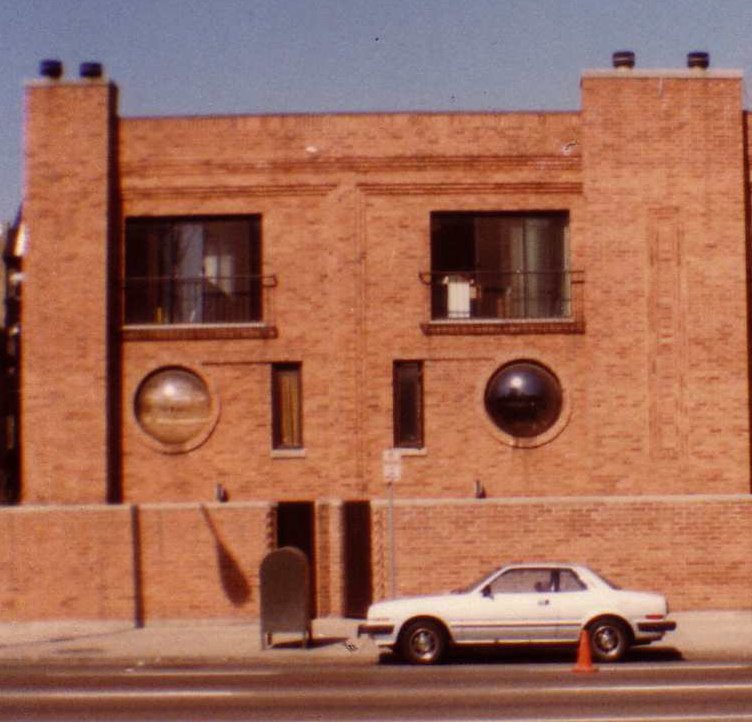
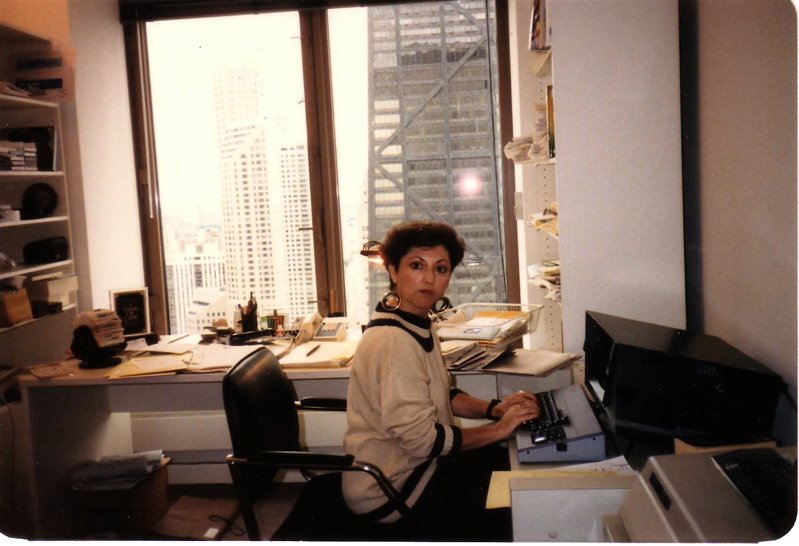
Perhaps I should have confessed – told him the house on Henderson St. in Chicago’s Lakeview neighborhood where I was living when we first met was my 12th residence since my first marriage in 1960. (A few houses and favorite places are pictured in this post and identified at the end.) But honestly, I had thought my moving days were over, filed away with my divorce papers, so there was no need to share my secret addiction.


I had pinned a few of those dozen moves to natural causes; i.e., the army, a growing family, first husband’s new career. As for the rest of our family’s moves, my theories included: empty nest syndrome, projects to recharge a long union, and my short attention span. But, no real answer. Now, though, thanks to a report I found on the Internet, I can blame my grandparents (aka Bubbie and Zadie), and the immigrant roots unearthed in my memoir, “The Division Street Princess.”

You see, according to Dr. Fred Goodwin, a psychiatrist and former director of the National Institute for Mental Health, ”Some 40 million Americans move every year. We’re a country of movers,” he said. “It’s as American as apple pie.” In an August 5, 2001 interview with CNN, Dr. Goodwin suggested that while some in the same situation stayed behind, “many of our forbearers bravely left their own country, old language, to better their circumstances or avoid religious persecution. The immigrants that came to this country were the risk-takers, explorers,” he said.
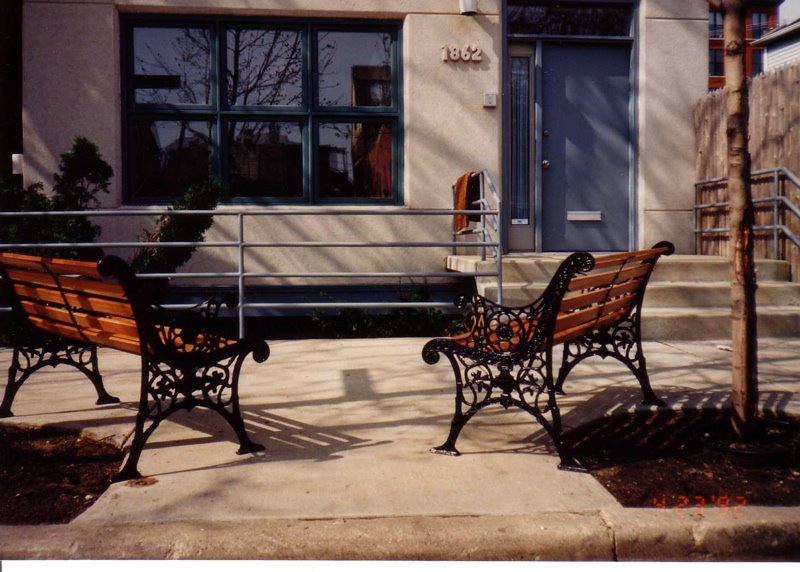

Could I have inherited this tendency to courageously seek new vistas from the Shapiros and Elkins who left their Russian shtetls for the concrete streets of Humboldt Park? Although my excuses for 14 homes (last count) have been paltry in comparison to my ancestors’ voyages from Russia to the U.S. in the 1920s, it’s clearly their fault Bradke Movers has been on my speed dial.
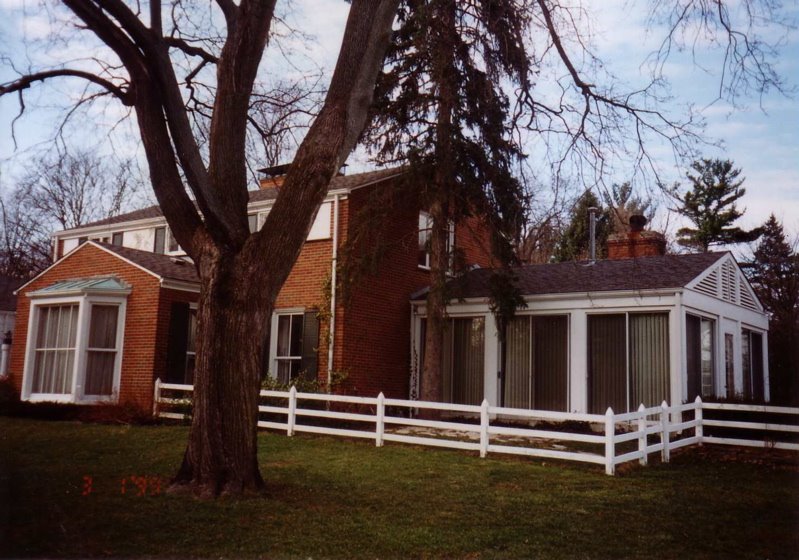

As I review my list of addresses, surely the strangest was that 1999 move to Geneva, IL. with Tommy. What possessed me to obscure the Yiddish of my childhood for the Swedish of the Fox River Valley? How could I ignore my liberal Democratic leanings (not to mention my tattooed biceps) to settle in a town almost totally Republican and conservative?

The excuse I gave Tommy at the time was that I wanted to see trees before I died. But looking back, I think I believed my narrow city row house too small to accommodate my new marriage and my two daughters who would occasionally visit from Boston and Los Angeles. A spacious home in the country – certainly more affordable than a similarly sized one in the city –could provide ample room for all.

My friends and family scoffed, taking bets on how long I would last. “If it doesn’t work out,” I told them, “I can always move back.” Tommy -- still unaware of my addiction, but knowing my talent for organization would ease the move and quickly find us new friends and activities – was optimistic.


My spouse was right: the move to a 50-year-old house on a half-acre of land with giant trees and wildflower garden, across the road from wooded trails, and walking distance from the train station, was a breeze. Within days, we joined the Delnor-Community Health and Wellness Center. Tommy planted a vegetable garden, and discovered enough golf courses to keep him puttering and putting. I became a member of the St. Charles Library Writing Group, as well as of Congregation Beth Shalom in Naperville. For a time, I was content.

But to keep a link to the city, and to attend Weight Watchers’ meetings with my old group, I’d climb aboard the Union Pacific/West Line’s 7:25 a.m. to Chicago once or twice a week. And each time the train pulled into the Ogilvie Transportation Center, and downtown skyscrapers magically blossomed before my eyes, I could feel my heart tug for the city I had carelessly forsaken.
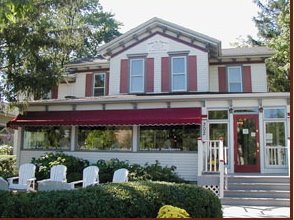

Ten months after our move to Geneva, I pleaded with Tommy. “I have to move back.” “You’re nuts,” he diagnosed. Too late. On August 10 (my birthday), 2000, we waved goodbye to Graham’s Chocolate shop, to The Little Traveler, to charming Third Street, to the great group of writers who encouraged my memoir, to the women I met while exercising or praying, and to the other places and people who tried to woo me to beautiful Kane County.


Surprisingly, even though I really was fish out of water, that wasn’t my reason for returning to the city. Folks in Geneva were genuinely friendly, and curious about my pursuits and me. I never felt unwelcome. It was Chicago, the home of my birth, that I missed. Certainly Geneva possessed the trees I thought I needed, and tranquility and charm I believed to be a bonus. But I never realized how much the city’s vitality and variety meant to me. At the end, my twice-weekly Metra visits only stoked, not satisfied my need for tumult, a longing likely sown in Eastern Europe and nurtured on the streets of my childhood.
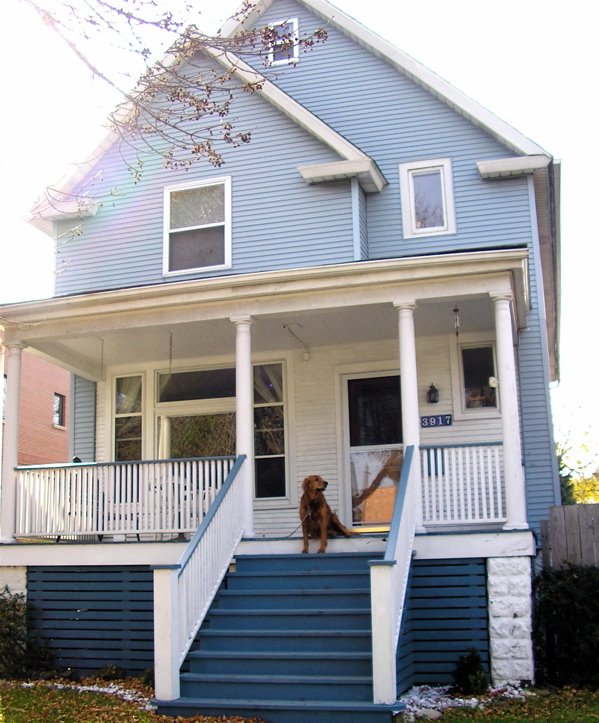

In January of this year, Tommy and I marked our eighth year of marriage and in August, our sixth year in our home in Chicago’s Independence Park neighborhood. Trees abound in the namesake park across the street. A mix of neighbors stop by our wide front porch to pet our dog and trade news. Tommy tends the backyard flower and vegetable garden when he’s not golfing or bowling. Tommy renewed his YMCA membership; I returned to the East Bank Club. I take the Blue Line to the Loop to window shop and wander.


Tommy warns me that the only way I’ll move from this house is “feet first.” I’m sure he doesn’t mean it, but if the urge should strike, I can honestly say I’m innocent. “It’s in my DNA,” I’ll insist. “Blame those adventurous peasants from the old country. Unwilling to stay put, hungry for the taste of new cuisine, the smell of fresh paint and untreated wood, the sound of hammers and saws, the feel of bubble wrap and corrugated boxes, the sight of blueprints and floor plans. Don’t look at me.”

Photo Captions:
1. Tommy and I pictured in 1999 on a card announcing our move to the country.
2. The Henderson St. row house, which we left for Geneva.
3. Officer’s quarters in Ft. Devens, MA.
4. A first marriage townhouse on LaSalle St.
5. One of my favorite homes, on Maud St.
6. Our Geneva home on Fargo Blvd.
7. The Little Traveler, on Third St., Geneva
8. My office within a Michigan Ave. high-rise condo.
9. Grahams Chocolate shop, on Third St., Geneva.
10. The Independence Park field house.
11. Our current Chicago home with our golden retriever, Buddy, on the front porch.
12. Some of our neighbors posing at a recent block party, which is held annually to welcome new neighbors. Tommy and I were the year 2000 guests of honor.

Postscript:
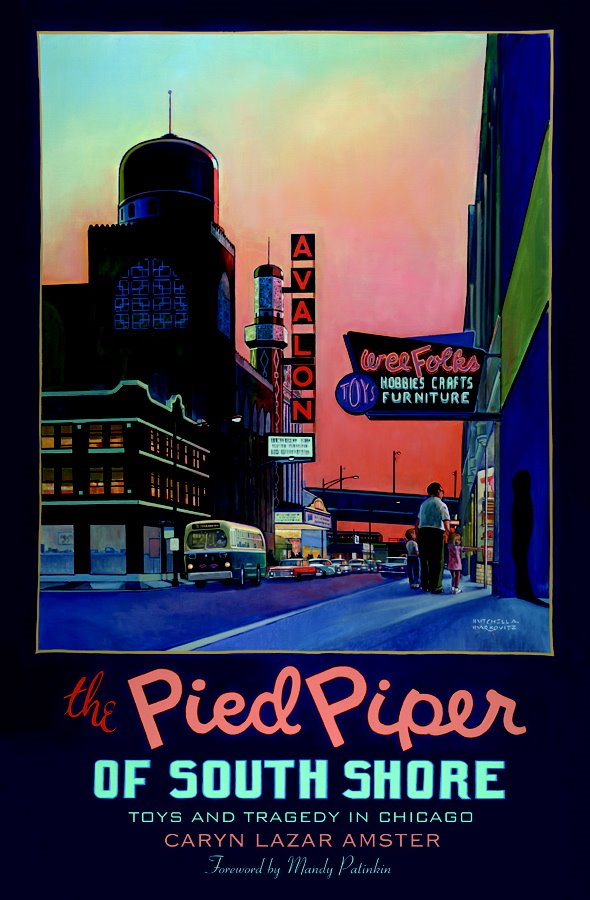
Fans of Chicago history and old neighborhoods should check out "The Pied Piper of South Shore, Toys and Tragedy in Chicago" by Caryn Lazar Amster, a fascinating true crime story set in the 1950s and 1960s. To subscribe to "South Shore News," Caryn's free monthly e-mail newsletter, write to her at: Caryn Amster

Monday, October 16, 2006

Bookies, Peddlers, and Junkmen


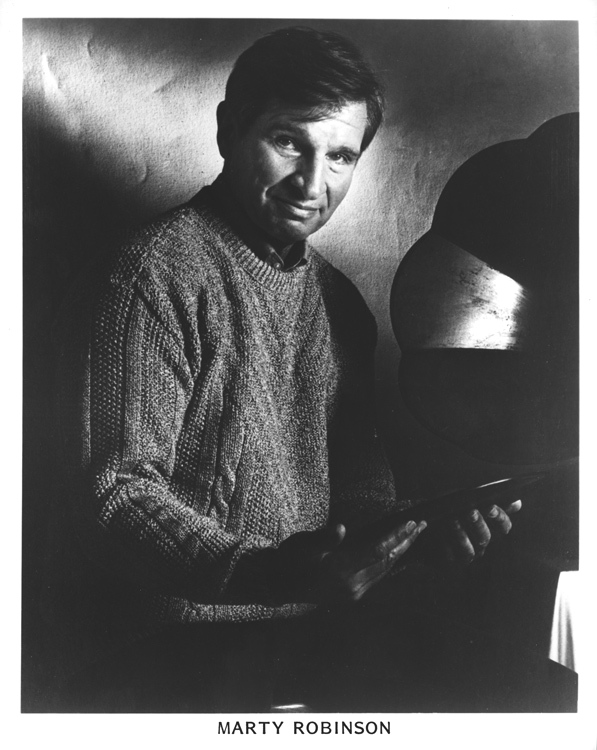
Marty Robinson refuses to sue me. Even though in my memoir I labeled his dad a bookie, the legendary voice of Chicago radio and TV insists on being a mensch, thus robbing me of a controversy that might have spurred headlines and boosted book sales.


Here’s the edited passage from "The Division Street Princess" where we first meet Marty’s dad, Emmanuel “Coffee” Robinson (All photos in this post are identified at the end.):

“I don’t know if Irv can handle the store alone,” my mother said.
“It’s not the store you’re worried about,” Aunt Mollie said. “Irv will behave himself. He knows you mean business.”
“What about Coffee and Major?” my mother said.
“I thought you told me that dreck was finished.”
“Yeh, the police closed them down and Irv promised no more. But who knows, maybe with me out of town, they’ll be back.”
I knew what Mom was talking about, and for a moment, my mind wandered from the Elkin sisters at the kitchen table to a pleasant memory of Coffee and Major, the neighborhood bookies who often visited us in the kitchen in the rear of our grocery store.”


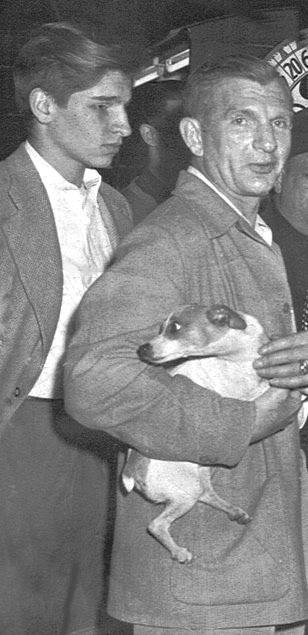
According to Marty, his dad – my Coffee -- “was not a bookie, but a junk peddler by trade, a gin player and a fisherman by choice, and an occasional overseer of the card games at Humboldt Billiards.” Marty does allow that perhaps an episode in my book was his dad’s “effort to get into the field.”

Here’s what I wrote:
“I also knew why Mom was worried about Dad and the bookies, for I had learned details just the week before when my parents’ loud voices awakened me from sleep.
“A hundred bucks a week,” my dad had said. “We can’t throw that away.” I heard the click of glass, likely an ashtray, then smelled cigarette smoke, and knew my dad would be lighting up one of several Camels.
“I don’t care what he gives you. I don’t want a bookie joint in the back of my store,” Mother had said. “Even if it’s after we close up.” She was moving around the kitchen, the sound of her wedge house slippers mingling with the swish-swish of a broom across the linoleum.


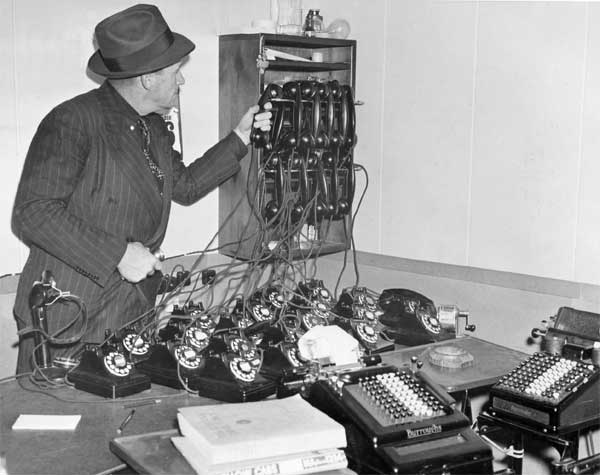
A bookie joint! I projected a scene straight out of the movies: Jimmy Cagney-types in wide-shouldered suits and dark fedoras, banks of ringing telephones, cigar smoke, stacks of cash.
“Whadaya worried about?” my father had said, interrupting the film I was directing.
“The police, like the last time.” My mother’s voice had risen as the sweeps came faster and louder.
Police! There were police in our store! I leapt from my bed and opened the bedroom door several inches wider, anxious not to miss a word.
“That was bupkis,” Dad had said laughing. “Major paid off the cops like always, but some schmuck thought he’d make detective if he blew the whistle.”


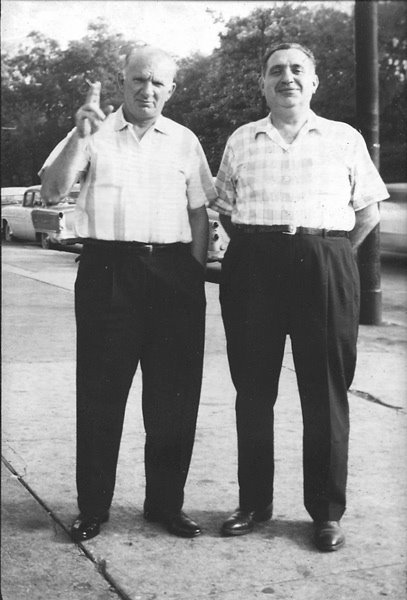
Major’s family has weighed in about his depiction in my book, too. Janice Lipinski, his niece, remembers her uncle, Irving “Major” Kasoff, as a masseur at the schvitz on North and Damen. She claims ignorance of the pair’s shady sideline, but admits “Major hung out at the poolroom on Division Street and always knew somebody who could get you a deal on anything.”


Marty says he can speak to Major's expertise as a masseur: (Imagine Marty’s melodious voice reading you this part.) “He was much in demand at the schvitz. When he used that broom made of oak leaves and dipped in hot suds on your flesh, the glow lasted the rest of the day. The soap was rinsed off with buckets of hot water, and then custom demanded you jump into the plunge pool. The water temperature was about 60° but it felt like 32. Then it was back into the steam room. I never made it to the top (hottest) shelf.”

I think the reason Marty and Janice refuse to press charges – sending me fan letters instead of litigation – is that even if their relatives did dip their hands in the trade, bookmaking back in the 1940’s seemed to be more colorful than criminal, folklore rather than felonious. No matter. Coffee and Major remain in my memory as treasured characters who only added fun and sweetness to my Division Street childhood. Never anything scary, like other incidents back then.


If you’re wondering where the duo’s Runyonesque nicknames came from, Marty explains his dad’s tag this way: “During the depression, my father, like many others, rode the rails as a hobo. One night at a hobo camp, he was asked his name by a big fellow with band intent. My dad bore a striking resemblance to a boxer of that era named Awful Joe Coffee. That’s who he said he was, and no one challenged him after that. The name Coffee stuck.”

As for Major – who remained friends with Coffee until their deaths (Coffee in 1970 at the age of 64, and Major in 1976 at 68) -- neither Janice nor Marty know where that nickname came from. Perhaps it was simply because Major was a big guy who commanded respect.


Of course, bookies weren’t the only crafty hustlers of the era. Junkmen, like Marty’s dad, and peddlers, like my uncle Jack Silver, also added zest to Division Street and to other old neighborhoods. Immigrants saw these jobs as footholds to a better life for their families, and they schlepped from pushcarts to horse and buggy, to trucks, and some even to enterprises that grew into department stores or major businesses.


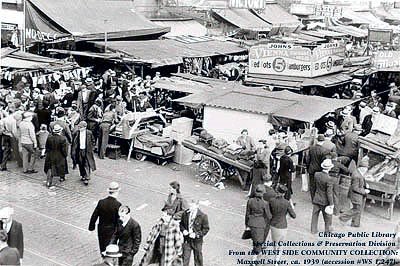
My brother, Ron, recalls Maxwell Street -- Chicago’s most famous gathering spot for immigrant peddlers – in this passage he contributed to today’s post. He says between the ages of 12 and 15 (1947-50), “ Dad and I used to go to Maxwell St. on Sundays, meet with the market master or whatever he was called and he would give us a spot and merchandise to sell. We had a minimum price and anything over that was ours. We sold all kinds of stuff, from softballs, watches, leather jackets, cashmere sweaters, etc. I learned more things about selling on those Sundays that stay with me today. You never lost a sale because of price. We had so much fun that the hours on our feet didn't matter, we were together and were a great team. I kept Dad in stitches with my carnie routine even back then. Good memories.”


You can learn more about Maxwell Street, which was sadly dismembered in 1994 and later sterilely resurrected by the city of Chicago, by going to the excellent website established by the Maxwell Street Foundation and by reading “Jewish Maxwell Street Stories” by Shuli Eshel and Roger Schatz. Both visits will return you to the world famous bazaar of my childhood that gave generations of Chicagoans long lasting memories.


As for Coffee’s son, he’s been active in the communications industry since 1956 when he was on the air at WEAW in Evanston, then WAAF in Chicago, and of course, his long career as the preeminent voice at WTTW-TV (1971-1998), host of the annual Golden Apple Awards and Chicago Jazz Festival broadcasts, and producer and host of “The First Fifty Years” (1967-1992). He’s been a sought-after media consultant and trainer for Fortune 500 companies, government agencies, politicians, major league sports franchises, and more.

I imagine that Coffee, my former neighborhood bookie – oops, junk peddler – would be enormously proud of Marty. I can see him and Major, somewhere in the cushy Division Street afterlife, kvelling over his talented tenderhearted kid.

Photo Captions:
1. Marty Robinson in a photo taken by the late Sherwood Fohrman.
2. Marty, age 13, with his dad Coffee and their toy fox terrier, Midge. Circa 1945.
3. Coffee and Major, sometime in the ‘50s.
4. Photo of a book making operation. This is what I imagined our bookie joint to look like.
5. Photo, taken perhaps in the back room of Humboldt Billiards with Coffee in the back row center in the dark coat.
6. Jack Dempsey poses with Joe "Awful" Coffee, probably in Colorado. Joe was a successful boxer in his younger years, and then became the owner of the Ringside Lounge, a well-known Denver restaurant from 1942-1965. He was active throughout his life and honored for helping the handicapped, mentally impaired and orphaned.
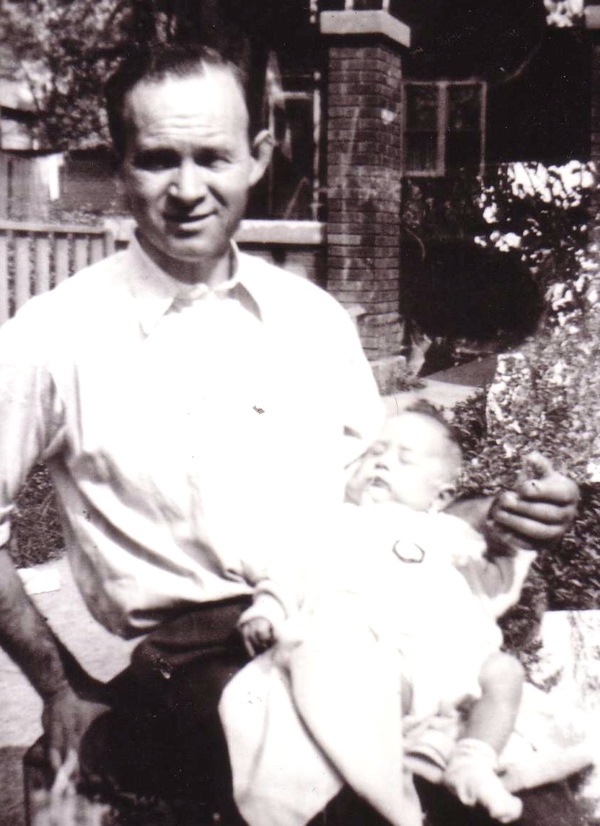
7. Jack Silver, a fruit peddler in the 1940s, whom I describe as a shtarker in my memoir. The baby in his arms is one of his three children, but my cousins are at a loss as to which one of them it is.
8. The Maxwell Street of our childhood.
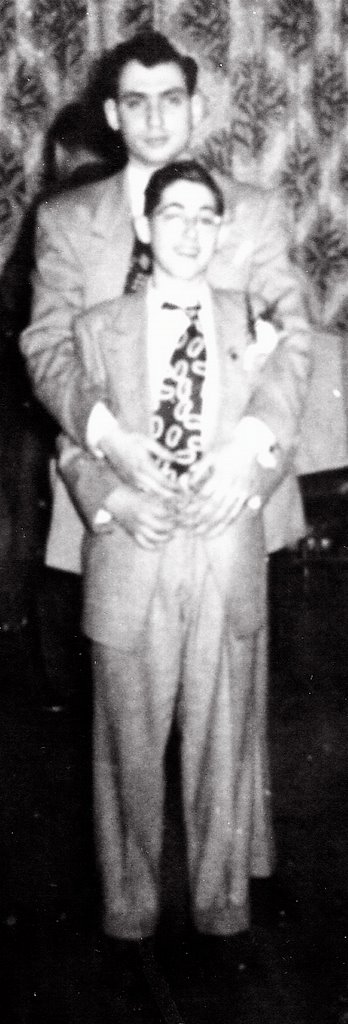
9. My brother, Ron Shapiro at his bar mitzvah with my uncle Hy Elkin. Perhaps Ron’s suit was purchased on Maxwell Street where he would’ve been dragged into a store by one of the street’s infamous “pullers.”
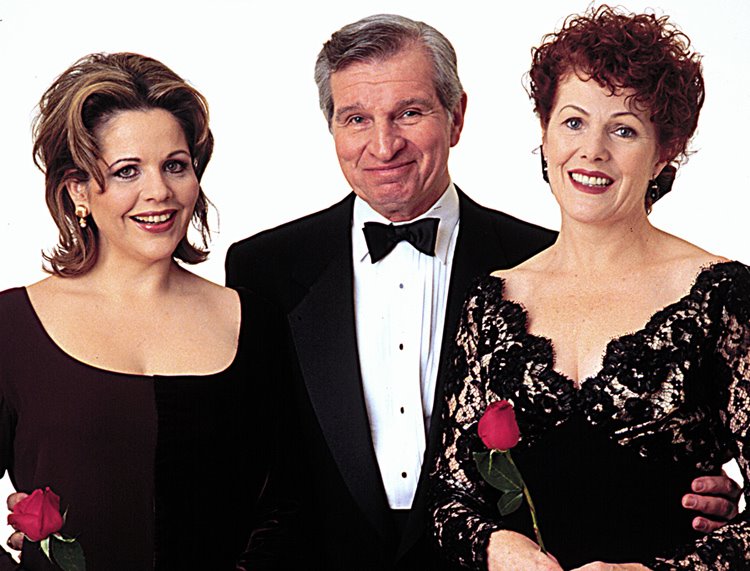
10. Marty Robinson with Renee Fleming and Lynne Redgrave in 1999 at Orchestra Hall during the taping of the PBS special "Star-crossed Lovers."

Upcoming:
October 27, 2006

Tuesday, October 03, 2006

Girlfriends


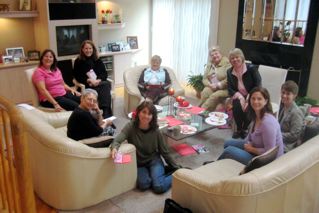
Jealousy, not gratitude, was my first reaction when I was the guest author last week at my friend Michele’s book club. It wasn’t her beautiful Northbrook home I coveted, but the bond between the six women who had assembled to discuss my book. Girlfriends -- who gather often, travel together, and consider themselves a group -- I don’t have one of those.

Don’t get me wrong. I have plenty of girlfriends -- singly. No lack of close women friends to share woes, lunch, or advice. But they’re separate from one another; know each other through an introduction by me, not sewn together by a common thread.


Then there’s a tier of women whom I know and enjoy because we watch our dogs chase, fetch and tussle each morning at our neighborhood park. Or another number I’ve met over the years in writing groups, Spanish classes, and of course, Weight Watchers. But in all of these settings, if there was an inner circle formed outside the scheduled time or purpose, where women bonded, I was absent.

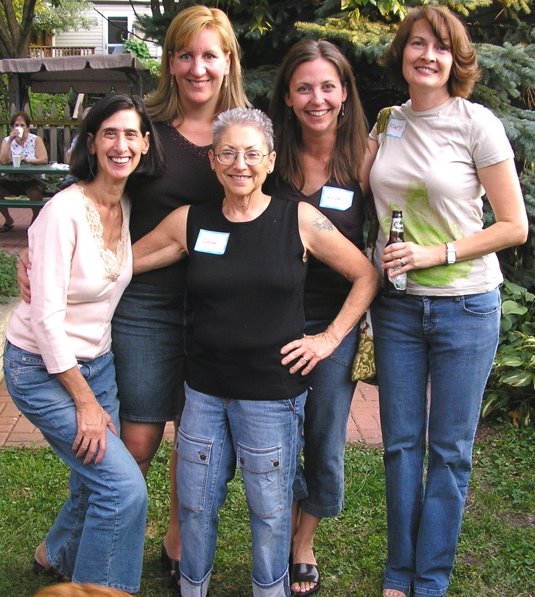
Why is this I wondered? Why did Michele, or some of the other women pictured in this post (captions at the end), have a posse, and not I? After much soul-searching, I’ve come up with an answer, and it’s not pretty: I’m a selfish, self-centered, inflexible, stay-at-home; and these traits fare poorly in a group setting.


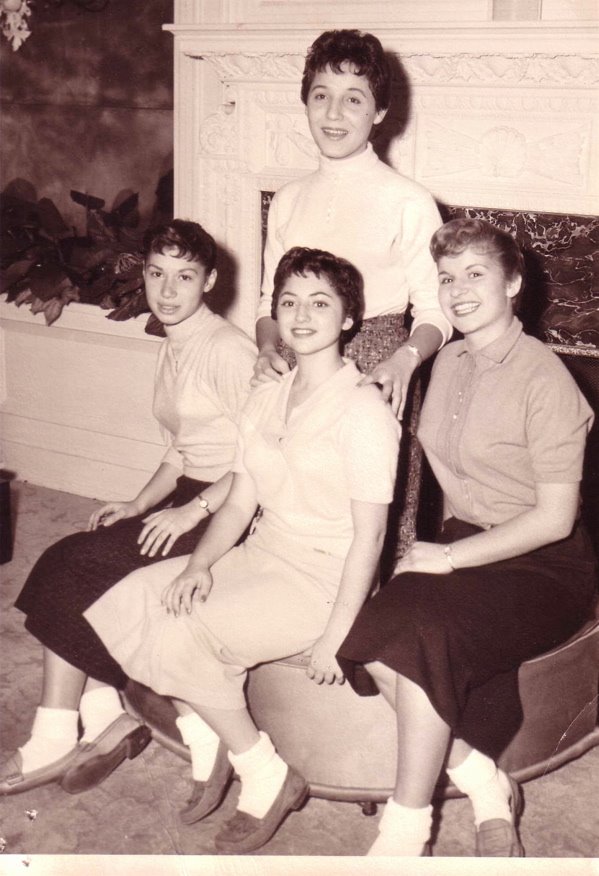
In truth, I was a member of a foursome once – back in high school. I was reminded of the group at our recent Roosevelt High School reunion because in my memoir, “The Division Street Princess,” I had cropped out two of our four from an old photo to emphasize my long friendship with Ruth Gilbert that’s included in a chapter of my book. (The pair missing from the original photograph is resurrected in this post.)

The four of us teens were indeed a group back then, part of the Alpha Valedas, a school club of bright, popular girls, where, well, I never felt I fit in. It wasn’t because I wasn’t cute or well liked that made me feel like an interloper, but more that I came from the wrong-side-of-the-tracks. After all, to enroll at Roosevelt, I had lied about my place of residence, claiming to live at my Aunt Molly’s Albany Park apartment rather than my Division Street flat. So, I wasn’t really a Northsider. And, I had an after-school job at Harding’s-Chicago, a print shop and manufacturer of dance bids located on Irving Park and Kimball. I needed that employment to afford those cool tassel loafers, and I believed most of my club members (not all, though, as some were illegals like me, and also held part-time jobs) were better off.


Because I continued my job through Roosevelt University, I had no time for clubs or teams (then there’s that absence of athletic ability thing, too) that might have cleaved me to a group. Marriage followed graduation, then a teaching job at Suder elementary school, and lastly, two children. No time to be a member was my excuse, a pattern that continued whatever the job or family obligation.


Certainly there were groups of women I could have joined over the years, and I could never be labeled an introvert. Opportunities and invitations have come my way that might have led beyond the club, committee, sisterhood, or class to an inner group of four or six. But remember those unattractive traits I ‘fessed up to earlier? These are my barriers. If I were part of a group, I’d have to share decision-making, not be the center of attention, compromise, and most importantly, be forced to stay up late.


There. I’ve said it. Being a member of a group would require me to leave the house at night (Michele’s book club moved their regular evening meeting to a Sunday brunch just for me.), thus relinquishing couch time with TV, newspapers, Tommy, the dog, plus my 9 p.m. bedtime. So attached to these activities and routine that I’m willing to forgo ties to a quartet or sextet of amiable women, might make me seem pathetic or stubborn. So be it. But at age 68, having sunk even deeper in the divan, and admittedly sneaking up to bed before the big hand hits 12 to announce the hour, I’ve come to accept my hermit-like habit.


Instead of sympathy or criticism, you might consider indulging me and set your gathering for mornings (afternoons won’t work either because of naptime between 1 and 2 p.m.). Perhaps then, I’ll be enticed to participate and diminish the envy I experienced at Michele’s place. But then again there’s that sharing thing, or compromising, or forgoing the spotlight. Well, thanks for the invitation. I appreciate it, I really do. But unfortunately, I must decline.

Photo Captions:
1. Michele’s book club: Me, Michele, Libbey, Marilyn (a guest), Ruth (a guest), Patti, Leah, Kimeri, and Sue.
2. Members of our 6 a.m. dog group, sans pooches: Lucy, Molly, Susan, Mary, and me.
3. 1956 high school photo: Joan, Ruth, and Eve, with me seated in the center.
4. My sister-in-law Norma’s gang: Sue, Carol, Betty, Bonnie, and Norma.
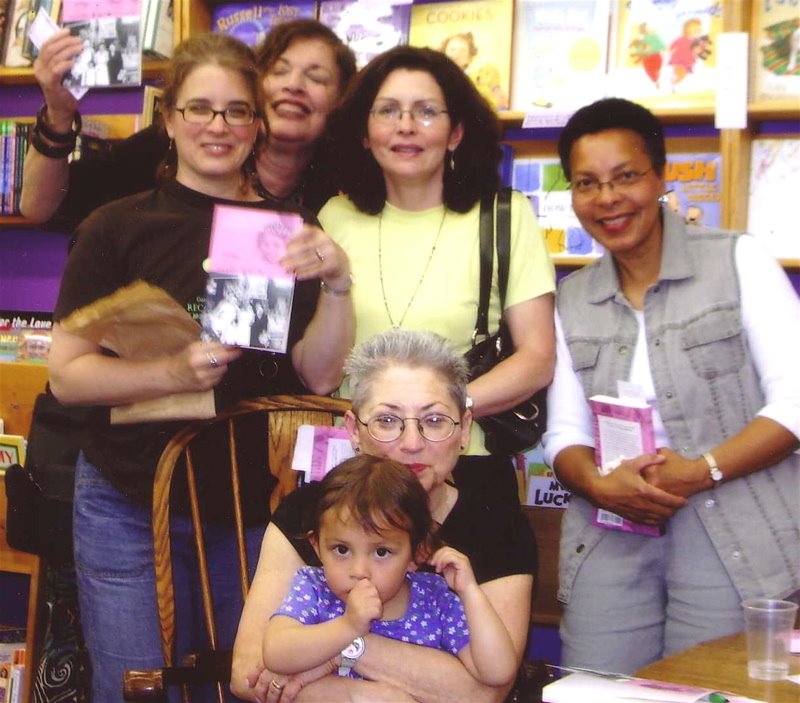
5. A few members of the Jill Rohde network pictured at my May, 2006 Women and Children First reading: Brenda, Jill, Ann, Vicky, and me holding Vicky’s granddaughter. (I’ll be back at this great bookstore again, October 27, 2006, 7:30 p.m. with Hillary Carlip and Jill Soloway.)
6. Faith Soloway’s female cast in “The F Word:” Margie Zohn, Christine Canavo, Merle Perkings, Megan Toohey, Faith (her fake pregnancy is part of the act), and Jenny Benscome. (Apologies to Seth Bodie and Eric Schmider, actors I cropped out to keep with our Girlfriends theme.)
7. Jill Soloway’s showbiz friends who took turns reading from “Tiny Ladies in Shiny Pants” at a N.Y. book event: Amy Poehler, Jodi Lennon, Lili Taylor, Lauren Ambrose, and Molly Shannon. Jill and me are front and center.

Upcoming: October 27, 2006

Wednesday, September 20, 2006

Short People

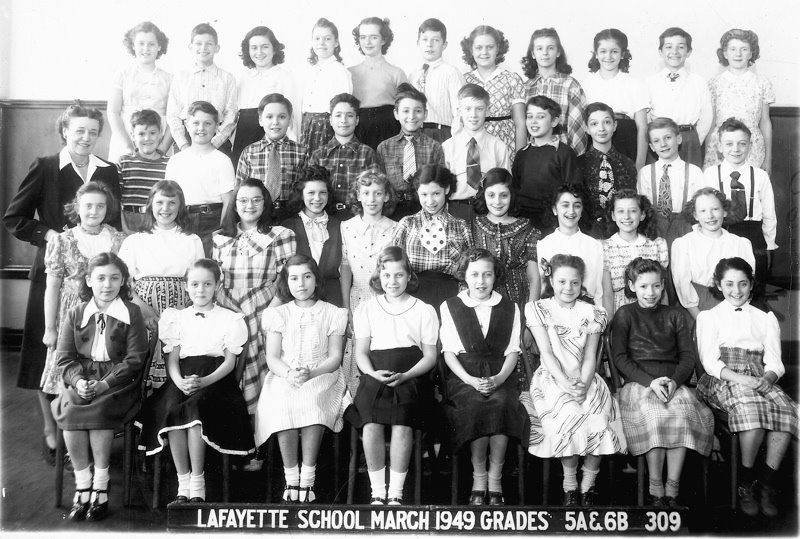
Instead of “hello,” I get, “You really are short,” as if I had lied in my memoir about being the schoolgirl in the first row, first seat, feet never touching the floor. Or maybe readers who meet me for the first time imagine the intervening years would’ve boosted me nearer their eye level. But age has been whittling me down, making my dream of average height always out of reach.


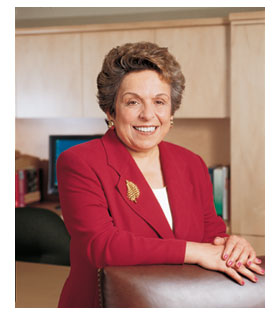
Today, at 4’9” (formerly 4’11”), I’m at peace with my stature, and even a bit haughty, thanks to the Short Persons Support website. It was there I discovered celebrity compatriots, as well as advantages. Are you aware my petite pals and I are less likely to break bones in falling or die in auto crashes, and that we live longer than tall people and even benefit the environment by taking up less water, energy, and space?

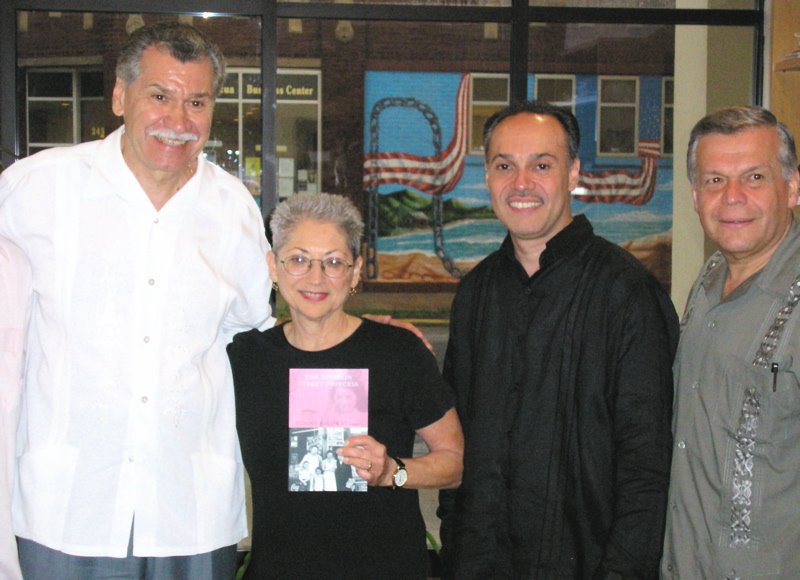
For a clear picture of where I stand compared to others, I’ve included some photos of me in the midst of friends and family. Also, I’ve adorned this post with a few well-known short persons. See if you can identify them -- or peek at the photo captions provided at the end.


In truth, I’ve never felt handicapped as a short woman. Yes, I do have to sit on a child’s booster seat to get my hair shampooed, and I have a hard time at the movies if someone longish fills the seat in front. And at the Jewel, I have to call on taller customers to pick Fiber One off the top shelf. But compared to other possible flaws, my lack of height is a yawn.


In fact my skimpy inches have been an advantage in one area: romance. I never had a problem attracting males, especially the short ones. In high school, any lad who had not attained full height by freshman year, sought me out. And in between my two marriages, when I was divorced and available, my height once more became a magnet, winning me all blind dates under 5’8”. “I’ve got the perfect guy for you,” a friend would say and I knew what she meant. And when I ran ads in the Chicago Reader noting my height along with my religion, love of dogs, jazz, and WBEZ, you can guess what pulled them in.


As I recall, there were merely two work-related incidents where my size caused me grief. The first was in 1980 when I was a press aide for Chicago Mayor, Jane M. Byrne. I was stationed at a ceremonial event -- some ribbon cutting or unveiling -- and along with distributing press kits I was to fend off the glut of reporters who typically pounced on the diminutive mayor the moment she stepped from her limo.


I took my usual stance: both arms extended out to my sides (like a lower case “t”) trying to hold back the crowd of reporters while opening a path auto to dais. But I was a hopeless as the kid with his finger in the dike: Nothing, especially this pint-sized press aide, could stop the rush. Television cameramen, photographers, reporters with their microphones thrust before them, easily pushed me aside and flooded the Mayor. Afterwards, back at City Hall, I overheard Her Honor tell Steve Crews, the press secretary at the time, “Don’t send Elaine to events anymore. She can’t handle it.” I didn’t blame the mayor; she was right.


It took 20 more years for my height to once again affect job performance. I had retired from my city post and public relations career and took a seasonal job at the Gap -- for a kick, for the discount. Denims there were stacked to the ceiling: classic, boot cut, wide leg. Size 2 all the way up to 14. Thousands of blue jeans piled one on top of another. If my customer was a tiny 2, no problem, but anything heftier, and I had to turn to another salesclerk or customer. “Could you please, would you mind?” I would gesture helplessly. And with a chuckle, they would comply.


Admittedly, my height, and lack thereof, has been a recurring theme in my life – sparked I’m certain by my beautiful mother’s concern about her only daughter’s chance at happiness considering a lack of inches from top to bottom and a few excess ones ‘round the middle. Here’s a small bit, skimmed from a chapter in "The Division Street Princess" that proves my point. While I am in the bedroom I share with my sleeping brother, Ronnie, I overhear this conversation taking place in the living room:

“I think we should take her to see someone.” It was my mother talking.
“You’re nuts,” Dad said.

“She’s the smallest girl in her class,” Mother said. “Maybe there’s something wrong that a doctor can fix.” From your lips to God’s ears I thought, repeating a Yiddish expression I had often heard my mother say.

“There’s nothing wrong with her. She’s perfect the way she is,” Dad said. His rebuttal didn’t surprise me for we were a family of shorties: Neither he nor my mother reached 5’5”, my 12-year-old brother Ronnie was short for his age; and I -- my father’s princess -- was the runt of the litter.

I lifted myself on my elbows the better to hear the rest of their conversation. Surprisingly, I was rooting for Mother. If a doctor could fix me up, give me a pill to make me taller, like the rest of my classmates, maybe then people would stop patting me on the head as if I was a pet. Whenever I saw a palm headed for my crown, I’d duck and steer the hand away. I wanted so much to be normal size, not this midget who gets lost in a crowd. Not this baby who has to sit on the Yellow Pages to reach the kitchen table. Not this dwarf perched at a classroom desk, feet never touching the floor.

I fell asleep before I knew who won the evening’s skirmish, but by morning I learned Mom was victorious. Yea! I thought to myself, the doctor will give me some magic pills and I will grow tall, slim, and beautiful.

***

“Well,” the doctor said to my mother as we sat in the examining room, “she is shorter than her age group, but her weight is just right. According to the intake sheet you filled out, I see that you, your husband, and your son are short people. It’s unlikely your daughter will grow much taller than either one of you. I don’t recommend hormone injections at this time.”

Mother turned to me, took my face in her two hands, kissed my forehead, and said to me loud enough for the departing physician to hear, “I knew you were perfect just the way you were.” I was happy to get her kiss and hear her sugary words. But in my heart I knew Mother’s efforts to transform her only daughter were far from over -- just temporarily stalled.”

Photo Captions

*School photo: First seat, first row, on the right. Feet in dark socks not reaching the floor.

*Edith Piaf, 4’8”

*Women and Children First Bookstore, May 25, 2006: Cousins Neil Shapiro and Renee Elkin on either end, my brother Ron on one side and my daughters Jill and Faith on the other. Note that my grandson is quickly catching up.

*Donna E. Shalala, 4’9”

*At the Teresa Roldan Apartments on Paseo Boricua, July 20, 2006: With Paul Roldan, Ald. Billy Ocasio, and Jose E. Lopez.

*Robert B. Reich, 4’10.5”

*Borders, Los Angeles, July 25, 2006: With Romie Angelich, Melanie Hutsell, and daughter Jill Soloway.

*Judy Garland, 4’11.5”

Thursday, September 14, 2006

Love In The Schools, 1983


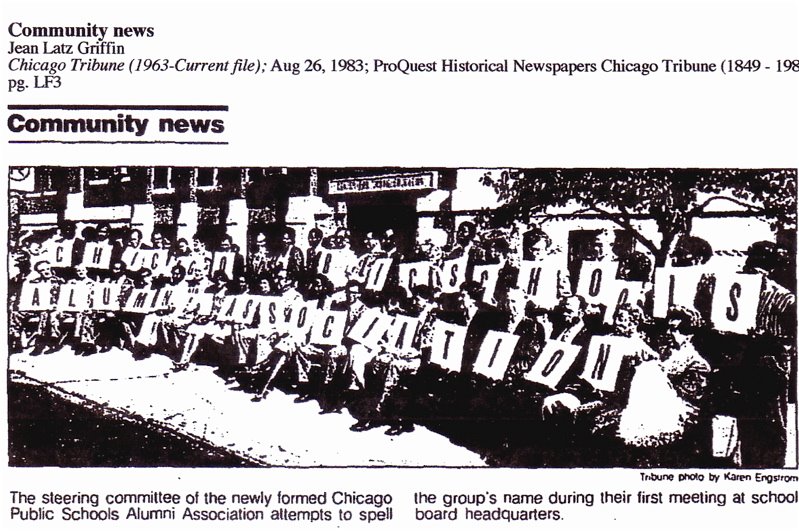
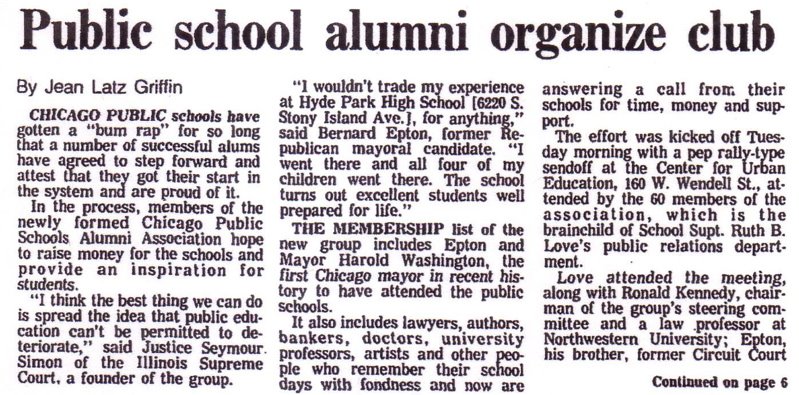
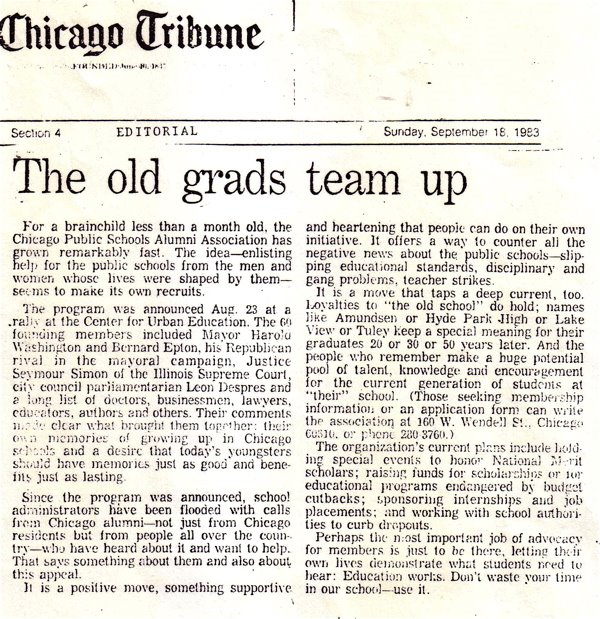
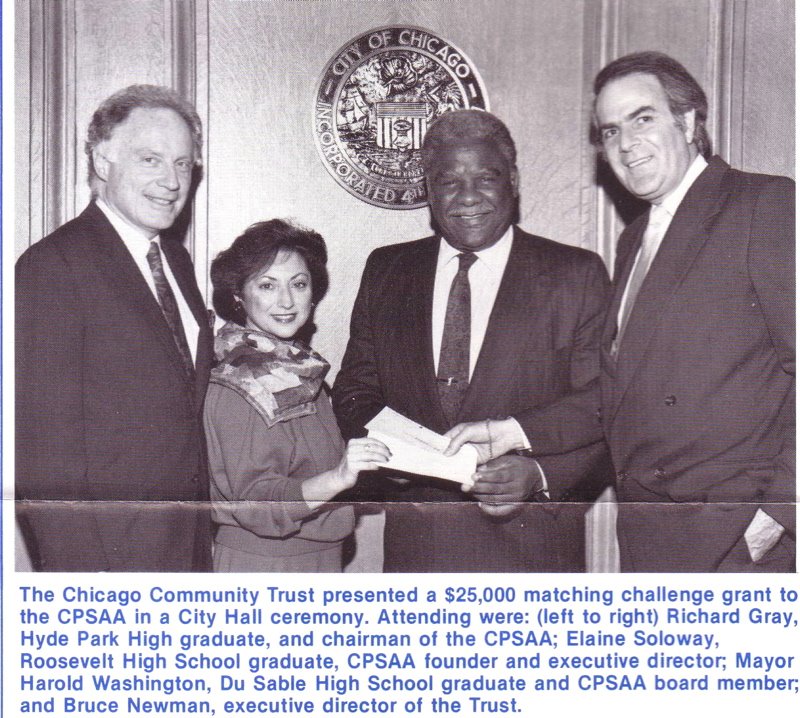
In 1983, when I was communications director for Chicago Public Schools’ Superintendent Ruth Love, and when support for the schools sagged, I conceived the idea of a citywide alumni association that would involve local politicians, civic leaders, business executives, and everyday citizens who would inspire students, raise money for the schools, and improve the image of public education. Thus, the Chicago Public Schools Alumni Association (CPSAA) was born, lived briefly, then died.

I got to thinking about the CPSAA last week when stories of First Day of School dominated daily news. Also, my memoir, “The Division Street Princess” reveals the impact of Lafayette Grammar School; and this Saturday night, Sept. 16, my Roosevelt High School Class of ’56 will celebrate our 50-year reunion. So public schools have been top of mind.

When I hatched the CPSAA in 1983, the media, parents, and school reformers were bashing the system; but I had a different view. After all, my two daughters, Faith and Jill, were college-bound Lane Tech graduates; and in my CPS job, I saw many outstanding teachers and students.

I pitched my idea to pals – who were also products of public schools -- and they enthusiastically climbed aboard agreeing to be part of a steering committee. For her part, Supt. Love, recognizing a PR opportunity, as well as a potent group of allies, gave her blessing.

Despite Dr. Love’s support, I wanted the CPSAA to be independent of the School Board because I believe this would provide greater credibility. And I wanted membership to be citywide – an alumni association that didn’t differentiate between North-, South-, or West- side schools. In the end, I believe my two stubborn and naïve visions aided the organization’s downfall.


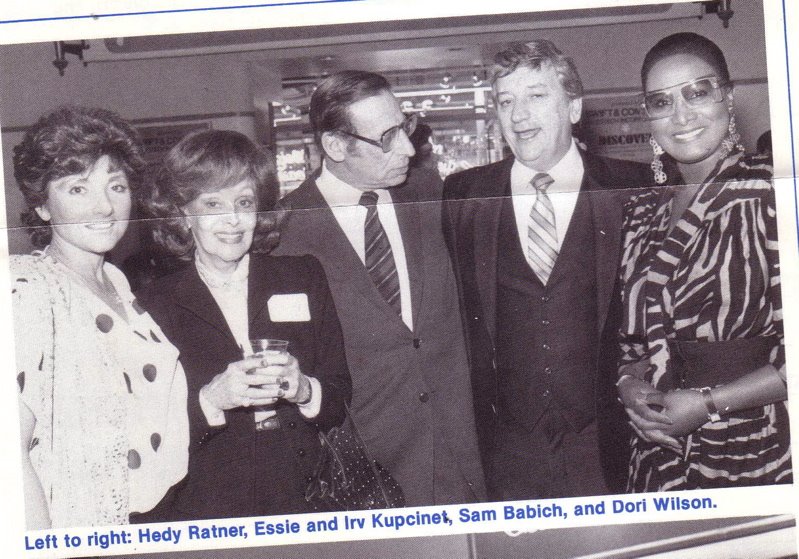
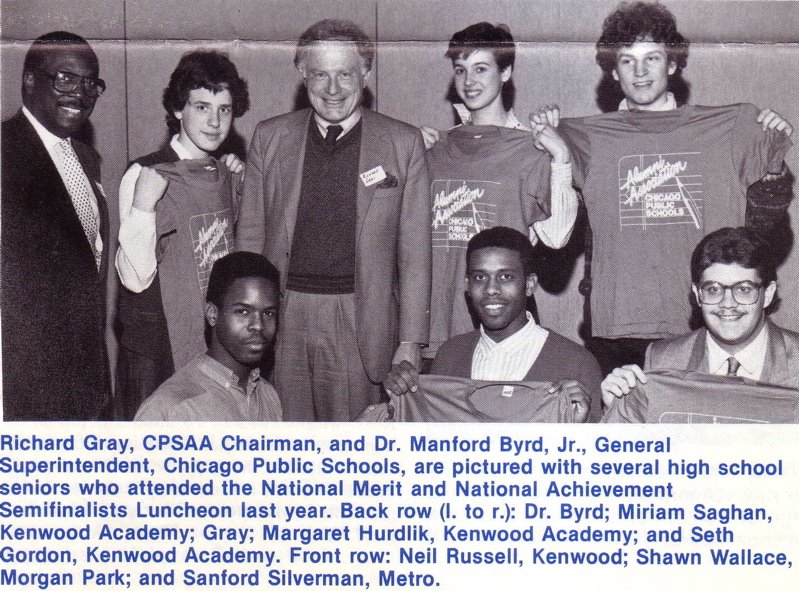
The CPSAA quickly grew from a steering committee to a prestigious 31-member Board of Directors headed by Richard Gray, Allen M. Turner, and Daniel Levin. Other prominent names included Judge Seymour Simon, Sen. Carol Moseley Braun, Judge David Cerda, Allison Davis, Leon Despres, Hedy Ratner, William Singer, Dori Wilson, and Joel Zemans. We also added a 43-member Advisory Board with equally stellar names, and a 17-member Honorary Board of Directors that led with Congressman Frank Annunzio, included Mayor Harold Washington, and ended with Congressman Sydney R. Yates.

Once established, we published a quarterly newsletter that included descriptions of exemplary schools and programs, interviews with education reporters like Linda Lenz and Casey Banas, and messages from school leadership; hosted luncheons to honor National Merit and National Achievement scholarship finalists; sponsored special events for alumni -- like the April 10, 1987 basketball match between DuSable and Roosevelt high schools’ champs of the 1950s; and explored ways to build membership and achieve goals.


But as the CPSAA grew, I began to sink. A year after launching the organization, I had left the school system for a PR job with Jasculca/Terman, a public affairs firm, and no longer had time or energy to handle tasks. (This was before speedy computers and Internet access could have eased the load.) So in 1987 the association hired Harriet O’Donnell to be its first salaried executive director. Under her leadership, and in offices generously donated by a board member, O’Donnell moved the CPSAA forward.


By now, Manford Byrd, Jr. had succeeded Ruth Love as School Superintendent, and Michael Rotman took over from Richard Gray as Chairman of the CPSAA Board. Under a committee headed by Theodore H. Wright, the group launched a drive to build membership to 5,000; and O’Donnell added a mentor program, “anti dropout” public service announcements, student talent shows, a recognition ceremony for outstanding students, and other activities. She also acknowledged alumni’s pull to their old schools by organizing workshops to help establish individual associations.

But despite O’Donnell’s deep commitment and vision, as well as ongoing financial support from some members of the Board of Directors, plus a Chicago Community Trust grant, the CPSAA was never able to gain enough members or funding to sustain itself long term. O’Donnell kept the organization going for several years, but eventually closed its doors. (Sadly, O’Donnell died in 2003, leaving behind a legacy of exceptional good works for dozens of organizations.)

Today I wonder: If the CPSAA had been an official Chicago Public Schools program, could it have survived? And what could we have done to keep alumni enthusiastic about a citywide group, while still encouraging their loyalty to alma maters?

Now, 23 years after our starry eyed photo in the Chicago Tribune spelling out our title, the school system -- under the leadership of CEO Arne Duncan and the watchful eye of Mayor Daley -- is praised and emulated. Yes, critics remain, but parents do send their kids to city schools and vie for spots in gifted and classical schools, and scholastic academies. As further evidence of the changed climate, Dennis Rodkin and Amy Rainey, writing in the October issue of Chicago magazine, recognized 30 Chicago public schools in their list of 140 city and suburban winners.

Despite the CPSAA’s failure to survive, it did produce a major achievement: it proved that a diverse group of people – some powerful, some everyday folk – could band together to help a struggling school system. So hooray for our old schools, and hooray especially for public school alumni everywhere.

Postscript: Good news for “The Division Street Princess:” The instructional coordinator of William P. Gray Elementary School, at 3730 N. Laramie, on Chicago’s Northwest side, has ordered a set of the books for 8th grade Language Arts teachers to use in their classrooms. This confirms my view that my memoir, although written for adults, can also appeal to young readers. In fact, “The Division Street Princess” is in the running for an ALEX award, which the American Library Association bestows on 10 books written for adults that have special appeal to young adults, ages 12 through 18.

Wednesday, September 06, 2006

Homecoming: South Commons 1969


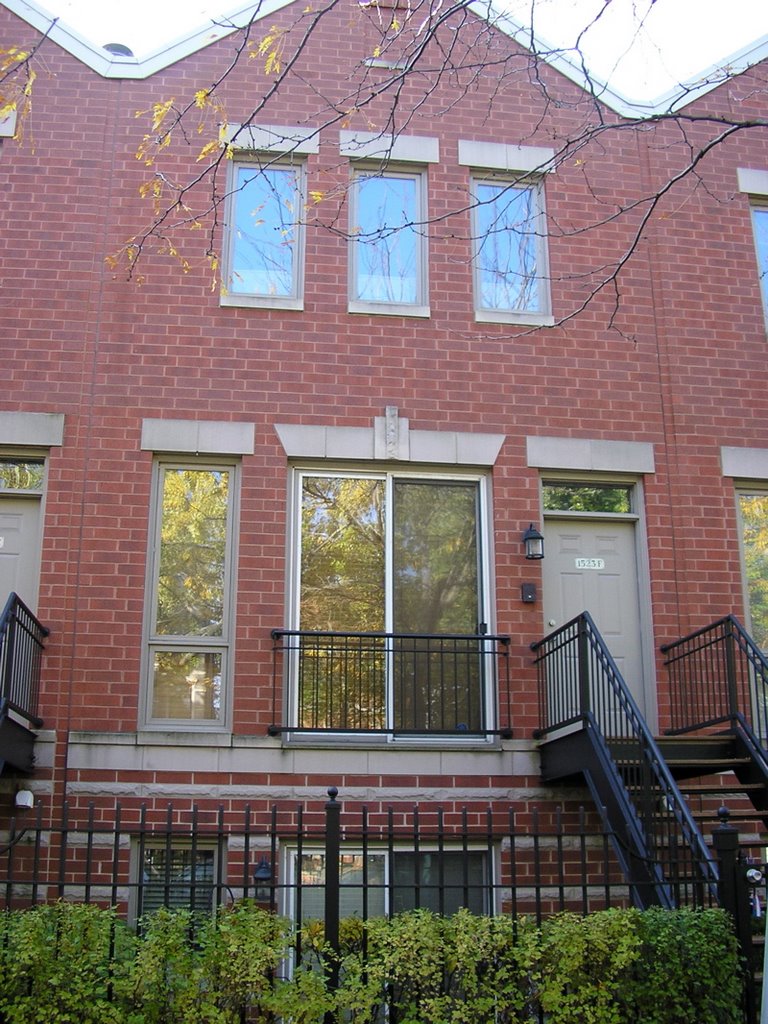
In 1969, one year after the assassination of Dr. Martin Luther King, Jr., and when riots erupted in parts of the inner city, my husband and I and our two young daughters moved from suburban Glenview to South Commons, a 30-acre, urban renewal complex at 28th St. and Michigan Ave. on Chicago’s Near South Side.

Friends and relatives called us crazy, but that move changed me. The 31-year-old unhappy housewife I was back then turned into a newspaper editor, musical theatre producer, and community activist. Almost overnight, I shed bored and lonely and donned euphoria.

I got to thinking about the 10 years I spent in South Commons after I had written my Aug. 31 post declaring the years described in my memoir, "The Division Street Princess,"as the most influential in my life. While the impact of my childhood above the store still holds true, South Commons is the place I hold nearest my heart -- the answer to all my dreams.


In many ways, the move to South Commons was a homecoming because we had previously lived nearby at Prairie Shores, when my husband was a resident at Michael Reese Hospital. But once he completed his tour, a job at an Arlington Heights hospital and the natural path of a Jewish doctor and his young family, prompted a move to a tract housing development more than 20 miles from the city.

For many – especially my mother – our suburban three-bedroom raised ranch with yard and attached garage on a cul-de-sac ringed with skinny baby trees, was heaven. For me, it was not. I felt fish-out-of-water, unable to connect to neighbors who were my age, religion, and background. I missed the city and would regularly sit on a bus for 1-1/2 hours to reach State and Madison.

Fortunately, my husband switched medical specialties and won a residency in Chicago that required a move back. When I learned about South Commons, a “new town” just a few blocks from our old Prairie Shores apartment, that aimed to integrate races, incomes, and ages in a mix of for-sale townhouses and rental low-, mid-, and high-rise buildings, I wanted in.

From my first step into the South Commons community center, where some boisterous activity was underway, I felt at home. As soon as moving boxes were unpacked, I plunged in, becoming a volunteer for Rev. Ed Weisheimer, a Disciples of Christ minister who led the ecumenical South Commons Church and organized community activities.


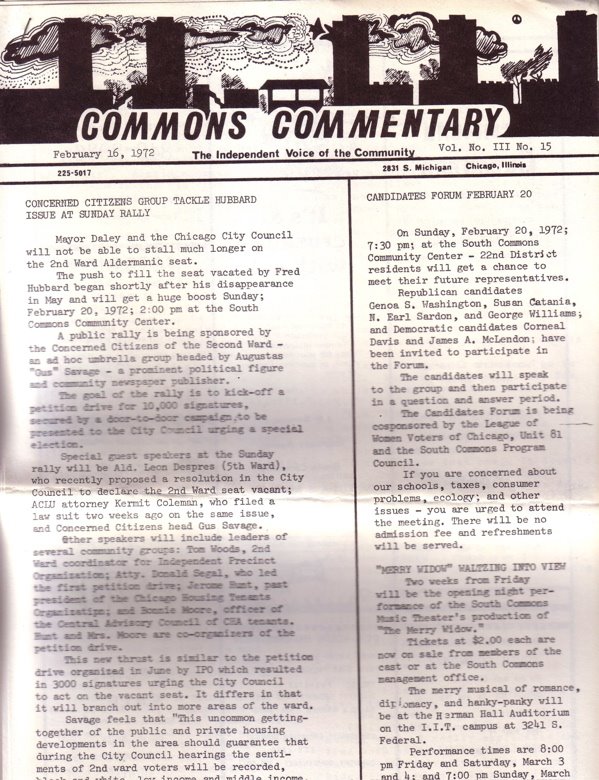
On a Selectric typewriter, I tapped out weekly issues of the Commons Commentary, rolled dotted pages onto a mimeograph machine, and delivered copies that had been piled onto a red Flyer wagon, to an eager audience of readers. I was a writer, editor, and publisher – skills unknown to me that blossomed freely in South Commons’ fertile soil.


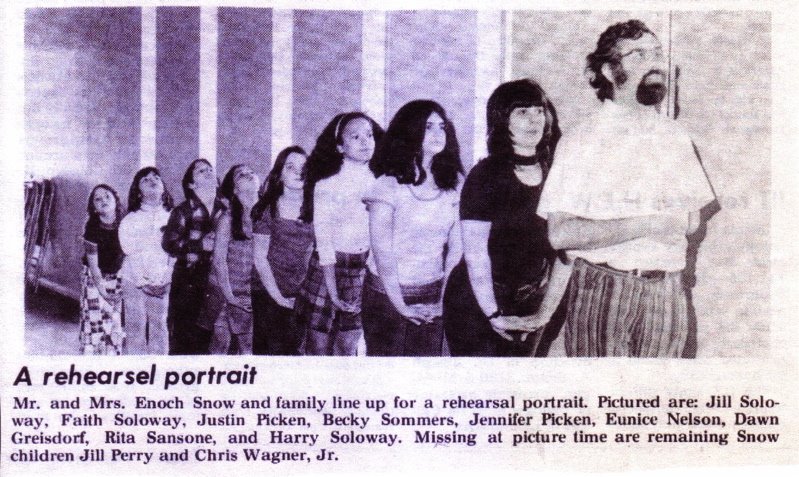
I believe my family thrived, too. My husband played leads in The Sorcerer, Pirates of Penzance, Carousel, and other musicals produced by our amateur theatre group; and he flourished in his medical career. At times, though, I imagine he longed for the housewife he had married only nine years earlier. But she had disappeared, and in her place was a woman barely recognizable to the two of us.


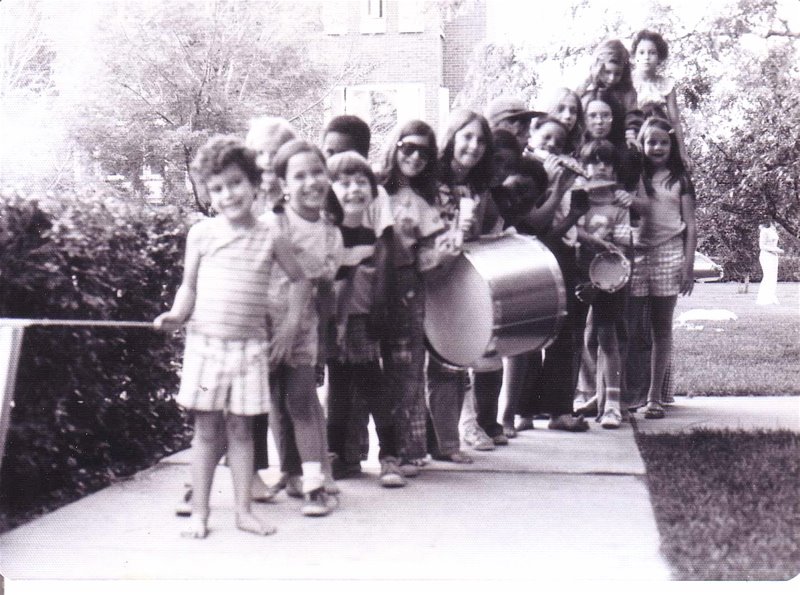
Our daughters Faith and Jill caught the show biz bug, too, while acting in the chorus of these musicals and in rag-tag productions they created in our courtyard playground. (You can read Jill’s take on South Commons in her book of essays, Tiny Ladies in Shiny Pants.)


Local and national publications put our neighborhood under a microscope: The Chicago Daily News claimed, “South Commons meets big test” (Oct. 17, 1969). The Christian Science Monitor said, “The experimental ‘new town’ in Chicago’s South Side is a model for cities seeking to reverse urban decay.” (April 23, 1971). The Chicago Daily News praised, “the integrated way of life in South Commons” (Sept. 29, 1972), and The Chicago Sun-Times described, “A sense of community at South Commons” (Sept. 10, 1972).


Much later, I was gratified to learn that along with my own family, and the journalists who penned those stories, other South Commons’ residents praised the community’s positive impact. In 2002, Tony Brooks, (you can read his reporting in the Aug. 4 archive of Chicago Sports Review) a young black man who had lived in a South Commons rental apartment in the 1970s, organized a reunion he targeted “to the kids who grew up in one of the best neighborhoods Chicago has to offer.” Although I was decades older than Tony and his peers, I attended the gathering and listened as Tony and his old South Commons friends shared my view that our experience had been a blessing.

Some former residents, who had moved out of town and missed the reunion (including my daughters) sent e-mails relating their memories. Mardi Teale, one of my best South Commons friends, who worked on the Commons Commentary, and with her husband, Jim, painted scenery or designed costumes for the musical theatre troupe, wrote from Arizona: “The best part of life there was the community spirit – people of all ages and ethnicity living, working and playing together. Of all the places we’ve lived, South Commons provides the best memories of all.”

My family remained in South Commons until 1979, long after many of our neighbors had left, after Faith and Jill were nearly the last white children in the K-6 branch of Drake elementary, after the early dream of integration had faded. Some of the middle-class black and white families left because they refused to send their children to “big Drake” for 7th and 8th grades where they would mix with the kids of nearby public housing. Others moved for typical reasons: because they needed more or less space than their South Commons residences provided, for affordable suburban homes, or for job opportunities elsewhere.

Forever touched by my South Commons experience and encouraged by its developer Daniel Levin and architect Ezra Gordon, I entered the very first Masters of Urban Planning Program at the University of Illinois Chicago. I wanted to learn what had happened to the noble experiment. What worked, what failed? I interviewed parents who had welcomed social integration for themselves, but rebelled at using their children as laboratory subjects in the public schools. Their stories form the basis of my master’s thesis.

Today, the Near South Side is bursting with new real estate and a mix of residents, and South Commons remains a centerpiece. My former homestead is all grown up now, no longer a “social experiment,” simply a lushly landscaped oasis in the city, 2-1/2 miles from Chicago’s downtown.
The dreams of wild-eyed urban pioneers -- like Tony Brooks, Mardi Teale, me, and so many others – are tucked in scrapbooks and photo albums. But every so often, especially when I hear old ‘70s tunes, like this one from Barry White, I go right back to those very special days:

The first, the last, my everything
And the answer to all my dreams
You're my sun, my moon, my guiding star
My kind of wonderful, that's what you are
I know there's only, only one like you
There's no way they could have made two
You're all I'm living for
Your love I'll keep for evermore
You're the first, you’re the last, my everything

Photo Captions:

No.1. From Chicago Sunday Sun-Times, Midwest Magazine, June 28, 1970.
No. 2. Our South Commons townhouse.
No. 3. An issue of the Commons Commentary, Feb. 16, 1972.
No. 4. From The Herald newspaper, April 25, 1973.
No. 5. South Commons’ kids in the courtyard. Jill at the drum, and Faith to her right.
No. 6. Friends and neighbors, from left to right: Friends Linda, Faith, Vaso, Jill, and Gina.
No. 7. From Lakefront Outlook, May 1, 2002.