Monday, October 15, 2007

I'm All Ears


Pull up a chair; I'm all ears. Don't be embarrassed because you find yourself turning to me for advice. Many other souls -- lost, confused, or indecisive -- have made the very same pilgrimage. But before you surrender your woes, you should be forewarned there’s a hitch in my mode of problem solving.


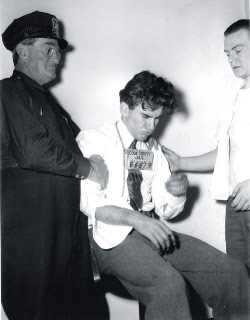
First off, while I am a certified expert (photos of more well-known counselors are included in this post) in a variety of subjects, I know my limits. If you stick to relationships, child rearing, weight loss, memoir writing, and Macs, it'll be smooth sailing.


But if instead, you are querying about fashion, travel, sports, financial planning, religion, nightlife, deep sea diving, dog obedience, cooking, home decorating, sewing, crafting, carpentry (I could go on, but am trying to limit this to 500 words.), I'd suggest a Google search.


If you are like the hundreds (okay dozen, um, handful) of callers who ring me up, you're likely to begin our conversation with the standard, "Do you have a minute?" Now, others might respond to that question with an exasperated sigh, but for yours truly, it’s positively lyrical. "Absolutely," I invariably respond, pushing away my mate who's wondering when dinner will be served, or my pooch desperate for some tummy-rubbing attention.


With coffee cup in hand, I settle into my office chair, and depending upon the problem, either log on to my computer, retract a folder from my resource files, flip through my Rolodex, pull books from the appropriate shelf, or simply listen. There's likely to be a number of uh-huhs on my end, which I can assure you, doesn't signify inattentiveness, just eagerness to jump in once you've paused in your downloading.


If you're wondering where I have the chutzpah to claim wisdom in my handful of fields, consider this evidence: In the realm of Relationships, although my first marriage ended in divorce, it did last 30 years and my ex and I are on friendly terms, even vacationing together as a family. Also, my second spouse and I will be celebrating our 10th year in 2008.


Re: Childrearing. Have you met Faith or Jill? Need I say more? Weight loss, down from 119 to 102 and have kept it off for more than 10 years. Memoir-writing, check out the title of this blog at your local bookseller. And as for Macs, I may not be on par with the guys at the Genius Bar, but can hold my own with any of Apple's other black t-shirted personnel.


Now, as to the forewarning I hinted at: If you turn to me for counsel or problem solving, do not expect it to end there. While you may be satisfied your issue has been resolved, I, on the other hand, may not be ready to let go. I may have to press on, refuse to dislodge even when you plead, "That's fine, that's all I needed to know." Well, maybe that's fine for you, but I haven't gotten to the root of the problem. Surely there's more we can discuss to clarify the picture. And when I contact you tomorrow to learn how my advice changed your life, I'll expect you to answer the phone and not screen my calls.

But I'm all ears.

Sunday, September 16, 2007

Short Fuse


Stand back, I may be about to blow! In the past, you could've described me as mild-mannered and been spot on. But as I age, I find myself easily erupting; and some recent flare-ups have made me wonder: Am I alone in my new volatility, or are other traditionally tame people experiencing similar behaviors? And, is having a short fuse so bad?

To start you thinking, I've shared two tantrums and hope you'll confess to a few of yours. For inspiration, I've included pictures of some famous hot heads.


Here goes: In my childhood (see "The Division Street Princess"), I was the classic good little girl. I can't recall ever talking back to my parents, raising my voice, or stalking off a sidewalk game. If challenged, I'd likely cry, or run home to mommy. Adolescence continued the same pattern and first marriage tussles typically ended in silence rather than a strong defense.


I admit to losing it a handful of times with friends, daughters, or second spouse. But I don't count these as authentic blow ups because my anger dissolved in tears. The following blow-ups, though, where absolutely no aqua was in evidence, made me feel 10-feet tall.


The first occurred on the CTA Blue Line. Husband Tommy and I were seated near exit doors when a male passenger leaned over the metal bar, smiled at the two of us, then dropped his pants to show off his …..


Because Tommy was partially blinded by a patch over one eye (recent cataract surgery), he didn't catch what was going on. I, instead, leaped from my seat and erupted in profanities. "Get the f@#$ off the train!" I shrieked. I don't know who was more startled, the flasher, other passengers, or me. I continued screaming until the offender slinked off the train, hiking up his pants on the way out. I felt like Wonder Woman!


Number two for your enjoyment took place during a discussion with a neighbor (known to be a feisty guy). We were in the midst of a debate, when he switched from the topic at hand to a personal attack. "You're retarded if you believe that!" he threw at me. "Shut the f@#$ up!" I returned. (You'll note I have a preference for a particular epithet.) He continued on, Tommy intervened, then pulled me home. Again, no tears, just a feeling of triumph.


(In the interest of full disclosure: I wound up writing my neighbor a note apologizing for my outburst because I realized his anger covered a raw spot. “Let’s put this behind us,” I suggested. He happily agreed. But I still count my initial rage as evidence of new boldness.)


I can't guarantee future outbursts won't find me dabbing my eyes and seeking a tissue. And I can't predict what will set me off. So, this will have to serve as fair warning: Watch out who you're messing with. I may be short, but…

Monday, August 13, 2007

Keep In Touch


In the past, I've failed to keep in touch. You've complained I don't call often enough. And as for letter writing, well, we've both neglected that quaint courtesy. But all that has changed, I promise. You see, my daughters bought me an iPhone for my birthday and now I can't keep my paws off the buttons. So call, text, let's catch up.

After receiving my iPhone (it was the first time in memory I lunged for the gift rather than the birthday cake) and swatting away my grandson who kept trying to snatch it from me, I reflected back on telephones of the past and the scenes they conjured.


Back in the 1940s (described in my memoir), I clearly see a small, spindly telephone table with a shelf for the Yellow Pages. When the telephone book wasn't a booster seat for me, it lived in its cubbyhole and grew tattered and smudged. A black, rotary dial phone topped the table; and my inventive father somehow anchored a pencil to that stand using string and rubber band.


I can't remember our phone number on Division Street, but my husband Tommy swears his prefix at the time, on Chicago's far northwest side, was Gladstone-something. Maybe my brother, Ron, although three years older than I but with a better memory, can come up with the long-buried name.


The Princess phone (It lights up!) was introduced in 1959, and that image finds me sitting on the floor of a narrow hallway in the one-bedroom apartment I shared with my mother. The phone was mounted on the wall, so I wound the cord around my fist while I yakked with my fiancé/first husband. During some of those daily calls, we considered eloping because we were both furklempt from the wedding arrangements. (We didn't elope, but interestingly -- to me, maybe not to you -- second husband Tommy and I got married in Las Vegas, somewhat of an elopement.)


During those same years in the late '50s, my mother Min was employed as a switchboard operator for American Linen Supply Co. After toiling behind a counter wearing a stained apron in our mom-and-pop grocery store, the new job was one she relished. I can still see her returning home at 6 p.m., her gorgeous blue eyes as bright as my illuminated phone, bringing tales of how her fingers zoomed across the board.

All of the other long-ago phones have faded from memory; the only images tied to them are rings that brought exceedingly good or bad news.

As for cell phones ("mobile" now, I guess) I was a slow subscriber, believing them primarily useful in case of emergency or for ordering pizza on your way home from work.

But because I've been a M.O. (Mac Obnoxious) since 2004, I have lusted for an iPhone since it was first unveiled. But the price tag kept us apart. My daughters -- evidentially witnessing their mother's desperate need for an object to love and pamper (other than themselves) -- on Aug. 10, presented me with the perfect gift.

Sadly for Faith and Jill, now that I'm armed with my clever iPhone, and have mastered Text Messenging, those poor dears are continually being harassed by their mother's: "hi, luv, how r u? xoxo"

I'm still w8ing 4 their reply.

Monday, July 16, 2007

Nap Time


If you and I happen to be in the middle of a conversation, and my eyelids start to lower and my head falls forward, don't take it personally. Check your watch. The big hand is likely on 12 and the little on 1, signaling time for my nap.


Daily 1 p.m. naps are a strict rule in the Soloway-Madison household. To assure that postal workers, UPS drivers, Watchtower evangelists, or other doorbell ringers heed our sacred hour, Tommy and I post a note on our mailbox pleading for silence. Our visitors likely pause as their fingers near our bell, read the well-worn sign, and believe their compliance protects a sleeping baby from stirring. Whatever.


Before you deride our daily habit, you should know that health experts praise nappers, and also that many famous people were fervent nappers. First, the benefits of napping: In a Feb. 13, 2007 article in The New York Times (my absolute favorite newspaper and source of all of my boorish conversation starters; i.e. "According to an article in today's New York Times…), "napping at least three times a week for a half-hour was associated with a significantly decreased risk of death from heart disease." Since most of the relatives cited in my memoir succumbed to this particular scourge, I'm up for any remedy that might stave off the family inheritance.


A website devoted to the subject (did you doubt it?), adds "nature intended that we take a nap in the middle of the day." Also, "an afternoon nap as short as ten minutes can enhance alertness, mood, and mental performance."


Second in my evidence are these famous nappers, whose accomplishments in life should further convince you of the practice's perks: Winston Churchill, Thomas Edison, Albert Einstein, John F. Kennedy, Eleanor Roosevelt, and several more from yet another website on the topic.


These noteworthy schlufflers likely have their own excuse for their siestas; mine is related to the hour in which I awake: 4 a.m. Please do not suggest I stay up past my usual bedtime (9 p.m.) to encourage later awakenings. Others have offered this and the result is by 10 p.m. I am wide-awake, then struggle to fall asleep, finally drop off at 1 a.m., and pop up at my traditional early hour. It's hopeless.


As for Tommy, I don't know his defense. He sleeps soundly from 10 p.m. to 5:45 a.m., returns for a morning nap from 7:45 to 8:45 a.m., and joins me in our joint 1 p.m. nap. Lest you think my spouse is aged or infirm, know that he is a vigorous guy who recently made the front page of the Lakeview YMCA newsletter.


And naturally Buddy, our 9-year-old Golden Retriever, accompanies Tommy and me for all bedtime snoozes. Flat-dogging* it on our bedroom floor, Buddy is happy to be part of our daily ritual. The only problem is that our dog's superlative hearing allows him to detect the footsteps of the postal worker, UPS driver, and evangelist. Duty calls, Buddy barks. Goodbye naptime. For me, of course. Nothing disturbs my Tommy.

*I have tried several times to take a photograph of Buddy in his flat-dog position. Have you ever successfully crept up on a sleeping canine and attempted a flash? Not possible; this one will have to do.

Yawn…. Honest it's not you. Time to…zzz, zzz, zzz.

Friday, June 08, 2007

Celebrating Dad: Old Spice & Gastronomy


Sunday the 17th is Father’s Day, so naturally I’ve been thinking of ways to celebrate Dad. Although Internet and newspaper advertisers have generously offered gift ideas, I’m relieved of that particular task because my father has snubbed the holiday for the past 49 years.

Of course, Irv Shapiro didn’t intentionally skip all of those gift opportunities. I’m certain he thought himself invincible and that his three-pack-a-day Camel habit or king-size appetite despite diabetes would never catch up to him. Alas, it did, and my father died at the too-young age of 48.


Today's post not only honors fathers long gone, but also those hale and hearty -- specifically Michael Blackstone, the dad of Charles Blackstone who is the author of "The Week You Weren't Here." Following my serving, Charles dishes up his own take on the subject.


My dad’s corporeal absence doesn’t stop me from considering the sorts of gifts I’d like to bestow on Pop. For nostalgia’s sake, there would have to be Old Spice, the men’s aftershave lotion manufactured by the Shulton Company back in 1938 and still on the shelves under the Procter & Gamble label.

In the Fathers' Days of my childhood, Old Spice with its colonial sailing ship logo was always first choice. And although Chicago's Division Street and Dad’s butcher counter were far removed from the nautical theme of the product, Dad gleefully accepted my perennial gift as if it was the cleverest choice on earth.


My father read a paperback book a week (we called them pocketbooks back then), especially pulp novels. Mickey Spillane was one of his favorite authors. "I, the Jury" was published in 1947 (Spillane wrote it in six days), and it introduced his tough detective Mike Hammer.

So when Old Spice bottles started backing up on our medicine cabinet’s shelves, I would switch to a Spillane novel, or another writer with an equally gritty pen.

Now this may be odd for a Jewish man, but my dad was very handy with tools. At one point in his life, he even had a workshop. The feature I most remember about that oil-stained and jumbled cave was the row of baby food jars that Dad used as containers for nails, bolts, and screws. He would fasten the jars’ covers to the basement’s ceiling, unscrew the container when in use, and then reattach it at the project’s end. I recall thinking how clever he was; I still do.


I recently saw a Stanley 62-piece Professional Grade Mechanics Tool Set on sale for $32.90 (regularly priced at $71.99) and in my mind’s eye; I carefully wrapped the set and presented it to my delighted father. “Old Spice would’ve been fine,” he might have said. “You shouldn’t have.”

Oh, there’s many more gifts I could think of that would please Dad, but I believe I’ve just given him the very best present a child could offer: Although 49 years have gone by, he's as fresh in my mind and in my heart as he was when he opened his very first package of Old Spice. What more could a parent wish for than to be forever remembered by his princess?


Father’s Daze by Charles Blackstone

My father has always been rather hard to shop for. He just doesn’t like anything. It’s not just disdain for all things pedestrian; a lot of popular gift items are just lost on him. The only DVDs he’s ever wanted to watch—The Curb Your Enthusiasm boxed sets—he already has, thanks to me. Worst of all, since he retired nearly five years ago (“I’m not a doctor!” he's taken to proclaiming), he no longer wears anything more elaborate than Dockers and button down shirts. Not even to fancy parties. And this means I can’t give him ties.


I know, I know. Ties for Father’s Day are so cliché. Right up there with fireworks on the Fourth of July and Christmas evergreens. The tie, though generic, was always at the top of my list because it was a gift that still allowed for tradition, for whimsy, and for me to get him something that he actually knew how to use and desired—until he gave them up. And it didn’t matter if I picked out an ugly one, or one so shockingly contemporary that we both knew there was no chance of him removing it from the gift box, let alone wearing it in public.

You could always win with a tie, even when you were losing. A tie wasn’t hard to find. You could get them at the supermarket. A tie said love, admiration, and appreciation. But none of that mattered if he had renounced them.

The prospect of choosing became a little more daunting with each passing tie-free year. I got away with gag gifts. Smile, nod, thanks, back to TV. What would it take to really impress The Dad? A $200 bottle of Chateau Neuf-de-Pape?

My wife solved the problem last year. I was about to suggest we just pretend we were out of town over the weekend and skip Father’s Day entirely. That would buy me at least a year. Then, from out of nowhere, Alpana said, “Why don’t we just take them to dinner?” I immediately recognized this as the pure genius that it was. All it would take was a phone call to make a reservation. (It didn’t hurt that we were friends with the proprietor.) And I wouldn’t have to give up the chance to give a gift that would not only be desirable and useful but also showcase my personality.


So we took them to Papillion, a charming eight-table French place, tucked away on Brown Street in downtown Skokie. Chef Danny regaled us with asparagus soup and beautifully marbled steak and soft shell crab and lobster medallions and a festive array of coronary-inducing cheeses. My dad ate like an emperor, or a pro-wrestler. Volnay and Pommard flowed into us like we were tributaries. We ate and drank and enjoyed the beautiful early-summer night. There was even a festive crème brûlée at the end. You can probably guess who got the first—and last—spoon.


At the end of the evening, my dad, the last to leave, stumbled out sated, impressed, touched, and, I can only hope, adequately loved. If he remembered tonight for even an hour longer than he’d remember having received a carbon-dioxide-powered corkscrew or pair of Bose noise-canceling headphones, I could consider this Father’s Day a resounding success.

“You’re a good son,” he said to me, after draping a leaden arm over my shoulder.

“And you’re a hard dad to shop for,” I returned.

He couldn’t deny it. I didn’t want him to.

(Photo above: Michael Blackstone is pictured with his wife Linda and daughter Maya. Taken in Normandy, 2002.)

Happy Father’s Day to Dads everywhere!


¡Muchas gracias!
To Andrea Telli (pictured on the left), manager of the Humboldt Park Branch of the Chicago Public Library; José López, executive director of the Juan Antonio Corretjer Puerto Rican Cultural Center; Billy Ocasio, 26th Ward Alderman, and Ann Bishop (on the right) professor, the University of Illinois Graduate School of Library and Information Science for inviting me to be part of their marvelous June 9th event, "Historic Memory and Literary Tradition in Humboldt Park: The Intersection of Puerto Rican and Jewish Experience."

I shared the program with poets David Hernandez, "The Urban Poems;" Eduardo Arocho, "The 4th Tassel;" and members of Café Teatro Batey Urbano; as well as authors Hazel Rochman, "Against Borders: Promoting Books for a Multicultural World;" and Carlos Quiles and Josefina Rodriguez, "Memorias de Josefina.


And another bow of gratitude to Maddi Elga Amill (photo), owner of Books Plus Publications for making my book available for purchase at the event.

Monday, May 07, 2007

Obsessions: The Bag Lady, The Pen Freak, and The Bone Collector


If you’re wondering what to get me for Mother’s Day, I could use a bag. Not to worry, I’m not talking about one of those obese leather designer bags, or the tiny jeweled ones shaped like animals that ring up at $3,000. I’m talking backpack or messenger bag – tops sixty bucks.

Wait. Perhaps I should be clearer. I don’t really need a bag; I already have more than a dozen. And that’s not counting the handful I’ve already bequeathed to others or sold on e-Bay. It’s more like I can’t stop myself from acquiring more and more and more -- trying to find the perfect bag. That one bag, with the ideal dimensions, correct number of compartments, durable material, nifty design. It’s an obsession.


But I’m not the only one with an odd compulsion. Husband and wife contributors, Kevin Davis and Martie Sanders, let us in on their strange collections, too. Kevin is a Chicago-based journalist and author whose book, “Defending the Damned: Inside Chicago's Cook County Public Defender's Office,” was released from Atria Books in April.


And Martie is a Chicago actress who is currently rehearsing "Criminal Hearts" for Apple Tree Theatre's summer season.

But first, my own backpack/messinger bag nuttiness: I’m not sure why I prefer to strap a 30-pound load on my back, or weigh my right shoulder down with an equal burden, rather than opt for a leather purse more appropriate for someone my age. But I have a theory: I’m the sort of a person who lives her life in “what ifs.” What if I wind up somewhere – let’s say a doctor’s office, emergency room, police station, or other setting where a wait is inevitable, information is urgently needed, and data must be recorded? I’m prepared.

Clever me will have stuffed on her person: a paperback book, cell phone, iPod, electronic and paper address book and calendar, water bottle, snacks, pens, pencils, marking pens, highlighter, lined notebook, cosmetics, mirror, Advil, Tylenol, Gas-X, Band-Aids, wet cloths, digital camera with extra batteries, Post-it flags, a Chicago street directory, and a rubber-banded batch of The Division Street Princess postcards.


Before you chuckle at the above list, consider the answer my daughter Jill gives to those stumped by my refusal to stow my gear. “Why doesn’t she park her bag at home, in the car, or with the coat check?” they’ll ask, shaking their heads at Jill’s loony mother.

She responds, “After the Armageddon, when we’re all living on cots in the high school gymnasium, my mom will be the most popular person in the place. She’ll be surrounded by desperate souls, offering to trade, bribe, or beg their way to her backpack.”


My other daughter has an equally sanguine view of her mother’s schlepping system. In fact, Faith wears one of my forsaken bags on her delicate frame and awaits others I toss on the discard pile.


Now, let's hear from Kevin Davis, who says he took most of his notes for his new book using black ink Papermate Fine Point pens. He titles his contribution, “Awash in a River of Ink”:

For someone who does most of his writing on a computer, I have an absurdly huge collection of pens. I cannot stop hoarding them. I have a sickness and think I need help.


I shouldn’t really call it a collection. It’s an accumulation. There are hundreds, maybe as many as three million pens in my house. I never counted. I cannot resist taking free pens from hotel rooms, offices, seminars or promotional booths at street fairs.

I pick pens off the floors of coffee shops, on the train or the bus. I have enough ink to copy the entire contents of the Chicago Public Library–including every branch and bookmobile.

My collection includes all genres of novelty pens, most of which are rarely clicked open or uncapped. Among my favorites is a green, torpedo-shaped, soft rubbery Zyrtec pen I got from my Mom, who gets tons of these from the pharmaceutical reps at the doctor’s office where she works. She also gave me a pink Ultram ER pen (extended release tablets).

I have a pen commemorating Robert Ebert’s Overlooked Film Festival from 2002, an American flag pen from a video store, one from a Bangkok hotel and a blue light-up pen from a lawyer friend. I have never used these for writing anything.

Most of these pens sit hidden and untouched. I store them in old coffee cups, in desk drawers, shoe boxes, art boxes, on my nightstand, in my car glove compartment, inside jackets and coats, briefcases and backpacks. I shall never be without one. Or five. Yet I continue to buy more pens because I can never find the right one, that perfect pen that combines grip comfort with a smooth, rolling glide, even ink flow and a sharp finish. I recently bought a box of “Office Depot Rubberized Barrels” for everyday use. Not bad. But not perfect.

Maybe it’s time to go with the flow. There’s no reason for all this plastic and unused ink to sit around. I should treat pens like my most frequently used writing tool: my computer keyboard. Squeeze the life out of it. I will type until the keys are worn, coated with enough crud and dead skin so that I can’t see the letters any more, or they get stuck or break. Then I buy a new one. It’s time to drain some ink and flick some Bics.


Now Martie Sanders shares the story of her scary stockpile. Watch for her solo monologues in Live Bait Theater's "Filet of Solo Festival 2007," and for the fall show of the Sweat Girls, a group Martie co-founded. Listen up:

I collect bones, but only bones I find. Ribs, vertebrae, skulls. I consider seashells bones, too. And cobblestones...and beach glass. I suppose my bone collection could be defined as intriguing objects that won't disintegrate in my lifetime. It wasn't until well into collecting that I learned you are really not supposed to take a bone from its sacred resting place. Since I lived so many years completely ignorant to this, I'm hoping the Gods will let me live a few more.

I guess my bone collection is my mother's influence. Among my mom’s many collections is an expansive gathering of animal-themed art and tchotchkes. Upon visiting my childhood home, one of my friends said "Wow! Have you ever tried to count the number of pairs of eyes in your parents home? It's boggling!"

But I suppose my mother's biggest collection is quirks. And "quirks" being just as expansive by definition as "bones." Mom loves oddball people, bizarre food, mystical experiences, and wacky jokes. She has been known to gather all of these in the same setting and call it "a party."

When one of the deer skulls I found needed a place to weather and sun to get rid of its gamey stench, I decided to bring it to Mom's backyard. As I was traveling by plane to get back to Detroit, I had to pass through the airport’s x-ray baggage check. I got stopped. The guards were alarmed by the skull -- probably wondering what kind of psycho travels with a head in a plastic Jewel grocery bag. "It's for my mom who's an anthropologist... uh archeologist,” I lied.

And really, it was for Mom because she unflinchingly gave my deer skull a respectable shrine in the sun. As the two of us posted the skull on a stick above Dad’s prized bed of tulips and daffodils. It looked so "Lord of the Flies" we giggled, just imagining Dad's reaction. Which eventually was, “For God's sake. What the hell is that in my flowers?”


So dear readers, spare your pity for Kevin’s, Martie’s, and my harmless afflictions and instead fess up to your own assortment of irresistible whatnots. We’ll start with my husband, Tommy, and the packages of golf balls he’s unable to pass up.

Sunday, April 08, 2007

Passover Agressive


On April 7, I was invited to be part of the Uptown Writers Space monthly reading series with the timely theme, “Where’s Your Moses Now? Musings on Faith.

After sending e-mails to alert friends about the essay I would be reading at the event -- “Passover Aggressive” -- a number of people who couldn’t attend, asked to read the piece I’d be performing.


I got laughs, so I decided to post my piece, along with photos and links. Fortunately, we had a full house, likely drawn by an impressive line-up of readers that included Don Gecewicz, Jason Grunebaum, Hugh Musick,Eden Robins, Marc Smith, Megan Stielstra, and me. Here what I read:


“For this evening’s theme of faith, which is especially relevant during this week of Passover, it’s important to honor the many contributions the Jewish people have made to society. Let’s see, there’s the Torah, the 10 Commandments, the idea of equality before the law, respect for the sanctity of life, social responsibility; and a lot of other good stuff.

But for now, I want to focus on one thing my tribe –especially revered Jewish mothers like myself—have been famous for for the past 5,767 years: Guilt.

As illustration, I’ve uncovered an e-mail I actually wrote to my two daughters prior to Passover 2005. First some background: my offspring, Faith and Jill Soloway, live in Boston and Los Angeles respectively, with their children (my grandchildren) and their partners. My daughters, who I labored with for 12 and 6 hours respectively, have been away from their mother since 1990, that’s 17 years, or 6,205 days, whichever number resonates with you.


Of those 6,205 days, I’ve seen my daughters – what half a dozen times? No, I lie, about three times a year, or 51 times. Let’s see, 6,205 vs. 51. You do the math, then you can appreciate where I’m coming from with this story.

Back to Passover 2005: Faith and Jill agreed to come to Chicago for a Seder at my home and to bring with them their families - my grandchildren, and their female and male significant others.


The idea of having my daughters within hugging distance for 3 full days (That’s all they could spare. They’re very busy. I’m not complaining, but…) anyway, the idea was so glorious that I put aside the other part of hosting a Passover Seder: the shopping, cooking, chopping, china and silverware search, table setting, serving, clearing, serving again, cleaning before and after.

The crowning of each piece of gefilte fish with a sliced carrot, the precarious trip from pot to plate with steaming matzo ball soup, the overcooking of the brisket, the interminable wait through the Haggadah reading, etc. Everything I’ve escaped over the years. But I was going to do it! In fact, I got so carried away, that I invited every friend who didn’t have a Passover plan to join us. I think it’s some kind of Jewish law.


Soon enough, the reality of what I had proposed started to hit home, so I suggested to my daughters that we have the whole 40 or so courses catered.

Jill, who is the balabusta (terrific homemaker) in the family, said, “No, Mom, I’ll cook.” Sounds good, right? But all I could think of was carloads of groceries from Whole Foods, a register receipt long enough to paper the bathroom, pots and pans covering every surface of my kitchen counter top, and a clean up job to rival Woodstock. But, it was Passover, and I was going to handle it.

Here’s where the trauma comes in: Instead of staying at my home --which has two spare bedrooms decorated as shrines to my daughters, complete with photographs of them in every age and stage of their careers – Jill and her family booked a hotel for their visit.

Okay, that I swallowed. After all, Jill is a Hollywood writer and she can afford it. And her boyfriend was a really big guy who might have felt squeezed with all of us in one house. And then there’s the dog. Tommy and I own a continuously-shedding, people-knocking-over, golden retriever, and Jill has this thing about dogs. So, I accepted her decision.


But when Faith and her girlfriend said that they, too, were going to stay at a hotel, I lost it. What had I done to deserve such treatment?

Naturally, I couldn’t sleep. So at 2:29 a.m., I got up and wrote the following e-mail to my daughters. It is so sarcastic, venomous, passive-aggressive; but sweet, that I thought it deserved another airing. I have not changed one word:

Subject line: Sorry for being selfish...
Dear Daughters,
Sorry I’ve been selfish and slow to understand that you want to enjoy Chicago, and that you want your partners and children to get to love our wonderful city, too.

I think it’s a good idea for you to stay in hotels -- and near your dad would be great for him. Faithy, I’m sure you can find something close to Jilly that will be more in your price range. I understand your desire for privacy and for having your own schedules. After all, who could be more on schedule than I? A hotel will give you more peace and quiet -- less dog hair -- and put you right in the middle of the action. And it will give the cousins a chance to see more of each other.

Plan your days to take advantage of restaurants and museums, or shopping, and I can come down to meet you wherever and whenever you tell me. And Tommy and I can meet you for dinner wherever you decide. There are so many terrific restaurants here – ethnic and otherwise – you should have a chance to try them out.

As for Passover, Jilly, why give up a Saturday to shop and cook with me when you could be doing more sightseeing, or maybe seeing Grandma Belle? Many restaurants now offer Passover dinners.

We could all go to one conveniently located. I’ll start doing research; and Jilly, the concierge at the Peninsula will likely have ideas, too.
Tommy and I will pick up the tab, as it was my idea to invite you to Chicago. That way, you and your families will make better use of your time here and we’ll all get to enjoy your vacation.

I apologize for dragging this on, and for only seeing my side. I love Chicago and want you to come often. Perhaps this kind of visit will entice more trips.
I love you….


Naturally, Jill responded immediately: “Are you crazy?” Something like that. “You don’t mean a word of it,” she said. Hmmm, you think? Well, you’ll be happy to hear we had many back and forth e-mails, phone calls, tears, etc. and apologies all around. The upshot is that the girls still came to town, Jill and her family did stay at the Peninsula Hotel, Faith and her family stayed with Tommy and me, and we ordered the entire meal for 17 people from The Bagel and What's Cooking restaurants.

Jill and my grandson Isaac wrote a Passover play (he was the baby Moses) and all of the children among our invited guests got to act out roles. A super marvelous time was had by all.


As proof, I’ve brought photos from the event. And to give you greater insight to the three Soloway women: me, Faith, and Jill, I’ve brought products of ours to sell: The Division Street Princess, my memoir; Tiny Ladies in Shiny Pants, Jill’s book of essays; and a CD of Jesus Has Two Mommies, Faith’s rock opera.

You don’t have to buy them, but I did bring them all the way down here in a heavy shopping bag, and my talented daughters and I put a lot of ourselves into our work, and you likely throw money away on stuff you don’t need anyway. But don’t feel any pressure."

Tuesday, March 06, 2007

Jan Brady Trained My Dog


Fair warning: if you are not a dog lover or do not enjoy posts that gush about the writer’s canine, here’s your chance to opt out – no hard feelings. But if like me, you fall to your knees to caress whatever breed crosses your path, read on. (Photo captions at the end.)

Owning a dog is a relatively new experience for me. During my childhood on Division Street, we briefly owned a terrier named Sparky. But for the life of me, I can’t remember what happened to him.


And when I married and started a family, we never sought a furry companion for our daughters, Faith and Jill, because my husband wasn’t a dog lover. Evidentially I didn’t feel strongly enough at the time to press for a pet for the kids, or for me. But after my husband and I separated in 1990, I hungered for something to warm and protect me, and a dog seemed an uncomplicated solution.

The girls were still living in Chicago when their dad and I split and were eager to help me adjust. If Mom had a puppy to love, feed, and spoil, perhaps she’d ease up on her offspring, they likely figured. So Jill accompanied me to a dog show where we narrowed our choices to Labradors and Golden Retrievers – breeds that she figured would look good with a red bandana around it’s neck. (Fast forward to 2005, where on Page 96 of the hardcover edition of "Tiny Ladies in Shiny Pants," Jill Soloway guiltily admits, “I don’t like dogs.” Horrors!)


The Goldens won out, and a trip to a Wisconsin breeder in my Uncle Hy’s Cadillac, with my Aunt Blos along to help choose from the litter, brought 7-week-old Sasha into my life. The puppy slept in my arms the entire trip back to my Maud St. townhouse. “This is a breeze,” I thought.

Little did I know that puppies chew up everything they can get their pointy little teeth on – from high heels to table legs to my bare arms– and also, that they pee all over the house. “What did I get myself into?” was my next thought. There I was, free and single, and saddled with a manic animal that was adorably, but purposefully, destroying my house. And, she had to be walked, daily, early, late. Had I lost my mind!


Salvation came from the oddest place: Eve Plumb, the actress who played Jan Brady in the TV hit “The Brady Bunch” taught me how to read the signal that dogs use to express their need to go to the bathroom, “When she does that little circle dance, grab her up and rush her outside,” Eve/Jan said. “Do that every time and she’ll be housebroken before you know it.” It worked. Those wise Brady’s.


Eve was in my home because my daughters had launched “The Real Live Brady Bunch” at the Annoyance Theatre and Eve traveled to Chicago to get a peek at the show. She was amused.

The chewing part of puppyhood eventually ended, and soon enough I was swooning every time I saw her adorable punim. Sasha was my companion throughout my separation and divorce and even helped me snag Tommy as a second husband. (That’s a whole other essay.)


Sasha died of cancer at the age of nine and we grieved for an entire year. Then, in 2000, after Tommy and I moved into our home in Independence Park – complete with front porch, back yard, and across the street from said park – we started hungering for a new pet. We adopted Buddy from a Golden Retriever rescue group – he was 15 months old and fully housebroken (Yea!) – and have lived blissfully with our pooch ever since.


Each morning since his adoption -- rain, shine, snow, or whatever Chicago’s weather throws at us -- Tommy and I leave the house at 6 a.m. to join other neighbor-dog combos in the park. The dogs sniff, wrestle, run, fetch, bark, and do the circle dance. Their owners sip coffee, debate politics, discuss TV and movies, review headlines, and pick up after our pooches. A lovely way to start a morning.


I’m not sure what sparked this essay, but I think it was after I was walking home from the grocery store the other morning and took the route home through the park. I stopped to pet a few dogs who are part of the 7 a.m. set and remembered how much I loved dogs and how grateful I am to Sasha and Buddy for all they have brought into my life. If you’re a dog person, you understand. If not, you shouldn’t have been reading up to here – you were warned.


Love to pooches everywhere!

Photo Captions:
1. Sasha as a puppy.
2. Sasha on our Henderson St. front steps.
3. Aunt Blos and Uncle Hy.
4. Eve Plumb as Jan Brady.
5. Cast of “The Real Live Brady Bunch.”
6. Tommy and Sasha in a winter scene.
7. Jack, owned by Molly.
8. Maggie, owned by Russ and Natalie.
9. Buddy undergoing water therapy at Integrative Pet Care with Tommy looking on. Like many large breeds (and folks in my age group), Buddy has arthritis. This regular treatment has definitely helped our dog. Go Bud!
10. Susan K. with Jessie on the left and Brody on the right.
11. On the left, k.d., Dusty on the right. These pooches are owned by Rick Karlin and his spouse, Gregg Shapiro.
12. Mindy and Mac are Sandy's angels.

Wednesday, February 14, 2007

Think Summer


Today is Valentine’s Day. Instead of roses, chocolates, or other tokens of affection, I’m gifting you with something cheaper, less caloric, and more heat producing: A reminder that Summer – hot, sunny, summer -- is just a tad over four months away. And with nary a break in Chicago’s 19-day cold wave, I figured photos of bathing beauties (captions provided at the end), tales of unforgettable vacations, and peeks into childhood summers gone by, might be more welcome than traditional Valentines.


First up, my summer memory: Like many Jewish Chicagoans who grew up in the 50s and 60s (see “The Division Street Princess”), Union Pier, Michigan, a seaside town about 90 miles from the city, provided our family with scrapbooks full of photos and memories that have lingered for decades.


Our annual routine went something like this: the four Elkin sisters, plus some sisters-in-law, would rent several cabins in the country where they and their children could spend a few weeks away from the sweltering city. On Friday nights, the husbands would drive up for the weekend, shed their workaday wardrobes, and join their relaxed wives and exuberant children for a quick two-day respite.


Looking back, I see me racing to meet Dad’s four-door Buick, watch it stir up a cloud of gravel as he pulls to a stop in our compound, and as soon as the motor is off, I hop on the running board to kiss his sweaty, bearded cheek.


I also recall days at the beach where we buried compliant cousins neck deep in the sand, riding my brother’s shoulders until he tossed me off into not-so-deep water, and finally, trudging back to our cottages, hot, exhausted, and sand encrusted. But it’s the Buick, and Dad’s scratchy cheek I remember best of all.

Now, let’s meet some friends who have generously shared their stories of summers past. Here’s former Chicagoan Chuck Otto, a West Michigan-based writer and communications consultant who specializes in environmental issues. Chuck and his wife, Ruth Anne, live in a tiny town on the Lake Michigan shore. This is Chuck’s contribution:


“Like many Midwesterners, I tend to hunker down during the winter months and dream of the coming summer’s vacation destination. From Nantucket to Anchorage, Santa Fe to Seattle, near or far, I’ve loved them all. To me, travel ranks as one of life’s greatest pleasures, and an absolute necessity for maintaining my sometimes borderline sanity.

“As a native flatlander, I have a special place in my heart for Colorado and the Rocky Mountains. Nothing beats those vast, open landscapes, distant mountains and blue skies. Boulder in particular, with its relaxed attitude and outside orientation, has an almost magnetic hold on me. I’ve had similarly wonderful experiences wandering the Pacific Northwest, the desert Southwest and the Northern regions of my home state of Michigan.


“As you might have noticed, my ideal summer vacations often involve trekking through woods, deserts and dunes. But I have to admit that an afternoon in a museum, humble or grand, is also time well-spent. And don’t even get me started on food or I’ll dazzle you (or not) with riveting tales of my first bowl of Southwestern green chili, a life-altering Indian meal in Cambridge, England, or that superb dinner of fresh-caught wild salmon in Fairbanks…

“I know people who have been everywhere, seen everything, and are clearly bored by it all. I pity them. I hope I always feel the sense of childlike wonder I experience from looking at maps, reading travel guides, packing my suitcase, and heading out on that next great summer adventure.”


Linda Freedman, LCSW, LMFT, PhD is in private practice in Chicago and is an academic researcher/writer, and the popular blogger, TherapyDoc. She has a more harrowing experience to share:

“How hard could this be to remember a nice, sunny vacation in the middle of the winter? Except it's the BAD vacations I remember. That's how my brain works.

“When I fell in love with F.D., we would talk about what we would do when we were married, and camping was at the top of the list. Even after we had kids.

“One summer, the older children went to camp and F.D. and I took our boys, 4 year-old and 10 months, to Turkey Run, Indiana for a weekend in the summer. By then we had a dog, too, an Airedale, only a pup. But he was BIG.

“Turkey Run's gorgeous. The best hiking path is through a very steep gorge that cuts through a canyon. What's left of a creek or a river is a little trickle of running water. When we arrived it started to rain a little. So here we are, in a gorge, and it's raining. Then it starts to pour, really pour, and pretty soon we're knee deep in a running river, not a trickling creek, and thunder's scaring the kids and lightning's crackling, lighting up the sky. Other hikers are scrambling up the cliffs, but we're handicapped with the boys and the dog. I remember water rising, rising, rising.

“We do it, make the scramble up the cliff. We dive between trees wondering if we'll be hit by lightening and that will be the end of what had been previously been a relatively nice life. Then the rain lets up. We go back to our site, get showered, start cooking because it's a Friday and we're Sabbath observant and everything has to be ready before sunset.

“I turn on the radio and hear: Tornado warning. Tornadoes have been spotted in Champaign, Illinois and are headed into Indiana, should be in the vicinity in about an hour. If you're in a trailer or a mobile home, please vacate to permanent shelter immediately.

“F.D. looks up at the sky and says, ‘No way, We've had the worst of it.’ But the sky's getting dark and it's starting to rain again, so I take the kids to the lodge to see if they have a room, but all are taken. ‘Can we stay in the lobby?’ I ask. ‘Sure, but not the dog,’ they say. I run back to the car and in blinding rain find the campsite again, and then locate F.D. We both have seen the dark cloud, watched the miserable black funnel as it passed over the area. It never touched down.

“The upshot? I don't like rain anymore, and I’m a little traumatized when I hear thunder. I'll walk in the rain, but I don't camp. Vacations? I'll take mine in the winter, thank you.”


My brother, Ron Shapiro, lives in Kansas City, Missouri, with his wife Norma (my sweet sister-in-law). Along with writing his occasional blog, Ron keeps busy with his jobs as “The Rapid Peddler,” an industrial chemical and janitorial supplier; at Allied Home Mortgage; and as a sports photographer. I asked Ron to supply a story for this photo and this is what my big brother (three years older) sent:

“Who is that guy? That's a time when I had a thin body and fat hair. Now, it's sort of switched to a fat body and very thin hair. I guess everyone has a place to escape to in his or her mind. Mine is over 20 years ago in the photo, near the water, lots of sun and happy days. I find myself going back there more often than I should. But rather than get depressed, I mentally flee to Hawaii. If I were to title the photo it would be “Every Day.’ Norma says I should stop living in the past and she's right. But when I close my eyes, my ‘Making Happy’ days start to roll as if in a film.”


Lowell D. Streiker, Ph.D., is an inspirational humorist, speaker, and author who lives in California. A 1956 graduate of Austin High School, Lowell has contributed to 40 books and his latest is “Of Boys and Guns: Childhood Memories of a Chicago Neighborhood--1942 to 1952.” Lowell offers us this essay about a much beloved summer place:

“During the summers, some kids from the block went to Riverview, the famous amusement park at Western and Belmont, about 40 minutes by two streetcars from our neighborhood. Now and then, thanks to coupons distributed by the Mom and Pop stores that ballyhooed, ‘free admission to park and (6) rides per person,’ I would go along.

“The coupons provided admission and free rides on the lesser attractions—the 70-horse merry-go-round, the slower roller coasters, the Tilt-a-Whirl, the Bump ‘em Cars, the Tunnel of Love, and the miniature train. The gang considered these ‘kiddy rides,’ fit only for ‘chickens’ and ‘sissies.’ They headed for the 35- and 40-cent rides. Their favorite was the Bobs, then America’s scariest roller coaster. Next they rode the Chutes, a fast slide down a long ramp in a 10-passenger, landing-craft-like boat into a huge pond. The resultant splash was sure to soak the riders and any bystanders!


“The limit of my courage was the Super Eli, the great double Ferris Wheel, twice the height of ordinary Ferris wheels. The operator made sure that each car stopped at the top for a minute or two, swaying in the wind, with its occupants shrieking in fear. Way beyond my terror limit was the Pair-o-Chutes, a 212-foot tall lace work of steel (originally built as Chicago’s version of the Eiffel Tower), from which couples sitting side by side on a wooden bench would free fall as a parachute canopy opened above them.”

Thanks to Chuck, Linda, Ron, and Lowell for sharing their stories. We hope our tales have managed to raise your hearts’ temperatures several degrees. If not, there’s always chocolate.

Happy Valentine’s Day!

Photos Captions:

1. My friend Eve and me, bathing beauties at North Avenue Beach, circa, 1956.
2. Aunt Blos, with Cousins Randy and Renee on either side. Union Pier, 1960.
3. Uncle Nate, Aunt Jackie, Cousins Michele and Lori. Union Pier, 1960.
4. Sasha, our first golden retriever, during a Union Pier revisit, likely 1998.
5. My daughters Jill and Faith, with their friend Rachel behind them. Taken at the South Commons swimming pool, sometime in the 1970s.
6. Chuck Otto, elevated in Colorado, Continental Divide in the background.
7. Journey to Chuck’s personal Mecca: The steps of the Beatles’ Abbey Road recording studios, London.
8. Turkey Run State Park.
9. My brother Ron Shapiro in Hawaii; in the early 1980s.
10. Cover photo, “Of Boys and Guns” by Lowell Streiker
11. The Pair-O-Chutes Tower, Riverview Park. Photo by Chuck Wlodarczyk, as shown in Lowell’s book.

Gratitude Corner:

To the Chabad organization for posting my essay on their Jewish Woman website and for sharing it with their vast readership.

Tuesday, January 30, 2007

Happy Birthday Mom


Today is my mother’s birthday and if she were alive to celebrate, we’d be figuring out how to place 93 candles atop her cake. But Min Elkin Shapiro, the skinniest of the Elkin sisters, died in 1981 just shy of her 68th birthday –my exact age as I write this.


I’m certain Mom would not have chosen to succumb to a massive heart attack at 68, but I do know she never wanted to be “old.” As you can see from the photographs I’ve included with this post (captions at the end), my mother remained a beautiful woman throughout her life.


To be honest, she was quite vain about her good looks. Well, with her gorgeous black hair (too thin, though, and later in life she covered it with a snappy wig), startlingly blue eyes, curvy figure, and flirty smile, she had every right.


If you’ve read my memoir, you know Mom and I had an ouchy relationship. She undoubtedly loved me, but in my mind, I never measured up. I always thought I wasn’t pretty enough, thin enough, tall enough to please her. And that my brother, Ron, three years older than I, was her favored child. (Oy, what a needy brat I was back then.)


I often wonder how my mother would critique her daughter today -- with my hair its natural gray, my wardrobe ala the Gap, and my at-home attire sweats and no makeup or bra. For her part, Mom was always fahpitzed (dressed up) – high heels, Max Factor pancake makeup, cornflower blue eyeshadow, and Fire Engine red lipstick. Wait, there’s more: mascara that required a dampened brush swiped across a tiny black circle before painting her eyelashes (I watched, open mouthed, silent), plus powdered rouge.


And even in the 1940s, when Mom dished out meals in the drab kitchen of our three-room flat, she wore her Swirl housecoat, 3-inch wedge house slippers, and clip-on earrings. “You never know who you’re going to meet,” she would tell me whenever I balked at combing my hair or fixing my face before leaving the house.


Mom did live long enough to see my daughters grow up to be teenagers, but she missed their more recent successes. She loved her granddaughters completely, and blamed me for any wardrobe shortcomings. I remember when Faith and Jill were toddlers and I permitted them to dress as they wished and to leave their tresses tussled (a rebellion against my mom’s constant primping of me?), she’d say, “That’s how you’re letting them leave the house?”


Today, as she surely reads their words or catches their performances from her special balcony seat, I can almost hear her asking, “That’s how you let them talk?” Ma, there’s nothing I can do.


After writing about my own childhood in “The Division Street Princess,” I realized I knew very little about my mom’s, or her true feelings during her 25-year marriage to my dad. Oh, I wrote what I though she was feeling, but I never asked her what was really in her head during the grocery store’s tsouris, my dad’s poor health, and their money woes. And, of course, now it’s too late. Only two of eight siblings (four girls, four boys) are alive today and sadly, neither is in a shape to provide clues.


Perhaps one day I’ll write a novel and imagine what Mom’s life was like growing up in her Russian shtetl. Or how she felt crossing the ocean at age 9 for a new life in America. And since it would be fiction, I could create a happier scenario for Min. I’d give her a marvelous romance, successful career, and sunny life. And most importantly, no matter how long she’d be alive, she’s never ever look old.

Happy Birthday Mom!

Photo Captions
1. Min and Irv’s engagement photo.
2. Their 1932 wedding photo.
3. A 1950s Division Street scene with (left to right) me, Dad, Mom, Cousin Estherly, Aunt Etta holding Cousin David, Aunt Rose with a shy Cousin Jay and Cousin Norman next to his mom.
4. Dad and Mom in the second row above Cousin Bobby, the bar mitzvah boy. Note Mom’s off the shoulder dress.
5. My brother, Ron, adorable in this toddler photo.
6. Ron again, age 19, in the Army.
7. Mom with baby Faith.
8. Mom with baby Jill.
9. Mom with her second husband, Joe. Although he was much older than Mom, he outlived her by several years. Despite the smiles, this marriage was unhappy. I think.
10. Mom and me, likely the late 1970s.


Gratitude Corner

To blogger South of the Loop for her Jan. 16 “Meet the Author” post where she gives me a thumbs-up review for my Dec. 2, 2006 Newberry Library appearance.

Tuesday, January 16, 2007

Odd Jobs


In 1952, at the age of 14, I got a work permit and my first job ironing dresses at a Milwaukee Avenue clothing store. Forty-seven years later, after retiring from my PR career, I signed on for a seasonal job at the Gap on Michigan Avenue. Those two odd jobs – all those many years apart – had one thing in common. I was lousy at both of them.


Wait. That’s not exactly true. There were some things I was good at in my Gap days. I arrived on time, absorbed my daily informational meetings, memorized the 10 Principals, dutifully wore Gap merchandise, didn’t grumble when it was my turn to fold and re-hang clothes in the fitting room, kept my eye out for sticky-fingered customers, and cheerfully moved from Denim, to Khaki, to Fleece, to Dressy.

But at the end of each day, I could barely shuffle to the subway. After standing or walking the floor for my entire shift, every aged bone in my body complained. By the time I made it home, I would sink to the couch, motion to my husband for a glass of Chardonnay, and wonder what I had gotten myself into.

During my three months on the job I never took home a paycheck, instead spent every discounted dollar on Gap clothing. That’s why to this day, you’ll still find me in my uniform: black t-shirt, boot leg denims, Steve Madden kids-sized boots. Courtesy of my oddest job.


To learn if others had similar odd job experiences, I asked several friends to share their stories. First up is Jimmy Carrane, co-author of “Improvising Better” and host of Studio 312 on Chicago Public Radio. He’s also taught at The Second City, Annoyance and IO-Chicago. Jimmy’s next “One Day Improvisation Workshop for Everyday Folks” is Saturday Feb 24th, from 11 a.m. - 4 p.m. in Andersonville at 3 Pear Studio at 5219 N. Clark Street. For info, write to jcarrane@aol.com or call 773-528-0433. Jimmy’s story:

“Two things actors desperately need - to be recognized and to make the rent. This job was neither. It was a birthday party for the CEO of The Fruit of Loom Company. The hosts needed four actors to go to his posh Streeterville condo, dressed like The Fruit of The Loom Guys and sing Happy Birthday. I don't remember exactly what piece of fruit I was, but since I was short and fat at the time, I know I was not the Banana or the Grapes. Let's say I was the Apple. I don't want to sound bitter, but the fat guy is always the Apple.


“The condo was in a very fancy building near the Drake Hotel, and in those days I was not taking elevators, because of my claustrophobia, so I walked up the 11 flights of stairs in my Apple costume and tights. When I got to the place, the self-important caterer shoved me into a room with the three other actors as if I was a piece of, well, fruit.

“Two hours later, the caterer let us out and took us to the living room to sing Happy Birthday to the CEO. The room was filled with Chicago royalty. People like Kup, his wife Essie, Neil Hartigan. Celebrities I had only seen on TV or read about in the newspaper. I had never been so close to these kind of powerful people, and at the same time, disguised as a fat Apple, felt so far away.”


Tony Brooks has a happier story. Tony (that's him in the middle of his beautiful family) has been a contributing journalist to sports magazines since 2005 and specializes in profiling sports legends in his “Where Are They Now” publications. Here’s Tony’s contribution:

“In 1981, with a political science degree in hand, I went to work at an Investment Banking firm, and oddly enough, 26 years later, I’m still there. But the real odd job came in 1995 when a mother of one of my Sunday school students asked me to recommend a good high school for her son. I had a few opinions, but told her I would do some in-depth research. To my surprise, I could not find any books on Chicago-area quality high schools. So, with the confidence of having been an Honors English student and a decent writer, I self-published a book called The Ten Best High Schools in the City of Chicago.


“For more than 20 years, I had suppressed my desire to write before finally taking that first major successful step for that perplexed mom. Also, I have always wanted to write about former Chicago star athletes and “where are they now?” stories. Four years ago, when my uncle Lemuel T. Smith Jr. (a former star basketball player at St. Elizabeth) passed away, this passion was ignited and for the last two years, my new on-the-side job has been freelance sports writing. I’m a regular contributing journalist to The Chicago Sports Review and Black Sports The Magazine. In the February edition of the Bear Report Magazine, I will have my first article published about catching up with former Chicago Bears football players. Life is good, and so are Odd Jobs.”


Susan Stone is a well-known storyteller, teacher of the art, and a published author who has been honored with many awards. She offers us two looks at her odd jobs:


“A graduate degree in theatre didn't help me get a job. I was 22, living at home and decided to waitress for the first time in my life at a family eatery in Skokie. I schlepped platters of burgers and fries, salads, and corned beef sandwiches in a crowded, noisy, bustling restaurant.

“Every day we’d get a ‘bank’ to make change and every evening we’d return the bank and keep the remaining money as our tips. But I regularly came home crying because I had no tips, likely giving the wrong change (math not being my strong suit) to my customers. Once, I could’ve made some real money when I slipped on a wet floor and contemplated suing. Instead, I quit.

“In my current profession, I have a ‘biggest nightmare’ story that could serve as an odd job. I was hired by the Chicago Botanic Gardens to tell scary stories for Halloween. I put on my best witch duds over layers of sweaters, and was seated on a truck with hay (aka a hay wagon), which was actually a very noisy tractor-type truck. It was a dark, freezing, sleeting October night. I stood on the first car of the flatbed truck with lights glaring in my eyes, blinding me. I held a microphone in my shivering hands and bellowed stories over the grind of the motor to an audience who couldn’t see me or the passing garden scenery. I don't think anyone could hear the tales. A nightmare gig for Halloween.”


Jill Stewart is president of Stewart Communications, a public relations and marketing communications firm that works with organizations focused on health care, housing, community development and other important issues. Jill’s Odd Job story follows:

“Maybe this is a common experience; maybe it was unique, but it sure was memorable. I was 18 and had just finished my freshman year in college. I had been a retail clerk the previous summer and was looking to make more than $1.60 an hour, the current minimum wage.

“For six days (after the five-day training period), I sold encyclopedias in Akron, Ohio. Each day at 2 p.m., we met in downtown Pittsburgh (my hometown) outside the building where we had been trained. We were then driven in a van 113 miles to Akron. At approximately 5 p.m. we were dropped off on a street corner in a residential neighborhood with a sample book and the driver’s promise to return at 10:00 p.m.


“For five hours, I pounded the pavement, knocked on doors and when admitted, told my prospects of the wonders of the American People’s Encyclopedia by Grolier Publishing, complete with the transparencies and overlays.

“I sold exactly one set of encyclopedias (“only a dime a day”). Qualifying for the payment plan involved having a working telephone number and only one of my prospects made the cut.

“My boyfriend – beside himself about the job’s safety – talked me out of continuing.

“The experience played to my entrepreneurial spirit. It played to my ability to sell and persuade, and not surprisingly those traits showed up later in life when I started and ran my own business.

“But times have changed. I don’t regret selling encyclopedias. The experience gave me a lot of stories, and insights about myself. But I cannot imagine allowing my own 18-year-old daughter to do the same thing in these very different times.”

Gratitude Corner


To Kelvyn Park High School's Career Day for introducing me and "The Division Street Princess" to its students (pictured).


To alumni magazines from the University of Illinois Chicago and its Master of Urban Planning and Policy Program for featuring us in recent publications.

Tuesday, January 02, 2007

Words to Live By?


At sundown on January 6, in memory of my father’s death, I’ll light a Yahrzeit candle and let it burn in its special container for 24 hours. Then, as tradition suggests, I’ll use the candle lighting ceremony to reflect on Irving Eugene Shapiro's life. I’ll recall Dad’s easy smile, salesman’s charm, and barrel body. But mostly, I’ll remember his infamous declaration: If I can’t eat, I’d rather die.


Today I wonder – after a lifetime of morning scale readings, measuring spoons, diet books, and weight-loss schemes – is it genetics, my own sloth and appetite, or was it Dad’s pesky proverb, that charted my preoccupation with poundage? And are others similarly swayed by pronouncements by loved ones? To learn, I queried a few friends and submit their contributions:

Karen Carpino (pictured below), president of Karen Carpino Design, a Chicago-based firm that provides Interior Design, Home Staging, and Model Home Design, offers this:

"Mon puo fare piu buio della mizzanotte, said my dear Italian aunt, Mary Ungaro. English translation: ‘Darker than midnight it cannot get.’ Whenever I'd be in a dilemma I could count on Aunt Mary to offer these words. However, over the years I've discovered that sometimes life can certainly shade darker than midnight. And although she's gone for many years, I find her phrase pop to my mind when I'm in a crisis, large or small. You see, I've come to realize this old Italian proverb (and Aunt Mary) have done their job on me. The gift in these words of my ancestors is what I've found most precious in life - hope, always hope.”


Jerry Gleicher (pictured left) is a sales representative with On Time Promotions a Morton Grove-based distributor of promotional products that serves clients locally, nationally and internationally.

(Jerry's company produced the jazzy aprons my family wore in this photo shown below that was taken at Women & Children First bookstore.)


Jerry says his dad’s words of wisdom actually served him well:

“My father, Paul, always told me, It doesn't matter much what you sell so long as you sell lots of it. Another of his favorite phrases was, If you never had a chance to steal, that doesn't make you an honest man.

“My dad owned a small gas station on the corner of Division and Paulina, and his words and work ethic motivated me throughout my life. ‘Be a good husband, father and grandfather,’ he said. And I think he’d be proud of me in that aspect of my life.

“Dad’s been gone for 30 years and my older children and all of my nieces and nephews still talk about him. He was the first person I knew who could make you think you were the number one person in his life. After his death all of his grandchildren claimed to be his favorite and could prove why.

“I only hope the people in my life will remember me as lovingly as they do my dad.”


Robb Packer, (shown in this photo with Joya Fields on his left and Iris Nelson on his right), is the author of "Doors of Redemption: The Forgotten Synagogues of Chicago." He offers this tale:

“When I was a little guy in the 1950's and my family was about to visit friends or relatives, my dad would make sure we had a little something to eat, because you never know. I would always ask my dad, ‘what do you mean, you never know?’ He wouldn’t answer, but would just tell my mom to make something.

“Years later he explained it all by telling us the family legend of the unforgiving meal: Back in the late 1880's, my grandfather was invited for dinner to an uncle's house. This being an unusual occasion and my grandfather and grandmother not having many invitations (they were newly married), they gratefully accepted.

“They prepared for the evening by dressing in their finest Sabbath clothes (the uncle they’d be visiting was very wealthy), and arrived at the appointed time to find everyone sitting around drinking coffee, nibbling on cakes, and smoking cigars. Somehow he got the idea it was for dinner, not just an evening of chatting.

“And ever since that time, until my dad passed away, we never left for an evening at someone else’s house without first having a little nosh. Because you never know.


As for Jim Passin, (photographed here as a young lad) president of Jim Passin Productions, a company specializing in Documentary, TV Production, Computer Graphics/Animation, Post-Production, Original Music, and Digital Photography, here’s his story:

“It's New Year's day. My wife, her sister (Minga The Dark), and I wait for friends to drop over for the traditional New Year's Day celebration featuring delicious blintzes (made by Minga), applesauce (also delicious, made by my wife, Nancy), and Champagne supplied by our guests. Hopefully that, too, will rest pleasantly in the delicious category.

“I have, this year, only one resolution: to loose weight. One would think I'd have more. I stopped smoking, years ago along with most other fun things, and find that as time passes, I can find fewer and fewer things to give up or that ever needed giving up or changing in the first place. Another resolution might be to stop thinking of myself as perfect. This is hard to do. Those who know me will undoubtedly snicker about now.

“Yet, today is indeed a signal year in the arc of my life. It marks the last day of carefree seasonal gorging. There's my birthday, Thanksgiving, Presidents' Day, Flag Day, Christmas Eve, Christmas Day, New Year's Eve, New Year's Day, and anyone else's birthday, anniversary, casual dinner or bar mitzvah I might attend. These are all good and fully certified occasions for gorging. Also, most any other time when food is present. On this account I tend to agree with Elaine's father.

“However, if I still want to be able to look down and see my shoes, among other things, my heart tells me that it is now time to let go of gorging. I used to think that a day without a good gorge isn't worth living. But lately my wife's words have been ringing in my ears, A day without fruit is a day not worth living! She says this often. It is her mantra. Words to live by indeed, by gum! So, I enter the New Year and to those 'words to live by' I might add my own: Never eat anything bigger than your head. This will be my mantra.

Q: Is it still OK to gorge on fruit?
Happy New Year!”


Now that we’ve heard from my friends, I think it’s time to retire my dad’s questionable words of wisdom and instead remember the blessings he passed on it me: his love of family, passion for books, lust for life, and exuberance for Chicago and its characters. And when I strike the match and light the wick to honor his memory, that’s what I’ll hold dear.
Then, I’ll head over to Smoque BBQ, our neighborhood’s newest restaurant, and order a sliced brisket sandwich with fries on the side. And as I savor each juicy bite, I’ll imagine Irv relishing the very same delicacy in the heavenly hereafter. Enjoy, Dad, enjoy.


Gratitude Corner:


To the Chicago Tribune for naming one of the best books of 2006.


To Quill for featuring me on page 165 of their office supply catalog. (Today I am a pencil, stapler, etc.)


To Maryann Mullan for choosing my memoir for her book club’s December discussion topic.


A deep bow to all, and to everyone else who made 2006 a year to remember for my book and me.

Friday, December 22, 2006

Chanukah Blog Tour 5767


I have a troublesome habit: I pick up young women. Sometimes on the street, lately in cyberspace. Am I a predator destined to be a “Dateline” exposé? Or simply a pathetic Jewish mother, with two grown daughters living cross country (Boston and L.A.), thus forcing me to latch onto any friendly female facsimile?


Okay, cutie, you figured it out. Delightful Amy Guth, who is my latest quarry and author of “Three Fallen Women,” asked me to be part of this meme (I had to look it up, too.) and answer her eight questions. So here are hers, plus my responses:

1. Quick! You must turn a plate of latkes into an upscale gourmet
delight (as if they aren't already?). What would you add to them to dress them up, flavor and/or garnish them?
Salsa, because I’m taking Spanish language classes at Dígame school in Logan Square and want to include as much español en mi vida como posible. (Corrections welcome.)

2. What is the dumbest thing you've ever heard anyone say about
Chanukah?
That they don’t know whether to spell it your way or this way: Hanukkah. I think I prefer yours, with the ch-growl.

3. What's the best possible use for olive oil?
Frying chicken. My favorite food in all the world.

4. Settle it once and for all. Latkes or hammentaschen? Which to you
prefer? What about pitting the winner of that contest against
sufganiyot?
Can’t I have all three? This blog is making me hungry.

5. What's the best way to mix up a game of dreidel?
Ask my daughter Jill who has invented a new game called “Ultimate Dreidel.” (See previous post.)


6. My novel, Three Fallen Women, shockingly enough, is about the lives of three women. Which three women would you like to have over this year for latkes and why?
I’d like to resurrect from the dear departed, my three favorite female jazz vocalists: Billie Holiday , Carmen McRae, and Nina Simone. I figure that by now, the chanteuses could use a bit of sustenance. But someone else would have to be in the kitchen to do the peeling, grating, squeezing, stirring, plopping, and frying. Of course, I’d ask full-of-life Leah and OrienYenta to join in on the party. (You’ll have to read their Tour posts to find out why they won an invitation; but be sure to check out Amy's blog to find links for all of the Tour contributors.)

7. Other than Three Fallen Women (har har), what book do you think would make a great Chanukah gift this year? What book would you like to receive as a gift this year?
Voo Den? Answer to first part: Jill Soloway’s “Tiny Ladies in Shiny Pants,” and to the second part, Amy Guth’s, “Three Fallen Women.” And although you didn’t ask, any videotape from Faith’s Soloway’s productions would make a great Chanukah gift. Though I’m not so sure about “Jesus Has Two Mommies.”

8. What bloggers didn't participate in Chanukah Blog Tour 5767 and you
think should have?

Hillary Carlip, Jill Soloway, and Danny Miller (he already did his post, but this is an extra vote for my favorite blogger). Scroll down my blog and you’ll see contributions by all three.

Happy Chanukah to all!

Wednesday, December 13, 2006

To Tree or Not To Tree


Every December I offer to get a tree for my Gentile husband, but Tommy declines, declaring religion a dangerous pursuit. So why on Friday nights is he the one reminding me to light the shabbos candles, and is now searching through cabinets to locate our wax-crusted candelabra? Are we the only pair with the Christmas or Hanukkah mishegas? To find out, I queried friends and relatives (photo captions are at the end) about their religious journeys and learned they often encountered forks in the road, confusing signposts, and other directional signals before finding their way home.


To be honest, my own wrestling match with Judaism has been a messy sight. In my childhood, we were High Holiday and Bar Mitzvah Jews, attending the Austrian-Galician shul every September in our 1940s-finest, and in 1948 for my brother Ronnie’s bar mitzvah. And although I had always considered myself Jewish, I felt an outsider -- ignorant of the laws, prayers, rituals.


That changed in 1988 when on Rosh Hashanah, I spotting dressed-up Jews, prayers books in hand, on their way to synagogue. Now, I wanted in and searched for a place that would welcome and educate me. And on May 6, 1989, after a year of membership and study at the Jewish Reconstructionist Congregation (JRC) in Evanston, I celebrated by becoming a Bat Mitzvah at the age of 51.


But it didn’t stick. After my Jewish husband and I separated in 1990 and eventually divorced, my ties to both synagogue and religion frayed. We had joined JRC as a couple; he was part of my ceremony, too many sad memories. And after marrying Tommy in 1998, I figured I had an even better excuse to neglect observance. But now, every Friday night, with my goy’s prompting (he claims he finds this ritual heartwarming rather than perilous) I light the candles, say the blessings, and Tommy and I wish each other and our dog, “Shabbat Shalom.”

My two daughters, Faith and Jill Soloway, have their own tales of ambivalence. Although they briefly attended Akiba Schechter Jewish Day School in Hyde Park, neither asked to study for a Bat Mitzvah, and their father and I didn’t push it. Now each daughter has a different story to tell.


Obviously Faith, who wrote, produced, and starred in the infamous folk rock opera, “Jesus Has Two Mommies,” has her own curiosity about the other side.


And although both Faith and her partner are Jewish, Faith says, “This year, in honor of our girl's mixed heritage (Scottish, Japanese, and Jewish), and in honor of her mothers loving the tree part of Christmas, we treed it up. Right now it's all candy canes and lights, we haven't committed to the ornaments yet.”

As for Jill, since living in Los Angeles and giving birth to her son 10 years ago, she has become immersed in Judaism, trumping even my years-ago bat mitzvah. Here’s her story:


“There’s been years with trees, years without... but if we ever did a tree, I wasn't really celebrating the glory of Christ's birth-- just sort of imitating what seemed really fun about the whole season-- lights, stockings, a strange fat man visiting in the night.


“But after enrolling my son into a Jewish day school, some of the Jewy-ness started to seep into my soul. Before you can say Shabbat Shalom, I was making Purim costumes and crafting my very own a Sukkah. Soon after, I was invited to be part of Reboot, a group that encourages youngish Jews to grapple with questions of identity, community and meaning. So if I was at all hovering at the edge of my faith, Reboot tossed me in full force. Now I’m sometimes flaying, more often surfacing, and even once in a while blissfully floating in waters that feel more familiar each day.

“So, this year, no trees in our casa. In fact, as I write this, we're decking the whole place out in blue and white and turquoise and silver, and planning a Hannukah party to play a new version of Dreidel we invented-- Ultimate Dreidl.


“And now, for the sales pitch part of me getting in on my mama's blog (how many of you can say that, ‘my mama’s blog’): SUPER JEW T-SHIRTS! I imagineered these shirts for a play at my son's school. Now you, too, can go to this website and buy a stack for yourself and deserving shirtless friends and relatives. Plus, you're doing a mitzvah with every purchase, just like a superjew should-- because a percentage of sales goes to the Progressive Jewish Alliance, an organization that educates, advocates and organizes on issues of peace, equality, diversity and justice. And if that doesn’t get you to part with your gelt, you should know that a percentage of sales also goes to Temple Israel’s school. That's right-- WEAR YOUR PRIDE, the Super Jew way!”

My offspring and I have had our say, so here are two other stories that fit our pluralism theme.


Laura Varon Brown, editor of the Detroit Free Press’ Twist magazine, explains her journey through several religious faiths:

“I was baptized Roman Catholic and raised Episcopalian. My mom taught Sunday school, so I was always with her – whether I was in the class or not. I think I had religious school overload.


“In comes my late husband, Jim, who was Jewish. During my classes to understand Judaism, I really began to enjoy the teachings and certainly the connection to the Rabbi. I surprised my then fiancé and secretly took conversion classes and converted the day before our wedding.

“Jim and I had a daughter before he died. She is being raised Jewish. I remarried to Jeff, who was raised a Christian Baptist. We married in my temple and Jeff immediately grew close to our Rabbis. While Jeff hasn’t converted, as a family, we follow more of the Jewish traditions. Our daughter Emma, is being raised a Jew.


“But regarding Christmas, remember, I was raised Catholic. My mother loved the Christmas traditions: the tree, the food, family gathering, gift giving and the general warmth of the season. My late-husband and I always had a tree in our Jewish home and it was to honor my mom. We have one now to honor my mom, my past as well as my husband Jeff’s traditions. My girls would have played Christmas music at their Bat Mitzvahs if they could have. They love the music. They love the tree – my mom’s penguin ornaments always go up first.

“So, yes, it’s eclectic. But it’s about honoring, respecting and finding the parts of every season and each other that touch us.”


Finally, Tommy’s golf/bowling buddy, Hal “Tiger” Temkin (Jewish), offers this tale of the tree he and his wife Alice Herman display in their suburban home:

“Alice grew up in a Catholic home and went to Catholic grammar school. She has always loved Christmas, and all the symbolism of the holiday, and has always gone the limit in decorating our home for the holidays.


“In addition to the tree with her collection of ornaments and lights, and a few Stars of David’s sprinkled in, there is cotton ‘snow’ at the base with a village complete with homes and people; a lighted Santa face on the wall; assorted Santa's, reindeer, elves and stuffed animals around the room; a miniature sled propped against the side of the couch; and stockings hung up for everyone in our family.

“Our homage to Hanukkah is limited to lighting the menorah candles whenever anyone is visiting -- the whole menorah, no matter the night -- in a beautiful blaze of our love and friendship for all our family and friends.”


And now, in closing, from the Soloway-Madison family to all of you: Happy Hanukkah, Merry Christmas, Happy Kwanzaa, and Happy New Year!

Photo Captions
1. Christmas trees for sale at Target.
2. Paltry in comparison, Target’s Hanukkah display.
3. Me, reading from the Torah at my Bat Mitzvah, May 6, 1989.
4. Wedding day, Jan. 13, 1998 at the Treasure Island Hotel, with an ecumenical minister presiding.
5. Catie Curtis, Sean Staples, and Jennifer Kimball in publicity shot for Faith’s “Jesus Christ Has Two Mommies.”
6. My granddaughter, and the Christmas tree supplied by her two mommies.
7. The Christmas tree, consisting of 130 balsam firs, that stands in Chicago’s Daley Plaza.
8. The Hanukkah Menorah on Daley Plaza, courtesy of Lubavitch Chabad, Center for Jewish Life.
9. Jill and my grandson in their Superjew t-shirts.
10. Emma Brown, Molly Varon (with her favorite Disney menorah), Laura Varon Brown, and Jeff Brown.
11. A Hanukkah greeting card.
12. A Christmas display at our favorite Sunday breakfast place, Dappers East.
13. Alice and Tiger pictured in non-December weather.
14. The Temkin-Herman Christmas tree.
15. A Kwanzaa display.

Wednesday, December 06, 2006

It Takes Two


On Sept. 18 of this year, two young women -- Susan McLaughlin Karp (above right) and Julie Saltzman (left) -- took an ambitious leap and launched the Uptown Writer’s Space. Because I’m a fan of risk-takers (the business kind, not the skydiving variety), I wanted to encourage these new owners by offering wisdom gleaned from 30 years in, out, and on the fringes of the work world. While I could easily supply P.R. tips, I flunked on a crucial slice of their enterprise: Partnerships. So I turned to my Rolodex, fished out three former employers whose success can be credited to the duo at the helm: GreenHouse Communications, Taylor Johnson Associates, and the Women’s Business Development Center. I was certain these six bosses could inspire and help my courageous friends.


I suppose it’s no surprise I blanked on the partnership bit because in my own career I’ve shied away from gluing myself to another person. I did have successful temporary arrangements with two terrifically talented women: Chris Ruys (pictured above) in the 1990’s, and Michele Snyder in 2005. Both women have headed their own full-service public relations agencies for many years. But I slipped away from each commitment, tracing my first departure to a new marriage that deserved attention, and the second to my memoir for the very same reason.


But looking back, I think I can pin my reluctance to permanently bond to my long-ago models of business partnership: my parents, Min and Irv Shapiro. In my childhood, I witnessed the two of them daily tangling across the counters of the mom-and-pop grocery store that I depict in “The Division Street Princess.” If that’s what workplace togetherness is like, I must’ve thought, who needs it?


Fortunately, Chris and Michele (pictured left) remain cherished friends of mine, as do the other people you’ll meet in today’s post. And that leads to one piece of advice I can offer: Never Burn Your Bridges. Who knows, one day I may shake my childhood flashback and want to renew alliances. And by keeping my bridges intact, I’ve snagged great contributions to this blog. I’ve included photos of all; and for fun I’ve sprinkled in pictures of well-known duos. Captions are at the end.

Now, meet Susan McLaughlin Karp, and read her tale of how the Uptown Writer’s Space came into being and what it offers Chicago-area writers:

“Once upon a time there were two women, each of whom had three young sons. Coincidentally, both women were writers who found it increasingly difficult to work from home - distracted by the frequent and familiar (but always disturbing) screams of children, mounds of laundry, unpaid bills, and other minutiae. ‘Go to the coffee shop,” said the voices in their heads, but upon arrival, said coffee shop would be jammed with people whose conversations, however mundane, insinuated themselves right into their work. The voices told them, ‘Go to the library,’ but staring at beige walls in eerily quiet rooms evoked unpleasant memories of failed final exams.


“What were they to do? The answer came in a New York Times article about the newly opened writing rooms in New York and Los Angeles. ‘We must make that happen here!’ the women shouted loudly over soy lattes at a crowded coffee shop, ruining someone else’s writing. And so it began, the creation of the Uptown Writer's Space.

“Located on Broadway above the famous Green Mill Jazz Club, the Uptown Writer's Space offers a serene sun-filled room furnished with original cubicles and desks that evoke Chicago modernism, WIFI, a printer and an overstuffed sectional for reading.

“We also provide opportunities for networking and learning with a conference room, reading series, movie nights, and a great variety of classes and workshops.”

Now that you’ve met the newcomers, here’s some background, inspiration, and advice from old friends:


GreenHouse Communications, which Dan Greenberger and Sandy House (photo above) founded in 1990, is a leader in integrated marketing communications for consumer and business-to-business clients. The agency’s primary focus is in the areas of food service, consumer and healthcare marketing.

According to Dan, “Our agency’s success is built upon empowering our senior marketing and creative talent with unique innovation tools and proprietary technologies. The result is breakthrough thinking and the ability to accomplish more in less time, thereby providing greater value to clients.”

For GreenHouse’ contribution, Dan lets us in on a candid conversation about their first meeting and ongoing relationship:

Sandy: Nearly 20 years ago, we met at the Walker Brother’s Pancake House as a result of my networking.

Dan: It was like a blind date. She was looking for the perfect creative director for her agency; I was looking for the perfect agency where I could be creative director. We hit it off, so giving it a go seemed like a good idea at the time.

Sandy: Little did we know that twenty years later we’d still be speaking with each other, let alone talking to others about partnership.


Dan: What attracted us to each other is also what has kept us together. And that is unfailing admiration for each other’s talents and an epic tolerance for each other’s weaknesses.

Sandy: More than tolerance for each other’s weaknesses, I think it’s helping each other understand and compensate for those weaknesses—all the while letting the other person know that your belief in them is unshaken.

Dan: Truth be told, over 20 years there have been ups and downs in our relationships. Not surprisingly, those down times have been when our tolerance for and belief in each other is shaken.

Sandy: That’s when perspective kicks in. You ask yourself, “Will we be better off working together or splitting up?” So far, each time that question comes up, working together has been the answer.

Dan: The other secret is that I always give Sandy the last word.

Sandy: Yes, Dan, but I always let you write it for me.


Now meet Deborah Johnson (above right) and her daughter, Emily Johnson (left), who are partners in Taylor Johnson, one of the nation’s leading real estate marketing and communications firms. Here Deborah gives us a short company description, and offers this counsel:

“Taylor Johnson has been in business for more than 30 years and we’re known for helping our real estate clients break records in sales, traffic, and awareness. We use an integrated approach; and by fusing together branding, public relations, research, media, and event planning, we’re able to create innovative solutions that connect objectives with results. A 95 percent retention rate with our clients speaks for itself.


“In our case, I credit mutual respect and trust in each other’s judgment as key to our success as partners. Emily and I really like each other as people, and not only spend the week together as business partners, but also find time to talk as mother/daughter and friends.

“One thing we did that I think worked well for us and that I’d recommend to others is that we shared an office for three years so we could listen to each other’s conversations and learn from each other.

“As to advice for all new entrepreneurs -- partners or solo practioners -- I’d suggest: Hire the best people you can afford, don’t be shy about charging what you’re worth, only do business with quality clients, be serious about collections, and review your client list every six months. Resign all those accounts who are difficult to work with or don’t pay their bills on time.”


Finally, meet Hedy Ratner (above left) and Carol Dougal (right), who are co-presidents of the Women’s Business Development Center (WBDC). This year the partners celebrated their non-profit organization’s 20th anniversary with a spectacular Entrepreneurial Woman’s Conference that featured Oprah Winfrey as guest speaker. As a measure of this pair’s success, consider these statistics offered by Hedy:

“When we first started out in 1986, less than 10% of U.S. businesses were women-owned. Today, women own nearly half of all privately-held U.S. businesses, employ 19.1 million people, generate nearly $2.5 trillion in sales and are growing at two times the rate of all privately-held firms. I’d like to believe, and many in our field concur, that the WBDC, and our model as a business development center, deserves credit for a good portion of this amazing leap.


“Economic empowerment has been our overriding goal and we’ve helped more than 50,000 women get there by providing resources, counseling, training, financial assistance, access to capital, and business opportunities with corporations and government agencies that didn’t exist before we opened our doors.

“We tell clients who consider going into business with a partner to be certain the goals of both parties match. If one person sees the business as a serious full-time commitment, and the other views it a fun hobby, there’s little chance for success. After all, it will surely take time and effort before they see a profit, so partners should be in sync and realistic if the business is to survive and grow. We also suggest they choose a partner whose skills complement, rather than duplicate, their own. And importantly, we recommend they learn how to disagree and deal with differences of opinion productively.”


Thanks to all for sharing. Be sure to click on our contributors’ websites to learn more. Now to close, here are lyrics from my favorite musical theatre composer, Stephen Sondheim (photo). From “Into the Woods:”
It takes two
I thought one was enough,
It's not true.
It takes two of us.
You came through
when the journey was rough
It took you.
It took two of us.
It takes care.

It takes one to begin,
but then once you've begun
it takes two of you.
It's no fun
but what needs to be done, you can do
when there's two of you.
If I dare,
it's because I'm becoming aware of us.
As a pair of us,
each accepting a share of what's there.


Photo captions:
1. Julie Saltzman and Susan McLaughlin.
2. Chris Ruys, Chris Ruys Communications, Inc.
3. Irv, Min, Ronnie, and Elaine Shapiro in the 1940s.
4. Michele Snyder, Raceworks, Ltd. Event Management and Public Relations.
5. Laverne and Shirley (as pictured, Penny Marshall, who played Laverne is on the right, and Cindy Williams, Shirley, is on the left).
6. Sandra House and Dan Greenberger.
7. Spencer Tracey and Katherine Hepburn.
8. Emily and Deborah Johnson.
9. Ginger Rogers and Fred Astaire.
10.Hedy Ratner and Carol Dougal.
11.Cagney and Lacey (Sharon Gless and Tyne Daly).
12.Stephen Sondheim

Tuesday, November 28, 2006

Lie to Me


Whoever said, “Honesty is the best policy,” must’ve been thinking of vote tallies, thumbs on scales, and other spots where truth is preferred. But if you’ve got some insight about me – let’s say you find my tics troubling, my grey hair aging, or my book underwhelming -- I’d prefer you curb your candor, and instead, lie to me.


I’ve thought about unsolicited opinions often, but the subject hit home after my Nov. 15 appearance on WTTW-Channel 11’s “Chicago Tonight” show. When a friend asked how I enjoyed the experience, I coyly admitted I winced each time I saw the TV-me lower an eyelid or pucker my lips. I was fishing for, “You looked great! I didn’t notice a thing,” but instead caught, “I know what you mean. I’ve seen you do it in person.”


Okay, in this case I take blame for providing a cue, and realize my friend had my best interests at heart -- perhaps thinking there was a remedy for my flaws. But, I wish he had taken a less honorable route and fibbed.

Am I the only one who feels thusly? To wish for duplicity, rather than frankness? To learn the answer, I queried a few friends and am happy to report -- when it comes to their looks or their books -- they’re just as eager as I for fudging.


First up, Jonathan Black, a fellow panelist on the “Chicago Tonight” gig, and author of “Yes You Can! Behind the Hype and Hustle of the Motivation Biz,” offers this experience with unsolicited advice:


“The husband of a friend, a fellow I’ve talked to maybe twice in my life, called me out of the blue to share his thoughts about my book. He’d read a Chicago Tribune review and agreed with the one reservation expressed. Did I need to hear this? No. If he felt compelled to call—I still don’t know why—I’d have preferred excessive praise, even if he didn’t mean it. I was so stunned I actually listened to him for several minutes, adding cowardice to offense. Criticism is a right reserved for professionals and very close friends.”


Next to offer her riffs on the subject is Elizabeth Crane, author of “All This Heavenly Glory.” One involves her husband, Ben, and the other…well, read on:


“Ben got his hair cut a few days ago, fairly short. He knows I like it on the long side, but that I respect his preference to wear it a bit shorter. (His tendency to go a long time between haircuts usually works out well for me.) However, he's had a couple of - um, not so good short haircuts - one had some fringy, well, bangs, let's call them, even though no man should really have bangs, and another we took to calling the Prince Valiant. His most recent haircut came out pretty good, and I told him so, prompting him to tell me that I really could tell him if I didn't like it. I said I would if that's what he really wanted, but that I'd prefer to wait until it grew out so that he didn't feel bad the whole time walking around with a bad haircut. He insisted he really didn't mind. So I said, ‘Okay, but let's just understand that this doesn't work both ways. If I get a bad haircut? You're not allowed to tell me.’

As for writing - that gets quite a bit trickier. One of my friendships suffered dramatically because of some insensitivity on that account that was aimed in my direction. I think sometimes there's a fine line between help that's useful, and criticism, especially of published work - what am I supposed to do if you tell me I suck and it's already out there? But other times, the line is very clearly crossed, and I'd just assume you tell me I'm brilliant to my face and go tell someone else you think you're better than me. But you know, I don't dwell on this stuff too much...”


My third friend to weigh in is Josh Karp, the other panelist on our “Chicago Tonight” show, and author of “A Futile and Stupid Gesture. How Doug Kenney and National Lampoon Changed Comedy Forever.” Josh had this to say about comments concerning his looks:


“I was a teenager in the right place (Glencoe, Illinois) and at the right time (early 80s) for a certain brand of Jewish mom (not their daughters) to think that I looked like a movie star.

‘Oh my god!’ they would almost scream, ‘Tom Cruise!’

The overall effect was mortifying. But, in some way, it was a compliment as he hadn't embraced Scientology, jumped on a sofa or gone medieval on Matt Lauer yet.

From 1985-2003, no one thought I looked like a celebrity. I had only the memory of Tom Cruise to keep me warm. Then, while at a bar for a friend's bachelor party, a drunk woman from Ft. Wayne began hitting on me, sitting on my lap and trying to call my wife to tell her ‘how fucking lucky she is.’ Then she said, ‘Oh my god!! Do you know who you look just like?’ As I no longer even remotely resemble Tom Cruise, I began to think, ‘She's from Ft. Wayne. So, George Clooney maybe?’

‘Steve Perry!” She shouted, ‘You look just like Steve Perry! Your totally hot!’

Steve Perry was the lead singer of Journey. One of the 10 living men with a nose larger than mine, and dark hair (his long, mine is short) that integrated feathered bangs with a stringy mullet. The man who, as an 80's solo act, shrieked ‘Oh Sherry.’

The drunken Hoosier took my picture with her cell phone and ran to her friends, ‘Steve Fuckin' Perry!’

Lie if you think I look like Steve Perry. Say nothing. Tell me I resemble Robert Mitchum. Or, be like my vet who (2 years later), in a fit of White Sox fever, said I looked like Paul Konerko, with whom Tom Cruise, Steve Perry and I share a great deal: dark hair, largish noses and - well - the fact that we're white.”


And last in our list of contributions, my husband, Tom Madison. Tommy says he empathizes with Josh’s “You look just like…” problem because many people compare him to former New York mayor Rudy Giuliani. My spouse realizes the resemblance is sparked mostly by their similar hairstyles, so Tommy blocks the shot with this favorite thrust, “I had wavy hair. Now it’s waving me goodbye.” Oy.


After reading everyone’s experiences with unsolicited opinions, I’m now wondering if I’ve ever been guilty of telling the truth when the recipient would have preferred otherwise? Did I supply a candid assessment of your temper, business skill, romantic choice, career path, grammar usage, creative work, computer preference, spending habits, addiction or affliction you would rather I have sidestepped? If so, I apologize. It’ll never happen again. Honest.

Tuesday, November 21, 2006

Angels on Division Street


Barbara Kapner Offenberg and Greg Lopatka have never met. But it’s no surprise their paths have failed to cross. After all, Barbara was a dark-haired Jewish girl attending Hibbard elementary and Roosevelt high schools on Chicago’s North Side, while Greg -- a tow-headed lad at the time -- spent the same years at St. Mark’s grammar and Holy Trinity high schools in my old Humboldt Park neighborhood. But today, I’m introducing them to each other, and to you, and exposing them for what they’ve grown up to be: Angels. My angels on Division Street.


Perhaps it’s this Thanksgiving week that has cooked up the idea of gratitude. But I want to be sure, before this outstandingly fun journey of authorship goes any further, that I acknowledge my many angels. While Barbara and Greg are in today’s spotlight, they actually represent the hundreds (my count, give or take 10%) of friends, relatives, bloggers, authors, journalists, producers, bookstore owners, book club hosts, and others who deserve angel designation for generously boosting "The Division Street Princess."


When I decided to declare Barbara and Greg my Division Street angels, I was pretty sure Greg wouldn’t protest because spiritual beings are frequently mentioned in the Scriptures. But what about Jews, like Barbara and me? What did our sages have to say about these heavenly creatures? So I Googled and learned that angels play a prominent role in Jewish tradition, too; and both religions consider angels to be God’s messenger and our guardian.


Now that I’m comfortable our theme is kosher (sort of), I’ll explain why I elevated Barbara and Greg to their roles. Also, I’m posting photos that are identified at the end of this essay.


Barbara and I attended Roosevelt High together in the 1950s, but at the time, we knew each other only as classmates, not buddies. She was involved in dozens of extra-curricular activities, while my resume is sort of skinny, so there were few opportunities to interact during those four years.


But thanks to our recent 50-year high school reunion – and the zeal of another one of my angels, Beverly Fischmann Steinberg – Barbara learned about my memoir and immediately booked me to appear before her sisterhood at Congregation B'Nai Jehoshua Beth Elohim (BJBE) in Glenview.


As we say in Yiddish, Barbara is a Gantseh Macher (big shot) at BJBE. She served as Sisterhood Interfaith Chairman, Religion and Education Vice President, Program and Human Services Vice President, and is now on the Temple Personnel and Interfaith Committees. In her career, she’s been at the right-hand of rabbis at Northwest Suburban Jewish Congregation, Niles Township Jewish Congregation; and true to her interfaith leanings, is currently in the same seat at Wilmette Lutheran Church.


The event at BJBE, which took place Nov. 8, was a grand success with more than 75 (my body count, plus or minus 10%) sisterhood members attending, including several spouses. I read a chapter of my book, and the crowd followed up with memories of their own old neighborhood days. On top of that, my angel Barbara sold a stack of my books, won me an honorarium, treated me to dinner; and here’s the guardian part: snagged her husband, John, to accompany her while they drove me back to my Independence Park home about 15 miles away. (Skittish about driving at night beyond Chicago’s city limits, I had taken a cab to Barbara’s house and was prepared to do the reverse. But you know these angels…)


While Barbara’s adoption of me shouldn’t be too surprising considering our common Jewish background, Greg Lopatka’s embracement has been a continuing wonder. Back in the spring of this year, after reading a newspaper article about my book (Chicago Sun-Times, April 10, 2006), Greg sent me fan e-mail. And then, being the messenger he has proved to be, mailed a glowing review to nearly 100 of his friends from St. Marks, Holy Trinity, and other places where he picks up chums.


And as a Chicago Public School employee for nearly 40 years, a volunteer at the Morton Arboretum where he helps Naperville kids and parents make atmospheric observations and report them to the GLOBE Program Data Base, Greg has built a mighty potent e-mail list. Now, all of his correspondents not only learn about his celestial teachings, but also are regularly updated on my book events.


Perhaps my astonishment at Greg’s interest in my book displays a bit of naiveté – or dare I admit it: small mindedness – on my part. I had always assumed that the primary fans of my memoir would be Jews my same age. Now I’m happy (nay, ecstatic) to report that Catholics like Greg, plus those of other ethnic and racial groups, and of various ages, are finding themes in my book that resonate in their own lives. Yea!

As for Greg, I believe my book’s draw for him has been nostalgia for our Humboldt Park neighborhood and “the good old days.” In his e-mails to me, he includes photos and descriptions of landmarks, streetscapes, products, pastimes, and other memorabilia. You can take trips down memory lane, too, by clicking on his website.


Can you understand why I feel so fortunate this Thanksgiving week? Absent a large publishing house behind me, and the publicity budget that might have provided, my book has managed to cut across religious boundaries, soar beyond city limits, and travel throughout the U.S. and as far flung as Taiwan. Something heavenly must be at work here. Hooray for my angels, and for any you are blessed to have.

Happy Thanksgiving!


Photo Captions:
1. Emma Thompson, as pictured in “Angels in America,” the breath-taking HBO film directed by Mike Nichols.
2. Greg on a pony that traveled the old neighborhoods with its photographer-owner to capture treasures like this one.
3. Barbara in her Roosevelt High days, plus a list of all of her activities.
4. Greg at age 14 watching his 12.5-inch Sonora TV.
5. A little blurry, but who could resist this photo of Barbara as a Roosevelt High drum majorette?
6. Beverly Fischmann Steinberg, my angel who was responsible for alerting the entire 1956 class of Roosevelt High School about my book. She also arranged my first book club appearance.
7. Barbara, in the light shaded multi-colored jacket, is seated on the right in this photo taken during the Sisterhood meeting. To her left is another Roosevelt High alumna, Beverly Mann Hollander.
8. Harvey Kupfer at BJBE relating his own old neighborhood memories. To his left is his wife, Elaine. Seated behind Harvey is Frances, and behind her, Lois.
9. St. Mark’s guys all grown up. From left to right: Phil, Greg, Paul, Father Rochford, Gerry, Father Charley, Ray (another Division Street angel), Ken, Ron, Jim, and Jerry.
10. Greg at his Morton Arboretum volunteer gig.
11. My newest angel: Dan Maxime. He is the Tuley high school (class of 1951) historian-archivist. Dan sent news of my book to his group’s several-hundred mailing list. Here he’s pictured with some of his collection of political memorabilia.
12. Charlotte Levy and her husband Marv at the first gig she arranged for me: the Good Timers social club. She has also included me in the upcoming Judaic Culture Day, Nov. 26. Contact Charlotte at Char0223@aol.com for more information.

Tuesday, November 07, 2006

Ouch


For one full year, my daily mail brought a fresh rejection letter from an agent or publisher. I survived those daily wounds believing that once my memoir was out and stocked on bookstore and library shelves, I’d be safe from further pain. But now, six words have emerged in my blogging life that cut even deeper than those earlier brush-offs: Take Me Off Your E-mail List.

While my rational self understands that those who make the request mean no harm – they’re busy, inundated with e-mail and spam, have better things to do than to read my essays – it still smarts. Just hit the delete key, I want to tell them. But if I replied with that suggestion, I’d just be aggravating the situation, don’t you think? After all, they just wrote to tell me they NEVER WANT TO HEAR FROM ME AGAIN.

Instead of weeping onto my keyboard, I decided to query some of my favorite people (photos included in this post and identifications are at the end) who, via their art, gain critics and dejection along with fans. I thought perhaps I could learn a thing or two about growing thicker skin from these stars who survived barbs, digs, despair and other weaponry.


First up, my daughter Jill Soloway, author of ‘Tiny Ladies in Shiny Pants’ offers this stinging episode:
“Once, in the ‘do-anything’ frenzy of the first few weeks of my Tiny Ladies publicity, I agreed to do an interview with a site called Television Without Pity. I spoke to the guy for about an hour, mostly about Six Feet Under and a little bit about my book. All seemed fine until a week or two later while masturgoogling I came upon a violent discussion about the level o' my intelligence. I know I'm not the smartest person in the world but these people were actually calling me a dumb bitch. Turned out the guy who'd interviewed me published an exact transcript of our interview instead of an edited interview like most people who publish interviews do. He left in every ‘um,’ ‘uh’ and ‘like’.


It was like a court document but less funny. It's a full fifteen pages-- he took out NOTHING. And, although he removed most of the ums and uhs and likes after I sent him an email explaining how a kind interviewer would do it, I still sound like a total tool. I guess my wounds were that the 6 feet under fans were so quick to jump onto my grave and call me out as an idiot. Read the whole thing plus the mean-ass comments for yourself right here.


Hillary Carlip, author of “Queen of the Oddballs: And Other True Stories from a Life Unaccording to Plan,” sends us this story of dashed hopes:
“OK, here's a wound. Maybe not a deep puncture, or a severe laceration, but more of an oozing scrape. When you're wishin' and hopin' and thinkin' and prayin' about having your book reviewed in People Mag, and your publicist tells you the good news -- IT'S HAPPENING! THEY ASSIGNED A REVIEWER, THEY NEED YOU TO SEND SOME PICS OF YOURSELF ASAP!!!!! (alright, maybe she only used one, perhaps two, exclamation points) -- life is good.


Sure, in another email, moments later, she adds, ‘Um... they over-review and not all reviews make it in, so don't get too excited yet.’ But that doesn't deter me. I'm CONVINCED a Critic's Choice, 4 star review will be in there! In fact, I still look in each new issue, every Thursday. So what if my book came out six months ago?! I'll get back to you in a year and let ya know what happens.”


Danny Miller writes a wonderful blog called "Jew Eat Yet?" yet despite scores of faithful and passionate readers, got bruised in this painful episode:
“In March I wrote about a recently discovered home movie of my 1959 circumcision ceremony or bris. I wasn’t trying to proselytize at all and I added a few comments about the people who oppose circumcision, stressing that they made some good points. I also included a tongue-in-cheek recounting of my wife Kendall’s queasiness on the subject in the event we one day have a son. I received some interesting comments, including several from people who thought
circumcision was an unnecessary practice, but it was a very civil discussion.

“In addition to my own blog, I’m an occasional contributor to the Huffington Post, a group blog founded by political commentator Arianna Huffington. I decided to post the circumcision piece on Huffington as well and I was excited when I saw my post zooming to their ‘Top Posts’ list, inching above entries by Nora Ephron, Deepak Chopra, and Harry Shearer. When the comments came fast and furious, I was glad that my post was generating such attention. But I couldn’t have been less prepared for the level of personal attacks (including examples of blatant anti-Semitism) that I received on the
Huffington Post. Here’s a small sampling:
—Pull your head out of your egotistical Jewish ass.
—Would you think the same thing if all male babies had to have their ears cut off at birth? Let’s dress up and make a fucking ritual of it and have a party with covered dishes!
—YOU are the reason there are self-hating Jews, asshole. Your son would have every reason to hate you for being a coward.
—Being Jewish and circumcised is no excuse for the kind of abusive behavior Miller exhibits. Many Jews are humane, decent people. This bozo is a disgrace to the good name of Judaism.
—Circumcising infants is a Satanic blood ritual. All children who are
circumcised are severely injured for life.

“Hello? One person compared me to a Nazi and another urged my wife to ‘replace this monster and find a human being for a father for your children.’ Suddenly the cozy left-leaning website felt about as safe as a Munich Beer Hall in 1942. Oy. When I started getting personal emails on the subject including some ugly comments about my 11-year-old daughter, I realized that this topic was too incendiary for my comfort level and I deleted the whole post. I don't mind a little controversy but I've learned that there are some topics I'll write about on my own blog but not on a national forum. There are a lot of crazies out there!”


While Danny stirred up a whole mess of circumcision critics, my daughter Faith managed to rile the Catholic community with her schlock opera “Jesus Has Two Mommies.” To explain what happened, I’m reprinting the Boston Herald’s description of the controversy. It appeared in the Dec. 14, 2001 issue:

“Faith Soloway was looking for laughs, not controversy. ‘But any time you name a play 'Jesus Has Two Mommies,' I guess you have to be prepared for trouble,’ said Soloway.


The musical satire, which features Catie Curtis, Jennifer Kimball, Sean Staples, Jim Infantino, Meghan Toohey and Soloway, sold out the Somerville Theater twice more than two weeks ago. On Dec. 21 and 22, the uproarious musical will be reprised for three shows at Boston's Copley Theater.

Soloway's goofy, high-spirited, lesbian-themed comedies often place the writer's neuroses center stage. Yet last Friday night, Soloway suffered a different sort of spotlight. A segment of the Fox News Channel's ‘Hannity & Colms’ show pitted Soloway against Bill Donohue, Catholic League president.

Donohue, who hasn't seen the play, continually claimed Soloway was a liar, and then, calling her ‘baby and ‘honey,’ offered to pay for her therapy sessions he felt she obviously needed.

‘It was like watching, not playing, a tennis match. I could barely get a word in. Donohue was like a feral rat,’ said Soloway, who spent much of her allotted time trying in vain to explain that a press quote of hers about ‘putting my middle finger at certain sorts of social construction’ had nothing to do with Christianity.

‘She wants to stick it to Catholics,’ Donohue retorted.

Soloway was ultimately forced to admit, however, that she doesn't approve of Catholicism's condemnation of homosexuality. ‘I think you guys are a little harsh on us,’ she said.

Soloway, ex-musical director of Chicago's Second City comedy troupe, good-heartedly lampoons gays, straights, folkies and big-haired women from Revere in her silly, excessive, highly personal and often hilarious shows.

‘Jesus’ concerns Faith's difficulty committing to gay marriage and motherhood, while a black, funky, female God tries to guide her by telling her the tale of Jesus, Mary and Josephine.

As theater, it's both impressive and cheesy, sophisticated and adolescent. The Video segments and multimedia effects, by Ian Brownell, are sensational. (Mary Chapin Carpenter makes a campy guest appearance as the musical star of one video.)

‘Jesus’ is, ultimately, an affirmation of gay lives. ‘I want to please a mixed audience, but the gay crowd doesn't have much theater, and I think it's needed,’ Soloway said.

Will Soloway ever write nongay plays? ‘I will when I get it all out of my system. It's almost out now,’ she said. ‘You see, it's all about me.’”

Now, having poured out our hearts, I think I speak for all of my blog contributors when I acknowledge that our scrapes and kvetches are minor compared to real problems of the world. And, I suppose you can say that if we’re going to put ourselves and our work out there – in cyberspace and for audience consumption -- we should anticipate some jabs and disappointments.


But in the end, we’re all as eager for pats as my golden retriever, Buddy. And when -- instead of earning the “good girl/boy” we’re expecting for sitting up or rolling over -- we get a swat, it hurts. Ouch.

Photo Captions:
1. My rejection letters.
2. Jill Soloway.
3. "Tiny Ladies in Shiny Pants" paperback edition.
4. This is the photo they're going to include when Hillary's review finally appears in People.
5. "Queen of the Oddballs: And Other True Stories From a Life Unaccording to Plan."
6. Danny Miller at the 30th reunion of Von Steuben High School on Chicago’s north side.
7. Faith Soloway.
8. The cast of “Jesus Has Two Mommies.” Faith is in the yellow t-shirt.
9. Buddy, mellowing out with my Shuffle.

Postscript:
No pain here; just great fun. Some photos from our Oct. 27, “Holy Trinity of Girl Power” gig at Women and Children First Bookstore with Hillary, Jill, and me. More than 75 people attended and enjoyed the hilarious readings of the two L.A. authors, plus a poignant piece from yours truly.

Tuesday, October 24, 2006

Roots


In 1999, just one year after Tommy and I had married, I convinced him to move with me to a small town 40 miles west of the city. Although Tommy was a lifelong Chicagoan, he agreed, imagining I suppose, that he’d spend his retirement years puttering in a country garden. Alas, my new spouse was unaware he had wed a serial mover, and in less than a year he’d be uprooted and replanted back in the city.


Perhaps I should have confessed – told him the house on Henderson St. in Chicago’s Lakeview neighborhood where I was living when we first met was my 12th residence since my first marriage in 1960. (A few houses and favorite places are pictured in this post and identified at the end.) But honestly, I had thought my moving days were over, filed away with my divorce papers, so there was no need to share my secret addiction.


I had pinned a few of those dozen moves to natural causes; i.e., the army, a growing family, first husband’s new career. As for the rest of our family’s moves, my theories included: empty nest syndrome, projects to recharge a long union, and my short attention span. But, no real answer. Now, though, thanks to a report I found on the Internet, I can blame my grandparents (aka Bubbie and Zadie), and the immigrant roots unearthed in my memoir, “The Division Street Princess.”


You see, according to Dr. Fred Goodwin, a psychiatrist and former director of the National Institute for Mental Health, ”Some 40 million Americans move every year. We’re a country of movers,” he said. “It’s as American as apple pie.” In an August 5, 2001 interview with CNN, Dr. Goodwin suggested that while some in the same situation stayed behind, “many of our forbearers bravely left their own country, old language, to better their circumstances or avoid religious persecution. The immigrants that came to this country were the risk-takers, explorers,” he said.


Could I have inherited this tendency to courageously seek new vistas from the Shapiros and Elkins who left their Russian shtetls for the concrete streets of Humboldt Park? Although my excuses for 14 homes (last count) have been paltry in comparison to my ancestors’ voyages from Russia to the U.S. in the 1920s, it’s clearly their fault Bradke Movers has been on my speed dial.


As I review my list of addresses, surely the strangest was that 1999 move to Geneva, IL. with Tommy. What possessed me to obscure the Yiddish of my childhood for the Swedish of the Fox River Valley? How could I ignore my liberal Democratic leanings (not to mention my tattooed biceps) to settle in a town almost totally Republican and conservative?

The excuse I gave Tommy at the time was that I wanted to see trees before I died. But looking back, I think I believed my narrow city row house too small to accommodate my new marriage and my two daughters who would occasionally visit from Boston and Los Angeles. A spacious home in the country – certainly more affordable than a similarly sized one in the city –could provide ample room for all.

My friends and family scoffed, taking bets on how long I would last. “If it doesn’t work out,” I told them, “I can always move back.” Tommy -- still unaware of my addiction, but knowing my talent for organization would ease the move and quickly find us new friends and activities – was optimistic.


My spouse was right: the move to a 50-year-old house on a half-acre of land with giant trees and wildflower garden, across the road from wooded trails, and walking distance from the train station, was a breeze. Within days, we joined the Delnor-Community Health and Wellness Center. Tommy planted a vegetable garden, and discovered enough golf courses to keep him puttering and putting. I became a member of the St. Charles Library Writing Group, as well as of Congregation Beth Shalom in Naperville. For a time, I was content.


But to keep a link to the city, and to attend Weight Watchers’ meetings with my old group, I’d climb aboard the Union Pacific/West Line’s 7:25 a.m. to Chicago once or twice a week. And each time the train pulled into the Ogilvie Transportation Center, and downtown skyscrapers magically blossomed before my eyes, I could feel my heart tug for the city I had carelessly forsaken.


Ten months after our move to Geneva, I pleaded with Tommy. “I have to move back.” “You’re nuts,” he diagnosed. Too late. On August 10 (my birthday), 2000, we waved goodbye to Graham’s Chocolate shop, to The Little Traveler, to charming Third Street, to the great group of writers who encouraged my memoir, to the women I met while exercising or praying, and to the other places and people who tried to woo me to beautiful Kane County.


Surprisingly, even though I really was fish out of water, that wasn’t my reason for returning to the city. Folks in Geneva were genuinely friendly, and curious about my pursuits and me. I never felt unwelcome. It was Chicago, the home of my birth, that I missed. Certainly Geneva possessed the trees I thought I needed, and tranquility and charm I believed to be a bonus. But I never realized how much the city’s vitality and variety meant to me. At the end, my twice-weekly Metra visits only stoked, not satisfied my need for tumult, a longing likely sown in Eastern Europe and nurtured on the streets of my childhood.


In January of this year, Tommy and I marked our eighth year of marriage and in August, our sixth year in our home in Chicago’s Independence Park neighborhood. Trees abound in the namesake park across the street. A mix of neighbors stop by our wide front porch to pet our dog and trade news. Tommy tends the backyard flower and vegetable garden when he’s not golfing or bowling. Tommy renewed his YMCA membership; I returned to the East Bank Club. I take the Blue Line to the Loop to window shop and wander.


Tommy warns me that the only way I’ll move from this house is “feet first.” I’m sure he doesn’t mean it, but if the urge should strike, I can honestly say I’m innocent. “It’s in my DNA,” I’ll insist. “Blame those adventurous peasants from the old country. Unwilling to stay put, hungry for the taste of new cuisine, the smell of fresh paint and untreated wood, the sound of hammers and saws, the feel of bubble wrap and corrugated boxes, the sight of blueprints and floor plans. Don’t look at me.”

Photo Captions:
1. Tommy and I pictured in 1999 on a card announcing our move to the country.
2. The Henderson St. row house, which we left for Geneva.
3. Officer’s quarters in Ft. Devens, MA.
4. A first marriage townhouse on LaSalle St.
5. One of my favorite homes, on Maud St.
6. Our Geneva home on Fargo Blvd.
7. The Little Traveler, on Third St., Geneva
8. My office within a Michigan Ave. high-rise condo.
9. Grahams Chocolate shop, on Third St., Geneva.
10. The Independence Park field house.
11. Our current Chicago home with our golden retriever, Buddy, on the front porch.
12. Some of our neighbors posing at a recent block party, which is held annually to welcome new neighbors. Tommy and I were the year 2000 guests of honor.

Postscript:

Fans of Chicago history and old neighborhoods should check out "The Pied Piper of South Shore, Toys and Tragedy in Chicago" by Caryn Lazar Amster, a fascinating true crime story set in the 1950s and 1960s. To subscribe to "South Shore News," Caryn's free monthly e-mail newsletter, write to her at: Caryn Amster

Monday, October 16, 2006

Bookies, Peddlers, and Junkmen


Marty Robinson refuses to sue me. Even though in my memoir I labeled his dad a bookie, the legendary voice of Chicago radio and TV insists on being a mensch, thus robbing me of a controversy that might have spurred headlines and boosted book sales.


Here’s the edited passage from "The Division Street Princess" where we first meet Marty’s dad, Emmanuel “Coffee” Robinson (All photos in this post are identified at the end.):

“I don’t know if Irv can handle the store alone,” my mother said.
“It’s not the store you’re worried about,” Aunt Mollie said. “Irv will behave himself. He knows you mean business.”
“What about Coffee and Major?” my mother said.
“I thought you told me that dreck was finished.”
“Yeh, the police closed them down and Irv promised no more. But who knows, maybe with me out of town, they’ll be back.”
I knew what Mom was talking about, and for a moment, my mind wandered from the Elkin sisters at the kitchen table to a pleasant memory of Coffee and Major, the neighborhood bookies who often visited us in the kitchen in the rear of our grocery store.”


According to Marty, his dad – my Coffee -- “was not a bookie, but a junk peddler by trade, a gin player and a fisherman by choice, and an occasional overseer of the card games at Humboldt Billiards.” Marty does allow that perhaps an episode in my book was his dad’s “effort to get into the field.”

Here’s what I wrote:
“I also knew why Mom was worried about Dad and the bookies, for I had learned details just the week before when my parents’ loud voices awakened me from sleep.
“A hundred bucks a week,” my dad had said. “We can’t throw that away.” I heard the click of glass, likely an ashtray, then smelled cigarette smoke, and knew my dad would be lighting up one of several Camels.
“I don’t care what he gives you. I don’t want a bookie joint in the back of my store,” Mother had said. “Even if it’s after we close up.” She was moving around the kitchen, the sound of her wedge house slippers mingling with the swish-swish of a broom across the linoleum.


A bookie joint! I projected a scene straight out of the movies: Jimmy Cagney-types in wide-shouldered suits and dark fedoras, banks of ringing telephones, cigar smoke, stacks of cash.
“Whadaya worried about?” my father had said, interrupting the film I was directing.
“The police, like the last time.” My mother’s voice had risen as the sweeps came faster and louder.
Police! There were police in our store! I leapt from my bed and opened the bedroom door several inches wider, anxious not to miss a word.
“That was bupkis,” Dad had said laughing. “Major paid off the cops like always, but some schmuck thought he’d make detective if he blew the whistle.”


Major’s family has weighed in about his depiction in my book, too. Janice Lipinski, his niece, remembers her uncle, Irving “Major” Kasoff, as a masseur at the schvitz on North and Damen. She claims ignorance of the pair’s shady sideline, but admits “Major hung out at the poolroom on Division Street and always knew somebody who could get you a deal on anything.”


Marty says he can speak to Major's expertise as a masseur: (Imagine Marty’s melodious voice reading you this part.) “He was much in demand at the schvitz. When he used that broom made of oak leaves and dipped in hot suds on your flesh, the glow lasted the rest of the day. The soap was rinsed off with buckets of hot water, and then custom demanded you jump into the plunge pool. The water temperature was about 60° but it felt like 32. Then it was back into the steam room. I never made it to the top (hottest) shelf.”

I think the reason Marty and Janice refuse to press charges – sending me fan letters instead of litigation – is that even if their relatives did dip their hands in the trade, bookmaking back in the 1940’s seemed to be more colorful than criminal, folklore rather than felonious. No matter. Coffee and Major remain in my memory as treasured characters who only added fun and sweetness to my Division Street childhood. Never anything scary, like other incidents back then.


If you’re wondering where the duo’s Runyonesque nicknames came from, Marty explains his dad’s tag this way: “During the depression, my father, like many others, rode the rails as a hobo. One night at a hobo camp, he was asked his name by a big fellow with band intent. My dad bore a striking resemblance to a boxer of that era named Awful Joe Coffee. That’s who he said he was, and no one challenged him after that. The name Coffee stuck.”

As for Major – who remained friends with Coffee until their deaths (Coffee in 1970 at the age of 64, and Major in 1976 at 68) -- neither Janice nor Marty know where that nickname came from. Perhaps it was simply because Major was a big guy who commanded respect.


Of course, bookies weren’t the only crafty hustlers of the era. Junkmen, like Marty’s dad, and peddlers, like my uncle Jack Silver, also added zest to Division Street and to other old neighborhoods. Immigrants saw these jobs as footholds to a better life for their families, and they schlepped from pushcarts to horse and buggy, to trucks, and some even to enterprises that grew into department stores or major businesses.


My brother, Ron, recalls Maxwell Street -- Chicago’s most famous gathering spot for immigrant peddlers – in this passage he contributed to today’s post. He says between the ages of 12 and 15 (1947-50), “ Dad and I used to go to Maxwell St. on Sundays, meet with the market master or whatever he was called and he would give us a spot and merchandise to sell. We had a minimum price and anything over that was ours. We sold all kinds of stuff, from softballs, watches, leather jackets, cashmere sweaters, etc. I learned more things about selling on those Sundays that stay with me today. You never lost a sale because of price. We had so much fun that the hours on our feet didn't matter, we were together and were a great team. I kept Dad in stitches with my carnie routine even back then. Good memories.”


You can learn more about Maxwell Street, which was sadly dismembered in 1994 and later sterilely resurrected by the city of Chicago, by going to the excellent website established by the Maxwell Street Foundation and by reading “Jewish Maxwell Street Stories” by Shuli Eshel and Roger Schatz. Both visits will return you to the world famous bazaar of my childhood that gave generations of Chicagoans long lasting memories.


As for Coffee’s son, he’s been active in the communications industry since 1956 when he was on the air at WEAW in Evanston, then WAAF in Chicago, and of course, his long career as the preeminent voice at WTTW-TV (1971-1998), host of the annual Golden Apple Awards and Chicago Jazz Festival broadcasts, and producer and host of “The First Fifty Years” (1967-1992). He’s been a sought-after media consultant and trainer for Fortune 500 companies, government agencies, politicians, major league sports franchises, and more.

I imagine that Coffee, my former neighborhood bookie – oops, junk peddler – would be enormously proud of Marty. I can see him and Major, somewhere in the cushy Division Street afterlife, kvelling over his talented tenderhearted kid.

Photo Captions:
1. Marty Robinson in a photo taken by the late Sherwood Fohrman.
2. Marty, age 13, with his dad Coffee and their toy fox terrier, Midge. Circa 1945.
3. Coffee and Major, sometime in the ‘50s.
4. Photo of a book making operation. This is what I imagined our bookie joint to look like.
5. Photo, taken perhaps in the back room of Humboldt Billiards with Coffee in the back row center in the dark coat.
6. Jack Dempsey poses with Joe "Awful" Coffee, probably in Colorado. Joe was a successful boxer in his younger years, and then became the owner of the Ringside Lounge, a well-known Denver restaurant from 1942-1965. He was active throughout his life and honored for helping the handicapped, mentally impaired and orphaned.
7. Jack Silver, a fruit peddler in the 1940s, whom I describe as a shtarker in my memoir. The baby in his arms is one of his three children, but my cousins are at a loss as to which one of them it is.
8. The Maxwell Street of our childhood.
9. My brother, Ron Shapiro at his bar mitzvah with my uncle Hy Elkin. Perhaps Ron’s suit was purchased on Maxwell Street where he would’ve been dragged into a store by one of the street’s infamous “pullers.”
10. Marty Robinson with Renee Fleming and Lynne Redgrave in 1999 at Orchestra Hall during the taping of the PBS special "Star-crossed Lovers."

Upcoming:
October 27, 2006

Tuesday, October 03, 2006

Girlfriends


Jealousy, not gratitude, was my first reaction when I was the guest author last week at my friend Michele’s book club. It wasn’t her beautiful Northbrook home I coveted, but the bond between the six women who had assembled to discuss my book. Girlfriends -- who gather often, travel together, and consider themselves a group -- I don’t have one of those.

Don’t get me wrong. I have plenty of girlfriends -- singly. No lack of close women friends to share woes, lunch, or advice. But they’re separate from one another; know each other through an introduction by me, not sewn together by a common thread.


Then there’s a tier of women whom I know and enjoy because we watch our dogs chase, fetch and tussle each morning at our neighborhood park. Or another number I’ve met over the years in writing groups, Spanish classes, and of course, Weight Watchers. But in all of these settings, if there was an inner circle formed outside the scheduled time or purpose, where women bonded, I was absent.

Why is this I wondered? Why did Michele, or some of the other women pictured in this post (captions at the end), have a posse, and not I? After much soul-searching, I’ve come up with an answer, and it’s not pretty: I’m a selfish, self-centered, inflexible, stay-at-home; and these traits fare poorly in a group setting.


In truth, I was a member of a foursome once – back in high school. I was reminded of the group at our recent Roosevelt High School reunion because in my memoir, “The Division Street Princess,” I had cropped out two of our four from an old photo to emphasize my long friendship with Ruth Gilbert that’s included in a chapter of my book. (The pair missing from the original photograph is resurrected in this post.)

The four of us teens were indeed a group back then, part of the Alpha Valedas, a school club of bright, popular girls, where, well, I never felt I fit in. It wasn’t because I wasn’t cute or well liked that made me feel like an interloper, but more that I came from the wrong-side-of-the-tracks. After all, to enroll at Roosevelt, I had lied about my place of residence, claiming to live at my Aunt Molly’s Albany Park apartment rather than my Division Street flat. So, I wasn’t really a Northsider. And, I had an after-school job at Harding’s-Chicago, a print shop and manufacturer of dance bids located on Irving Park and Kimball. I needed that employment to afford those cool tassel loafers, and I believed most of my club members (not all, though, as some were illegals like me, and also held part-time jobs) were better off.


Because I continued my job through Roosevelt University, I had no time for clubs or teams (then there’s that absence of athletic ability thing, too) that might have cleaved me to a group. Marriage followed graduation, then a teaching job at Suder elementary school, and lastly, two children. No time to be a member was my excuse, a pattern that continued whatever the job or family obligation.


Certainly there were groups of women I could have joined over the years, and I could never be labeled an introvert. Opportunities and invitations have come my way that might have led beyond the club, committee, sisterhood, or class to an inner group of four or six. But remember those unattractive traits I ‘fessed up to earlier? These are my barriers. If I were part of a group, I’d have to share decision-making, not be the center of attention, compromise, and most importantly, be forced to stay up late.


There. I’ve said it. Being a member of a group would require me to leave the house at night (Michele’s book club moved their regular evening meeting to a Sunday brunch just for me.), thus relinquishing couch time with TV, newspapers, Tommy, the dog, plus my 9 p.m. bedtime. So attached to these activities and routine that I’m willing to forgo ties to a quartet or sextet of amiable women, might make me seem pathetic or stubborn. So be it. But at age 68, having sunk even deeper in the divan, and admittedly sneaking up to bed before the big hand hits 12 to announce the hour, I’ve come to accept my hermit-like habit.


Instead of sympathy or criticism, you might consider indulging me and set your gathering for mornings (afternoons won’t work either because of naptime between 1 and 2 p.m.). Perhaps then, I’ll be enticed to participate and diminish the envy I experienced at Michele’s place. But then again there’s that sharing thing, or compromising, or forgoing the spotlight. Well, thanks for the invitation. I appreciate it, I really do. But unfortunately, I must decline.

Photo Captions:
1. Michele’s book club: Me, Michele, Libbey, Marilyn (a guest), Ruth (a guest), Patti, Leah, Kimeri, and Sue.
2. Members of our 6 a.m. dog group, sans pooches: Lucy, Molly, Susan, Mary, and me.
3. 1956 high school photo: Joan, Ruth, and Eve, with me seated in the center.
4. My sister-in-law Norma’s gang: Sue, Carol, Betty, Bonnie, and Norma.
5. A few members of the Jill Rohde network pictured at my May, 2006 Women and Children First reading: Brenda, Jill, Ann, Vicky, and me holding Vicky’s granddaughter. (I’ll be back at this great bookstore again, October 27, 2006, 7:30 p.m. with Hillary Carlip and Jill Soloway.)
6. Faith Soloway’s female cast in “The F Word:” Margie Zohn, Christine Canavo, Merle Perkings, Megan Toohey, Faith (her fake pregnancy is part of the act), and Jenny Benscome. (Apologies to Seth Bodie and Eric Schmider, actors I cropped out to keep with our Girlfriends theme.)
7. Jill Soloway’s showbiz friends who took turns reading from “Tiny Ladies in Shiny Pants” at a N.Y. book event: Amy Poehler, Jodi Lennon, Lili Taylor, Lauren Ambrose, and Molly Shannon. Jill and me are front and center.

Upcoming: October 27, 2006

Wednesday, September 20, 2006

Short People

Instead of “hello,” I get, “You really are short,” as if I had lied in my memoir about being the schoolgirl in the first row, first seat, feet never touching the floor. Or maybe readers who meet me for the first time imagine the intervening years would’ve boosted me nearer their eye level. But age has been whittling me down, making my dream of average height always out of reach.


Today, at 4’9” (formerly 4’11”), I’m at peace with my stature, and even a bit haughty, thanks to the Short Persons Support website. It was there I discovered celebrity compatriots, as well as advantages. Are you aware my petite pals and I are less likely to break bones in falling or die in auto crashes, and that we live longer than tall people and even benefit the environment by taking up less water, energy, and space?

For a clear picture of where I stand compared to others, I’ve included some photos of me in the midst of friends and family. Also, I’ve adorned this post with a few well-known short persons. See if you can identify them -- or peek at the photo captions provided at the end.


In truth, I’ve never felt handicapped as a short woman. Yes, I do have to sit on a child’s booster seat to get my hair shampooed, and I have a hard time at the movies if someone longish fills the seat in front. And at the Jewel, I have to call on taller customers to pick Fiber One off the top shelf. But compared to other possible flaws, my lack of height is a yawn.


In fact my skimpy inches have been an advantage in one area: romance. I never had a problem attracting males, especially the short ones. In high school, any lad who had not attained full height by freshman year, sought me out. And in between my two marriages, when I was divorced and available, my height once more became a magnet, winning me all blind dates under 5’8”. “I’ve got the perfect guy for you,” a friend would say and I knew what she meant. And when I ran ads in the Chicago Reader noting my height along with my religion, love of dogs, jazz, and WBEZ, you can guess what pulled them in.


As I recall, there were merely two work-related incidents where my size caused me grief. The first was in 1980 when I was a press aide for Chicago Mayor, Jane M. Byrne. I was stationed at a ceremonial event -- some ribbon cutting or unveiling -- and along with distributing press kits I was to fend off the glut of reporters who typically pounced on the diminutive mayor the moment she stepped from her limo.


I took my usual stance: both arms extended out to my sides (like a lower case “t”) trying to hold back the crowd of reporters while opening a path auto to dais. But I was a hopeless as the kid with his finger in the dike: Nothing, especially this pint-sized press aide, could stop the rush. Television cameramen, photographers, reporters with their microphones thrust before them, easily pushed me aside and flooded the Mayor. Afterwards, back at City Hall, I overheard Her Honor tell Steve Crews, the press secretary at the time, “Don’t send Elaine to events anymore. She can’t handle it.” I didn’t blame the mayor; she was right.


It took 20 more years for my height to once again affect job performance. I had retired from my city post and public relations career and took a seasonal job at the Gap -- for a kick, for the discount. Denims there were stacked to the ceiling: classic, boot cut, wide leg. Size 2 all the way up to 14. Thousands of blue jeans piled one on top of another. If my customer was a tiny 2, no problem, but anything heftier, and I had to turn to another salesclerk or customer. “Could you please, would you mind?” I would gesture helplessly. And with a chuckle, they would comply.


Admittedly, my height, and lack thereof, has been a recurring theme in my life – sparked I’m certain by my beautiful mother’s concern about her only daughter’s chance at happiness considering a lack of inches from top to bottom and a few excess ones ‘round the middle. Here’s a small bit, skimmed from a chapter in "The Division Street Princess" that proves my point. While I am in the bedroom I share with my sleeping brother, Ronnie, I overhear this conversation taking place in the living room:

“I think we should take her to see someone.” It was my mother talking.
“You’re nuts,” Dad said.

“She’s the smallest girl in her class,” Mother said. “Maybe there’s something wrong that a doctor can fix.” From your lips to God’s ears I thought, repeating a Yiddish expression I had often heard my mother say.

“There’s nothing wrong with her. She’s perfect the way she is,” Dad said. His rebuttal didn’t surprise me for we were a family of shorties: Neither he nor my mother reached 5’5”, my 12-year-old brother Ronnie was short for his age; and I -- my father’s princess -- was the runt of the litter.

I lifted myself on my elbows the better to hear the rest of their conversation. Surprisingly, I was rooting for Mother. If a doctor could fix me up, give me a pill to make me taller, like the rest of my classmates, maybe then people would stop patting me on the head as if I was a pet. Whenever I saw a palm headed for my crown, I’d duck and steer the hand away. I wanted so much to be normal size, not this midget who gets lost in a crowd. Not this baby who has to sit on the Yellow Pages to reach the kitchen table. Not this dwarf perched at a classroom desk, feet never touching the floor.

I fell asleep before I knew who won the evening’s skirmish, but by morning I learned Mom was victorious. Yea! I thought to myself, the doctor will give me some magic pills and I will grow tall, slim, and beautiful.

***

“Well,” the doctor said to my mother as we sat in the examining room, “she is shorter than her age group, but her weight is just right. According to the intake sheet you filled out, I see that you, your husband, and your son are short people. It’s unlikely your daughter will grow much taller than either one of you. I don’t recommend hormone injections at this time.”

Mother turned to me, took my face in her two hands, kissed my forehead, and said to me loud enough for the departing physician to hear, “I knew you were perfect just the way you were.” I was happy to get her kiss and hear her sugary words. But in my heart I knew Mother’s efforts to transform her only daughter were far from over -- just temporarily stalled.”

Photo Captions

*School photo: First seat, first row, on the right. Feet in dark socks not reaching the floor.

*Edith Piaf, 4’8”

*Women and Children First Bookstore, May 25, 2006: Cousins Neil Shapiro and Renee Elkin on either end, my brother Ron on one side and my daughters Jill and Faith on the other. Note that my grandson is quickly catching up.

*Donna E. Shalala, 4’9”

*At the Teresa Roldan Apartments on Paseo Boricua, July 20, 2006: With Paul Roldan, Ald. Billy Ocasio, and Jose E. Lopez.

*Robert B. Reich, 4’10.5”

*Borders, Los Angeles, July 25, 2006: With Romie Angelich, Melanie Hutsell, and daughter Jill Soloway.

*Judy Garland, 4’11.5”

Thursday, September 14, 2006

Love In The Schools, 1983


In 1983, when I was communications director for Chicago Public Schools’ Superintendent Ruth Love, and when support for the schools sagged, I conceived the idea of a citywide alumni association that would involve local politicians, civic leaders, business executives, and everyday citizens who would inspire students, raise money for the schools, and improve the image of public education. Thus, the Chicago Public Schools Alumni Association (CPSAA) was born, lived briefly, then died.

I got to thinking about the CPSAA last week when stories of First Day of School dominated daily news. Also, my memoir, “The Division Street Princess” reveals the impact of Lafayette Grammar School; and this Saturday night, Sept. 16, my Roosevelt High School Class of ’56 will celebrate our 50-year reunion. So public schools have been top of mind.

When I hatched the CPSAA in 1983, the media, parents, and school reformers were bashing the system; but I had a different view. After all, my two daughters, Faith and Jill, were college-bound Lane Tech graduates; and in my CPS job, I saw many outstanding teachers and students.

I pitched my idea to pals – who were also products of public schools -- and they enthusiastically climbed aboard agreeing to be part of a steering committee. For her part, Supt. Love, recognizing a PR opportunity, as well as a potent group of allies, gave her blessing.

Despite Dr. Love’s support, I wanted the CPSAA to be independent of the School Board because I believe this would provide greater credibility. And I wanted membership to be citywide – an alumni association that didn’t differentiate between North-, South-, or West- side schools. In the end, I believe my two stubborn and naïve visions aided the organization’s downfall.


The CPSAA quickly grew from a steering committee to a prestigious 31-member Board of Directors headed by Richard Gray, Allen M. Turner, and Daniel Levin. Other prominent names included Judge Seymour Simon, Sen. Carol Moseley Braun, Judge David Cerda, Allison Davis, Leon Despres, Hedy Ratner, William Singer, Dori Wilson, and Joel Zemans. We also added a 43-member Advisory Board with equally stellar names, and a 17-member Honorary Board of Directors that led with Congressman Frank Annunzio, included Mayor Harold Washington, and ended with Congressman Sydney R. Yates.

Once established, we published a quarterly newsletter that included descriptions of exemplary schools and programs, interviews with education reporters like Linda Lenz and Casey Banas, and messages from school leadership; hosted luncheons to honor National Merit and National Achievement scholarship finalists; sponsored special events for alumni -- like the April 10, 1987 basketball match between DuSable and Roosevelt high schools’ champs of the 1950s; and explored ways to build membership and achieve goals.


But as the CPSAA grew, I began to sink. A year after launching the organization, I had left the school system for a PR job with Jasculca/Terman, a public affairs firm, and no longer had time or energy to handle tasks. (This was before speedy computers and Internet access could have eased the load.) So in 1987 the association hired Harriet O’Donnell to be its first salaried executive director. Under her leadership, and in offices generously donated by a board member, O’Donnell moved the CPSAA forward.


By now, Manford Byrd, Jr. had succeeded Ruth Love as School Superintendent, and Michael Rotman took over from Richard Gray as Chairman of the CPSAA Board. Under a committee headed by Theodore H. Wright, the group launched a drive to build membership to 5,000; and O’Donnell added a mentor program, “anti dropout” public service announcements, student talent shows, a recognition ceremony for outstanding students, and other activities. She also acknowledged alumni’s pull to their old schools by organizing workshops to help establish individual associations.

But despite O’Donnell’s deep commitment and vision, as well as ongoing financial support from some members of the Board of Directors, plus a Chicago Community Trust grant, the CPSAA was never able to gain enough members or funding to sustain itself long term. O’Donnell kept the organization going for several years, but eventually closed its doors. (Sadly, O’Donnell died in 2003, leaving behind a legacy of exceptional good works for dozens of organizations.)

Today I wonder: If the CPSAA had been an official Chicago Public Schools program, could it have survived? And what could we have done to keep alumni enthusiastic about a citywide group, while still encouraging their loyalty to alma maters?

Now, 23 years after our starry eyed photo in the Chicago Tribune spelling out our title, the school system -- under the leadership of CEO Arne Duncan and the watchful eye of Mayor Daley -- is praised and emulated. Yes, critics remain, but parents do send their kids to city schools and vie for spots in gifted and classical schools, and scholastic academies. As further evidence of the changed climate, Dennis Rodkin and Amy Rainey, writing in the October issue of Chicago magazine, recognized 30 Chicago public schools in their list of 140 city and suburban winners.

Despite the CPSAA’s failure to survive, it did produce a major achievement: it proved that a diverse group of people – some powerful, some everyday folk – could band together to help a struggling school system. So hooray for our old schools, and hooray especially for public school alumni everywhere.

Postscript: Good news for “The Division Street Princess:” The instructional coordinator of William P. Gray Elementary School, at 3730 N. Laramie, on Chicago’s Northwest side, has ordered a set of the books for 8th grade Language Arts teachers to use in their classrooms. This confirms my view that my memoir, although written for adults, can also appeal to young readers. In fact, “The Division Street Princess” is in the running for an ALEX award, which the American Library Association bestows on 10 books written for adults that have special appeal to young adults, ages 12 through 18.

Wednesday, September 06, 2006

Homecoming: South Commons 1969


In 1969, one year after the assassination of Dr. Martin Luther King, Jr., and when riots erupted in parts of the inner city, my husband and I and our two young daughters moved from suburban Glenview to South Commons, a 30-acre, urban renewal complex at 28th St. and Michigan Ave. on Chicago’s Near South Side.

Friends and relatives called us crazy, but that move changed me. The 31-year-old unhappy housewife I was back then turned into a newspaper editor, musical theatre producer, and community activist. Almost overnight, I shed bored and lonely and donned euphoria.

I got to thinking about the 10 years I spent in South Commons after I had written my Aug. 31 post declaring the years described in my memoir, "The Division Street Princess,"as the most influential in my life. While the impact of my childhood above the store still holds true, South Commons is the place I hold nearest my heart -- the answer to all my dreams.


In many ways, the move to South Commons was a homecoming because we had previously lived nearby at Prairie Shores, when my husband was a resident at Michael Reese Hospital. But once he completed his tour, a job at an Arlington Heights hospital and the natural path of a Jewish doctor and his young family, prompted a move to a tract housing development more than 20 miles from the city.

For many – especially my mother – our suburban three-bedroom raised ranch with yard and attached garage on a cul-de-sac ringed with skinny baby trees, was heaven. For me, it was not. I felt fish-out-of-water, unable to connect to neighbors who were my age, religion, and background. I missed the city and would regularly sit on a bus for 1-1/2 hours to reach State and Madison.

Fortunately, my husband switched medical specialties and won a residency in Chicago that required a move back. When I learned about South Commons, a “new town” just a few blocks from our old Prairie Shores apartment, that aimed to integrate races, incomes, and ages in a mix of for-sale townhouses and rental low-, mid-, and high-rise buildings, I wanted in.

From my first step into the South Commons community center, where some boisterous activity was underway, I felt at home. As soon as moving boxes were unpacked, I plunged in, becoming a volunteer for Rev. Ed Weisheimer, a Disciples of Christ minister who led the ecumenical South Commons Church and organized community activities.


On a Selectric typewriter, I tapped out weekly issues of the Commons Commentary, rolled dotted pages onto a mimeograph machine, and delivered copies that had been piled onto a red Flyer wagon, to an eager audience of readers. I was a writer, editor, and publisher – skills unknown to me that blossomed freely in South Commons’ fertile soil.


I believe my family thrived, too. My husband played leads in The Sorcerer, Pirates of Penzance, Carousel, and other musicals produced by our amateur theatre group; and he flourished in his medical career. At times, though, I imagine he longed for the housewife he had married only nine years earlier. But she had disappeared, and in her place was a woman barely recognizable to the two of us.


Our daughters Faith and Jill caught the show biz bug, too, while acting in the chorus of these musicals and in rag-tag productions they created in our courtyard playground. (You can read Jill’s take on South Commons in her book of essays, Tiny Ladies in Shiny Pants.)


Local and national publications put our neighborhood under a microscope: The Chicago Daily News claimed, “South Commons meets big test” (Oct. 17, 1969). The Christian Science Monitor said, “The experimental ‘new town’ in Chicago’s South Side is a model for cities seeking to reverse urban decay.” (April 23, 1971). The Chicago Daily News praised, “the integrated way of life in South Commons” (Sept. 29, 1972), and The Chicago Sun-Times described, “A sense of community at South Commons” (Sept. 10, 1972).


Much later, I was gratified to learn that along with my own family, and the journalists who penned those stories, other South Commons’ residents praised the community’s positive impact. In 2002, Tony Brooks, (you can read his reporting in the Aug. 4 archive of Chicago Sports Review) a young black man who had lived in a South Commons rental apartment in the 1970s, organized a reunion he targeted “to the kids who grew up in one of the best neighborhoods Chicago has to offer.” Although I was decades older than Tony and his peers, I attended the gathering and listened as Tony and his old South Commons friends shared my view that our experience had been a blessing.

Some former residents, who had moved out of town and missed the reunion (including my daughters) sent e-mails relating their memories. Mardi Teale, one of my best South Commons friends, who worked on the Commons Commentary, and with her husband, Jim, painted scenery or designed costumes for the musical theatre troupe, wrote from Arizona: “The best part of life there was the community spirit – people of all ages and ethnicity living, working and playing together. Of all the places we’ve lived, South Commons provides the best memories of all.”

My family remained in South Commons until 1979, long after many of our neighbors had left, after Faith and Jill were nearly the last white children in the K-6 branch of Drake elementary, after the early dream of integration had faded. Some of the middle-class black and white families left because they refused to send their children to “big Drake” for 7th and 8th grades where they would mix with the kids of nearby public housing. Others moved for typical reasons: because they needed more or less space than their South Commons residences provided, for affordable suburban homes, or for job opportunities elsewhere.

Forever touched by my South Commons experience and encouraged by its developer Daniel Levin and architect Ezra Gordon, I entered the very first Masters of Urban Planning Program at the University of Illinois Chicago. I wanted to learn what had happened to the noble experiment. What worked, what failed? I interviewed parents who had welcomed social integration for themselves, but rebelled at using their children as laboratory subjects in the public schools. Their stories form the basis of my master’s thesis.

Today, the Near South Side is bursting with new real estate and a mix of residents, and South Commons remains a centerpiece. My former homestead is all grown up now, no longer a “social experiment,” simply a lushly landscaped oasis in the city, 2-1/2 miles from Chicago’s downtown.
The dreams of wild-eyed urban pioneers -- like Tony Brooks, Mardi Teale, me, and so many others – are tucked in scrapbooks and photo albums. But every so often, especially when I hear old ‘70s tunes, like this one from Barry White, I go right back to those very special days:

The first, the last, my everything
And the answer to all my dreams
You're my sun, my moon, my guiding star
My kind of wonderful, that's what you are
I know there's only, only one like you
There's no way they could have made two
You're all I'm living for
Your love I'll keep for evermore
You're the first, you’re the last, my everything

Photo Captions:

No.1. From Chicago Sunday Sun-Times, Midwest Magazine, June 28, 1970.
No. 2. Our South Commons townhouse.
No. 3. An issue of the Commons Commentary, Feb. 16, 1972.
No. 4. From The Herald newspaper, April 25, 1973.
No. 5. South Commons’ kids in the courtyard. Jill at the drum, and Faith to her right.
No. 6. Friends and neighbors, from left to right: Friends Linda, Faith, Vaso, Jill, and Gina.
No. 7. From Lakefront Outlook, May 1, 2002.

Thursday, August 31, 2006

3 Rooms Above a Store


Ghosts of young Max Levine, and his parents Jennie and Harris, followed me last week as I toured their recreated 1900s’ flat and garment shop. This scene, as well as the trials of its long dead inhabitants, is staged by the Tenement Museum on New York’s Lower East Side in “Piecing It Together: Immigrants in the Garment Industry” -- one of several tours that illuminate family and work life in that singularly New York industry.

In Max Levine’s world, immigrant families ate and slept in the same space where customers and employees ambled in and out. This combination of daily home life and commerce made me think of my own childhood – just a few decades later –when I grew up in three rooms above a store.


Certainly my experience, described in my 1940s memoir "The Division Street Princess," was a paradise compared with the problems faced by the Levines and their neighbors. Gangs, garbage, prostitutes, poor sanitation, and tuberculosis, were just some of the chaos within their building and at the curb.

While many of these plagues still hammered the very poor of my era, the challenges in our three little rooms on Division Street were much less overwhelming and precarious. And unlike Jennie and Harris Levine who worked right there in their airless apartment, my parents, Min and Irv Shapiro, descended a flight of stairs to reach their jobs at Irv’s Finer Foods, our street level grocery store.


Because we had a kitchen in the back of our store, in addition to the one upstairs, in many ways my childhood was not unlike that of Max Levine, with my mother and father here, there, and everywhere.

Readers of my memoir are often curious as to why I selected this particular period of my life to write about. “What was so special about those years, rather than another handful, that compelled you to share them with others?” they ask.

My theory focuses on the very same combo of home and workspace experienced by the early garment workers. Because my parents did not leave my sight to go off to work, because we were together so many hours of the day, I learned many of my life’s lessons back then that affected the woman I grew up to be.

I learned the joy of being your own boss, but also the diligence and fortitude need to keep a small business afloat. Both my brother and I have been entrepreneurs: me in my home-based public relations business, and Ron with various ventures. And like our parents, we’ve seen profits rise and fall; but still, we choose ownership over employment.
Ron in a grocery store apron during a reading at Women and Children First bookstore.

I learned that a daughter who grows up listening to her parents’ quarrels could become a woman who prizes peace over confrontation. Sadly, this reluctance to talk things out was as harmful to my first marriage as the clamor was to my parents’.

I learned that a child often scrutinized about her weight and appearance can become a mother who only finds the wonders of her children to comment on. Praise, rather than judgment, can produce amazing daughters: Faith and Jill are proof.


I learned that a father who ignores doctors’ warnings could depart this earth early and leave behind a forever-grieving princess. Attention to my own health is his legacy. I yearn to see my grandchildren grow up, a pleasure denied my dad, and a loss for both sides.

I learned that despite having dutiful parents ‘round the clock, vulnerable little girls couldn’t be shielded from dangers outside their doors. Fear, an illness contracted during my childhood, had been a companion for most of my life. Now, strengthened by age and accomplishment, I’ve become braver, with my tattoo (see Aug. 10 post) and revealing memoir as testimony.

For these lessons, learned in three rooms above a store -- in a world only slightly resembling Max Levine’s –the 1940s on Division Street deserve my 209-page tribute.

Photo Captions:
No. 1. Pauline and Max Levine, circa 1910.
No. 2. 97 Orchard Street, owned by Lukas Glockner, a German immigrant who opened his tenement in 1863, hoping to turn a profit by providing cheap homes to the immigrants who were flooding into Manhattan.
No. 3. Irv’s Finer Foods, circa 1940s. Dad, Mom, and Dad’s sister Mary. My brother Ron and me.

Postscript: If you missed the August 30 edition of the Chicago Tribune, click here. The story, by reporter Eric Benderoff, has me in the lead and final paragraphs -- on the front page, above the fold, first column. Yea!

Wednesday, August 16, 2006

School Daze


As summer ends and September nears, school bells start clanging in my ears. This annual cacophony – accompanied by an imagined aroma of pencil shavings, glued bookbindings, and musty classrooms -- is a relic of my youth that tempts me still.

Witness my current dilemma -- albeit a shift from traditional academics: Shall I enroll in Spanish 102 at Wright College, Inicial 4 at Cervantes, or self learn with Rocket Spanish CDs? Swim lessons at the East Bank Club or paddle the pool on my own? Music 105 at Wright, Alfred’s Basic Adult Piano alone on my Yamaha spinet, or hire a music student who swears she can teach me as well as the tot next door? Help!

The pathetic part of my perennial problem is that my three targeted subjects: Spanish, swimming, and piano, have been in my sights for years. I’ve stumbled through private and group lessons in each, and by now, you’d think I could habla español, crawl without fins, and play on tempo. Alas.

This trajectory of mine – a shot put of enthusiasm, followed by mediocrity, and ending with bailing – would surprise anyone who knew me as the ardent student of my various schools. Consider: I was teacher’s pet at Lafayette Grammar School, which is fully described in my memoir, “The Division Street Princess.” Gold stars, “E’s”, and praise graced each report card. At Roosevelt High, I excelled in English, was a member of the Student Council, and graduated in the upper 10 percent of my class. (Fortunately, we had multitudes, so there was plenty of room on the list for me.)

Members of Roosevelt High’s Class of June 1956 Student-Teacher Relations Committee: Row 2: Elaine Shapiro (me), Audrey Solomon, Dolores Isman, Joan Levin, Harriet Singer, and Alan Jacobs, Chairman.
Row 1: Kathryn Piazza.


Next came Roosevelt University where I majored in Education and wrote for the school newspaper. A part-time job to swing tuition barred college fun, but no matter, that didn’t sour me on higher ed. For in 1975 I enrolled in the University of Illinois at Chicago’s very first Masters in Urban Planning Program.

Although marriage, two children, and a freelance job writing newsletters for The Habitat Company tussled for my time -- and despite being older than my classmates and professors -- this two-year program was the highlight of my academic life. Imagine this Division Street kid -- who swoons at the word “urban” -- studying housing, healthcare, education, economic development, and social services. Intoxicating.


With degree in hand, my thirst for formal education ended and my quest for self-improvement stoked. Thus began the pursuit of my three suppressed desires noted earlier: to be a fluent Spanish speaker, an able swimmer (i.e. not drown), and an ivories tickler for the occasional group sing.

Lest you feel sympathy for my struggles, be assured I’m content with this annual fall folly. For if I had persevered -- if I could speak Spanish beyond the present tense, swim unworried in Lake Michigan, or play Rogers and Hart while pals bellow in the background, what then? What other September siren would lie in wait? Pilates? Parasailing? No, gracias, no.

Postscript: On August 11, “The Division Street Princess” and I were guests of the Good Timers Club at Lone Tree Manor in Niles, IL. That’s Marvin and Charlotte Levy (she is club president) pictured in the first photo below and Peter and Edna Schmelkin (event chairman) in the second photo. Many thanks to both couples for a delightful lunch and for recruiting more than 35 members to hear my friend Ruth Gilbert and I read passages from my memoir.

Thursday, August 10, 2006

Happy Birthday Dear Tattoo


Eight years ago on my 60th birthday, I got a tattoo, despite knowing I’d be violating Jewish law, perplexing loved ones, and startling onlookers.

Because today, August 10, is our mutual birthday, as a present to my tattoo I’m devoting this post to the artwork of the flesh and including photos of fellow tattoo wearers who are identified at the end of this column.

In 1998 when I acquired my tattoo, I sought to justify the bold act by penning an essay that appeared in “Today’s Chicago Woman” magazine. You can read that piece on my other website and while there check out some additional follies and findings by this writer.


In that original essay, I said I got the tattoo “because achieving age 60 is a chance to thumb your nose at society, a don’t-give-a-damn-what-anyone-thinks time to stray from conformity. So there’ll be critics. Who cares? After many in my age group have endured the collapse of a long marriage, kids who grow up and leave, and loved ones who die too soon, we get our priorities straight, and a barb tossed our way is harmless.”


While this prior theory still holds true, it took the writing of my 1940s memoir, “The Division Street Princess” to provide yet another clue to that rash act eight years ago. In recreating my childhood, I met again the little Elaine I defined as a “fraidy cat.” Besides the timid genes I may have been born with, in those tender years I acquired several real reasons to be scared: run-ins with neighborhood sickos, the terrifying murder of little Suzanne Degnan, squabbling parents with the threat of their divorce, a father I feared would drop dead any moment, a near drowning; and of course, the war overseas with my four young uncles on the front.

Fortunately, many sunny episodes in my memoir balance the dark. But is it any wonder the child I was back then – more dainty than daring, bookish instead of athletic – would grow up to be a skittish adult?

Over the years my disposition improved. Bolstered by good marriages, great children, loyal friends, and successful careers, I slowly discarded many of the fears that clouded my Division Street childhood. And by age 60 (okay, so it took me awhile), I was ready to proclaim a new me. An audacious me. What better way to display this strength than with a tattoo on my left biceps? A wildly-colored, five-inch picture of a chubby heart, musical notes, rays of sun, and roses, intersected by banners bearing the names of my two cheeky daughters, Faith and Jill.


Eight years older now, I understand that the tattoo – wearing my heart on my sleeveless arm, calling attention to myself – not only was a symbol of new courage, but also opened the door to writing the memoir. If I could survive onlookers’ stares, surely I could expose my private self to a wider audience. And based on affectionate and enthusiastic responses to my book, I was correct: truthfulness is welcome; childhood experiences, universal.

While Leviticus 19:28 does state: “You shall not make gashes in your flesh for the dead, or incise any marks on yourselves: I am the Lord,” and charges me a lawbreaker in my religion, my tattoo does not keep me from being buried in a Jewish cemetery, as many mistakenly believe. And considering all of the other laws I have sideswiped, including marrying my Gentile Tommy (we’re figuring out how to sneak him into the family plot at Waldheim), I’ll take my chances on reckoning day.

Hopefully, my judge on high will weigh both sides of my ledger and declare, “What’s a little tattoo? Let her in.”

Happy Birthday Tattoo!


Photo Captions:
Photo No. 1: Me and my tattoo in 1998.
No. 2: Linda Chaput, our favorite Dapper’s East Family Restaurant waitress displaying one of her six tattoos.
No. 3: Kyle Woods, a South Florida motorcycle stuntman I met in Los Angeles, with tattoos decorating the length of each arm.
No. 4: Taken last year, in this photo my hair is naturally grey (talk about courage!). I’m merely posing, never riding, Dink Adams’ Harley. Dink, a member of my L.A. family, is head of Voodoo Grips, a West Coast film and T.V. production company.

Tuesday, August 01, 2006

Going Hollywood


Typically, a starry-eyed kid follows in a parent’s footsteps. But in the case of my family, it’s been this mom trailing greedily behind her daughters.

On July 25th, Jill, author of “Tiny Ladies in Shiny Pants,” greased the way for me to join her at the Borders/Westwood in Los Angeles. This daughter-mother gig (details to follow) hosted by essayist Romie Angelich and also starring Melanie Hutsell, sent me musing about my own mother, Min Elkin Shapiro, and our brambly relationship described in my memoir, “The Division Street Princess.”


Left to right: Romie, me, Melanie, and Jill.

I realize now that everything I learned about being a mother was taught to me in the 1940s, but instead of mimicking Mom’s style, I turned it upside down and raised my own two daughters differently.

There was no doubt my mother loved me, but as a child, I often felt I was not pretty or thin enough to please her. Despite this, I deeply loved my mother and wished I could better match her own beauty, as well as her expectations for me.

Wait. That’s not entirely true – the part about my mom not being impressed with me. As I grew up, married, had a family, career, accomplishments, I remember her beaming when she was introduced to my prestigious bosses: Mayor Jane Byrne or School Superintendent Ruth Love. And I still have the birthday card with her inscription, “I am so proud of you.” But little Elaine in my memoir couldn’t have foreseen what would come later, so the harsh memories stick. Forgive me Mom.

So when my daughters were born – Faith in 1964 and Jill eighteen months later in 1965 – I was determined to be as nonjudgmental as my mom was critical and as awestruck by their specialness as my mom was blasé about what I perceived was mine. This translated into letting the girls choose their clothing (which frequently meant mismatched tops and bottoms), hair combed when they felt it necessary, bedroom cleaned when wading through floor debris was a hazard, and never measuring or commenting about their shapes.

I like to think this approach steered them towards the creative, independent, kind, and resilient young women they are today. (Of course, their dad Harry, and other nature/nurture factors deserve credit, too.)

As for their specialness, I’ve been the mom kvelling in the audience for all of their creations – from “Coed Prison Sluts” and “The Real Live Brady Bunch” at Chicago’s Annoyance Theater to Faith’s recent Boston production of “Jesus Has Two Mommies,” and Jill’s episodes in HBO’s “Six Feet Under,” plus dozens more original shows.


Faith, me, and Jill outside of Joe’s Pub, New York. On March 16 of this year, I joined my daughters on stage for an event launching the publication, “Guilt and Pleasure.”

My daughters know where I stand in their cheering section, and when I don’t overly embarrass them, happily accept my applause. In turn, they profess to being happy and proud to see my book published, which led to my L.A. appearance with Jill.


The evening’s host, Romie Angelich, met Faith and Jill during the Brady Bunch days when Romie was chosen to play Alice in one of the touring companies. Romie learned of my memoir through one of Jill’s e-mail announcements and suggested the daughter-mother combo for her monthly Borders event, “Published, Produced, or On Their Way…” Melanie Hutsell, also on the bill, is a former “Saturday Night Live” cast member, and more importantly, former Jan Brady.


“People” magazine July 1991, with my daughters on either side of the original “Real Live Brady” cast. Melanie is in the middle row on the left.

Romie launched the evening’s program with her essay, “I Write to Dead People,” Jill followed with “Please Don’t Try to Kill Me After You Read This,” a chapter about dogs from “Tiny Ladies in Shiny Pants,” and Melanie followed with a story of her own parents’ views of attractiveness. In Hollywood speak: the three of them killed. I followed these laugh-out-loud pieces with excerpts from “Searching for the Spotlight,” a more poignant than funny chapter from “The Division Street Princess.”


The crowd of friends, family, and Borders’ customers applauded us all and they bought books! By evening’s end, the store’s entire stock of “Tiny Ladies…” and “Division Street…” was nearly gone.


Cousins Leonard and Estherly (Kaplan) Reifman. Estherly and the rest of the Kaplans are major characters in my book.


Jill and me signing copies of our books with my grandson eyeing his mom’s inscriptions.

I’d like to think that my mom, from her cushy spot in the afterlife, was in the Borders audience, just as I imagine her presence at all of Faith’s and Jill’s performances. And I believe, despite my bratty description of our 1940s relationship, that Mom’s beautiful blue eyes would be blazing with pride as she proclaims, “Great job, sweetheart. My granddaughters are amazing. Great job!”

Tuesday, July 25, 2006

The Ties That Bind


Sometimes, the things that bind us to our own culture can also link us to others. That’s the lesson I learned July 20 when I visited the Teresa Roldan Apartments on Paseo Boricua at 2501-11 W. Division St. in my old Humboldt Park neighborhood. Constructed by the Hispanic Housing Development Corp. (HHDC) for those 55 and older, the five-story, 59-unit affordable rental building was designed to reflect an architectural style typical of buildings in Old San Juan, Puerto Rico.

My original goal was to see the property that had blossomed on the site of my childhood home and grocery store – the places I describe in my memoir, “The Division Street Princess.” Also, I hoped to donate signed copies of my book to the building’s library. But thanks to the residents of the Roldan apartments and leaders of the Humboldt Park community whom I met that day, that intent soon evolved into a heart-to-heart conversation that proved enlightening for all.

When I consider my Jewish heritage, I’m blessed by concern for family and a desire to make life better for those we love. In the 1940s, that took shape in my parents’ American dream of education for their kids (immigrants from Russia, my dad –- one of six -- never went to high school, let along college; Mom and her seven siblings graduated from Tuley high school) and economic success for their mom-and-pop grocery store.

During my visit to my old neighborhood, I found that same concern and dream along Paseo Boricua, the section of Division Street anchored by two, 45-town steel Puerto Rican flags. I learned that our similarities trumped differences. True, shopkeepers now sprinkle their patter with Spanish instead of Yiddish, building facades can be sunburst yellow instead of faded red brick, and a sleek No.70 Division Street bus speeds along its asphalt path rather than the old Red Pullman that was hooked to overhead cables and ran along streetcar tracks.

But these changes are simply history book entries that color an era, give evidence to what came before and what is now. They are links, not barriers. Guideposts, not fences.

The men and women I met during my visit to Paseo Boricua welcomed me as if I were their own returning daughter, and they shared their stories: Paul Roldan, president of the HHDC, told me how his parents met on New York’s Lower East Side despite growing up in the same Puerto Rican town, Aqua Villa. Ignacio De La Rosa, who had owned a grocery in the neighborhood like my parents, said he loved the same statue I had placed in my memoir – the one at the entry to Humboldt Park and now needing attention and repair. Pablo Pepsin, Sr., a longtime resident of the community, studied my father’s photo on “The Division Street Princess” book cover, and said, “I knew him. I shopped in your store.”


Pablo Pepin, Sr. and me.


Left to right: Ignacio DeLaRosa, Paul Roldan, and Candida R. Agron. Standing Angel Lopez

Along with Roldan, I met other community leaders, like highly respected Billy Ocasio, alderman of the 26th Ward for the past 10 years who has fought to halt discrimination, and encourage affordable housing, economic development, and school reform.

Left to right: Paul Roldan, president, Hispanic Housing Development Corp.; me, Billy Ocasio, Alderman 26th Ward; and Jose E. Lopez, executive director, Puerto Rican Cultural Center

Enrique Salgado, Jr., is executive director of the Division Street Business Development Association (DSBDA), a 22-year-old organization that nurtures and enriches the neighborhood by celebrating the cultural heritage of residents, and at the same time, striving for economic success for business owners. The steel Puerto Rican flags, plus stabilization of existing shops, and influx of new businesses and jobs, are testimony to the DSBDA’s progress.

Jose E. Lopez, executive director of the Puerto Rican Cultural Center, which is considered the intellectual anchor of the community, also serves as local historian. Lopez and the Center promote social service programs to answer health and educational needs while reaffirming the neighborhood’s cultural legacy.

My visit culminated at lunch in Nellie’s Restaurant, 2458 W. Division St. (773-252-5520), cattycorner from Irv’s Finer Foods (1940s) and the Teresa Roldan Apartments (2006). And yes, I found another similarity between our heritages: we love food! I enjoyed a delicious ceviche salad recommended by Lopez, while enviously sampling Roldan’s plate of fried pork and plantains. (Note to kosher or Weight Watcher friends: I know, I know…)

This visit to Division Street in its reincarnation as Paseo Boricua, encouraged me to declare myself an honorary hija; and my new friends -- sensing an ally to their cause – are including me and “The Division Street Princess” in future plans. Watch this space for more ways this grocer’s daughter and Paseo Boricua’s residents will work together to prove that history, plus respect and admiration, can link, rather than separate, people who truly care about their families, their community, their city, and yes, their cultural heritages.


Today's immigrants much like early arrivals
July 22, 2006
BY SUE ONTIVEROS SUN-TIMES COLUMNIST


Stirring the melting pot
July 27, 2006
BY TIMOTHY INKLEBARGER, Staff Writer
CHICAGO JOURNAL

Tuesday, July 18, 2006

Women Who Love Books + My Yen for Yates


Today’s post was inspired by my July 11 appearance at the Women Who Love Books (WWLB) book club. Actually, this group of readers who live in Lincolnwood and in Chicago’s Peterson Park neighborhood doesn’t have a name, but I gave them one for the purpose of this blog. My friend and booster Beverly Fischmann Steinberg is a member of the WWLB club and proposed my memoir “The Division Street Princess” as it’s monthly selection.

I’ve been a book club member in the past but this was my first experience as the guest author. My longtime friend Ruth Gilbert joined me in reading passages from the book and in the discussion that followed. I had a wonderful time being the center of attention, answering thoughtful questions about my book, and revealing secrets about publishing and marketing. It’s obvious this group’s devotion to reading justifies the tag I’ve given them.

The special event sent me musing about books and their place in my life, in my home, and about my favorite author. As evidence of my love for books, I’m revealing a list of sites in our home (my husband Tommy is an enthusiastic reader, too) where I stash books currently being read. In my backpack, “Family History” by Dani Shapiro; powder room (also known as the Library, as in “I’m going to the Library.”) “Stories,” T.C. Boyle; living room coffee table “Queen of the Oddballs" Hillary Carlip; upstairs bathroom, “Children Playing Before a Statue of Hercules” David Sedaris; and nightstand, “Gardenias” by Faith Sullivan.

Tommy is a fan of mysteries and historical novels; Buddy patiently waits for someone to put down his book or her camera and pay attention to their pup.

The Library


You can meet talented and ingenious writer Hillary Carlip in person on Thursday, July 20, 7:30 p.m. at the Bookslut Reading Series to be held at Hopleaf bar, 5148 N. Clark St., 2nd Floor, 773-334-9851. Hillary’s book is a special treat. For verification, read my review on her Amazon page.

As you can see, I enjoy a variety of writers and genres, but I confess to a passion for Richard Yates, whom I discovered November 14, 2003 in an article in the Chicago Reader. Written by J.R. Jones and titled “Out of the Wreckage,” the nearly 5,000-word piece reveals Yates’ “compassion for life’s losers that made his stories heartbreaking,” and describes Yates’ most well-known book, “Revolutionary Road” (1961) that “peers…into the anguished soul of middle-class America in the 1950s.”

Richard Yates

Jones’ intriguing write-up (perhaps Yates’ four-pack-a-day cigarette habit and his frequent themes of failed dreams reminded me of my dad) sped me to bookstore shelves. After relishing “Revolutionary Road,” I went on to read all of Yates’ novels and short stories available at the time, as well as a 2003 biography by Blake Bailey, “A Tragic Honesty: The Life and Work of Richard Yates.”

Although Yates was praised by critics; and “Revolutionary Road” was a finalist for the National Book Award, his short stories were regularly published in major literary magazines, and four Yates’ novels were Book-of-the-Month club selections, he never sold more than 12,000 copies of any one book in hardcover. Along with this dismissal by the general reading public, Yates is considered a tragic figure because he suffered from alcoholism, tuberculosis, emphysema, and bipolar disorder. He died in 1992 at the age of 66 never fulfilling his own dreams of happy family and successful career.

Yates may be an odd choice for my muse, but I became so enamored of his work that I selected lines from his short story “Saying Goodbye to Sally” to be on the epigraph page for “The Division Street Princess.” Somehow, this quote evokes my feelings about revisiting my childhood: “He stood watching until after she’d gone inside, and until the tall windows of one room after another cast their sudden light into the darkness. Then more lights came on and more, room upon room, as Sally ventured deeper into the house she had always loved and probably always would – having it now, for the first time and at least for a little while, all to herself.”

Tuesday, July 11, 2006

Blue Skies: Starring Three Irvings

Today, July 11, is my dad’s birthday. If Irving Shapiro were alive today, we would be celebrating his 97th year. My father would have never reached this milestone, though, because he managed to accumulate at least four risk factors for heart disease: obesity, diet, diabetes, and smoking. I won’t reveal his age at the time of his death because that would spoil the ending of my memoir, THE DIVISION STREET PRINCESS. Let’s just say it was younger than two other Irvings you’ll meet in today’s post: Irving Berlin, the American composer and lyricist, and Irving Berlin, a 1940s grocer like my dad.


The more famous Irving Berlin never learned how to play a piano or read music beyond a basic level, but wrote over 3,000 songs and also produced 17 film and 21 Broadway scores. Born to a Jewish family in Russia (like my father) this Irving died of a heart attack at the age of 101. Lyrics for Blue Skies -- the 1926 hit song that was featured in the first talkie, Al Jolson’s The Jazz Singer -- close out this post. I selected this number out of Berlin’s enormous repertoire because it seems to capture my dad’s philosophy of life.

The second Irving Berlin is the father of Howard Berlin, who is married to my friend, Norma. I chose the story of Howard and his father Irving because these Berlins were a grocery store family like mine. Perhaps these two Irvings have already met in the food aisles of the afterlife; but if not, they can get acquainted here in cyberspace.


This is a photo of Howard taken recently at 4138 N. Sheridan Rd. in Chicago’s Uptown neighborhood where one of his family’s two stores stood. Howard’s experience as a grocery kinderlach mirrors my brother Ron’s because both sons helped out by working in the store and by making deliveries.

An anesthesiologist today, Howard recalls his early “mom & pop” days: “One of the major problems of having a small store was the time needed to keep it going. My father was a hard worker and spent long hours in the store. I remember, especially after the war, my father bemoaning the growth of the chain stores – the A & P and National. When my father was forced to retire in 1949 his complaints stopped. Now he was a big fan of the chain stores and looked for the bargains. I don’t think my family ever shopped in a small grocery store again.” (Howard’s dad suffered two heart attacks before he retired, and lived another 20 years. He died at the age of 73 after his seventh – yes, seventh – and final attack. What’s with Jewish men and heart disease?)

As for my own dad, Irving Shapiro, he left the grocery business in 1951; and once more, I’ll send you to the pages of THE DIVISION STREET PRINCESS for details. But here his similarity with Irving Berlin (the grocer, not the songwriter) ends, because my Irving was hardly a bargain hunter. Dad lived life in excess (remember the four risk factors) and spent money even if his pockets were bare.


I’ve included a photo of my dad taken at Ronnie’s bar mitzvah in 1948. I love this picture because it shows Dad having a swell time. My mother’s youngest brother, Hy Elkin, is pictured dancing with my boozy father. To accompany the photo, I’ve submitted a paragraph from the book -- evidence of my childhood angst about carefree Irving Shapiro:

“Several of my young uncles took turns breaking from the ring to dance the kazatska in the center. With arms folded across their sinewy chests, they squatted almost to the floor, shot their legs alternately out in front of them, then hopped upright with a whoop. We clapped and cheered to egg the boys on. But when my shikker father leapt dizzily into the spotlight, I became alarmed. Didn’t the doctor tell him to watch himself? To stop smoking? To lose weight? Didn’t the doctor warn Dad that his diabetes could weaken his heart as it did his feet, his gums? He had almost lost a limb to gangrene, and I had already witnessed Dad’s false teeth floating nightly in a drinking glass. What other part of his body would be next to fail?

Yanking the elbow of his herringbone suit, and shouting to be heard over the orchestra’s horns and relatives’ hoots, I screamed, ‘Daddy, stop, you’ll get sick!’

With his brown eyes as bright as the morning’s Eternal Flame, Dad brushed my anxious hand from his sweat-soaked suit, and slurred, ‘I’m having a good time, Princess, let me have a good time.’”

Blue Skies by Irving Berlin

I was blue, just as blue as I could be
Every day was a cloudy day for me
Then good luck came a-knocking at my door
Skies were gray but they’re not gray anymore

Blue skies
Smiling at me
Nothing but blue skies
Do I see

Bluebirds
Singing a song
Nothing but bluebirds
All day long

Never saw the sun shining so bright
Never saw things going so right
Noticing the days hurrying by
When you’re in love, my how they fly

Blue days
All of them gone
Nothing but blue skies
From now on

[2]
I should care if the wind blows east or west
I should fret if the worst looks like the best
I should mind if they say it can’t be true
I should smile, that’s exactly what I do

Tuesday, July 04, 2006

I Forced a Mac on My Daughter

Scratch a Jewish mother and you’ll likely find a woman itching to buy her daughter apparel. (See excerpt below from THE DIVISION STREET PRINCESS.) But for this first generation Yiddish Momma, I wasn’t content until my daughter Faith let me buy her a Mac.

Some history: I’ve been a computer user and fan of the product since the 1980s with my first army-green Kaypro and WordStar software. I eventually graduated to Gateways and Word Perfect. Over the years, I accumulated and discarded several desktops and one laptop.


“You’re not a Mac person?” friends with Macs would ask in surprise. “Too tricky to change,” I’d answer, “and besides, Macs are for graphics people.”

Finally, in December of 2004, plagued by viruses, spy ware, and the programs intended to bar them, my computers ceased to be fun. It was time to switch, but first, as is my wont in new pursuits, I got immersed in Mac manuals, visits to the Michigan Ave. and Old Orchard Apple stores, and free classes. Also, I waylaid any Mac coffee shop user who erred by working on his laptop in my line of vision.

Persuaded I could handle change, I bought an iMac G5 desktop and gave myself and my new pet a few weeks to get to know each other. Then it happened: I was hooked, addicted. Ripping and burning to iTunes, importing to iPhoto, dragging files to the Desktop or Trash. Soon, an iPod Shuffle, a Nano, and finally a PowerBook entered my iLife. I became – drum roll here – a certified M.O. (Mac Obnoxious).

Not satisfied with my own collection of Apple products, I vowed to win over everyone else in my life, starting with my own family. Figuring my 8-year-old grandson would be most amenable to conversion, I wooed him during a visit to Los Angeles. “Just put these in,” I cooed as I gently stuffed Shuffle buds into his tiny ears. “Nice grandma,” he said as Carmen McRae continued the seduction. His 9th birthday won him a Nano from all grandparents, and an iBook from his parents. My first success!

My L.A. grandson being wooed in the Apple store at The Grove.

Emboldened with the taste of tech, I tried my spiel on PC friends, but recognizing they were beyond salvation, and also because they ran whenever they saw me approach, I returned to my original scheme and targets: my two daughters.

When I learned Jill was borrowing her son’s laptop for Starbucks visits, I cackled to myself. To my Macs I said, “It’s just a matter of time. She’ll soon be ours.”

Jill, pre-Mac and unaware of my devilish plans.

Finally, her e-mail, “You’ll be happy to hear…” was the subject line. Two down, one to go. Not only did Jill get a Mac desktop, but her machine included a camera and iChat. Video conferencing from L.A. to Chicago (okay, early shots were of Jill and my grandson making silly faces) followed, with a hunger on my part, for a new Apple product, an iSight camera.

As for Faith, my last holdout, fate intervened. A visit to her home in Boston required my laptop’s participation. As Faith and her daughter watched her sister and nephew cavort on the West Coast, I sensed an opening. “You need a Mac,” I said. “I can’t afford it,” she answered, “although my Dell is driving me crazy.”

Did my eyes brighten with lust, my heart quicken? I’m ashamed to admit such emotions as my prey slacked before me.

“I’ll buy it for you,” I said, the words spilling before my brain could calculate my income to debt ratio.

“Oh, Mommy, I can’t accept it,” she said, and quickly added, “but how could I turn you down.”

If I knew how to link a sigh of contentment to this essay, it would go right here. We plugged in her Mac iBook upon our return from the Apple store in Chestnut Hill, MA. And before we could say “Steve Jobs” my daughter and grandson’s punims sailed wirelessly to the East Coast.

Faith, success!

Buddy, our golden retriever, not certain if my iPod Shuffle is his thing. I didn’t press it.

My work here is done. And now, from THE DIVISION STREET PRINCESS, Chapter Six, “From Your Lips to God’s Ears,” my mother Min’s misguided attempt to gift her only daughter:

“I remembered my excitement on the Saturday Mother had returned with the skirt. Racing to the door to relieve her of her Carson’s, Stevens’, and Fair’s shopping bags; I shouted, ‘Let me see, let me see.’ I tossed out the tissue paper, seeking something delightful, but instead fished out the homely, scratchy skirt.

‘Isn’t it pretty,’ Mother had said excitedly. ‘I got it on sale. Try it on.’
‘Yes, Mom, pretty,’ I had said, my voice a bass to her soprano. ‘But I’ll try it on later. Okay?’ I considered telling her the truth then and there, but kept my mouth shut.

What I wanted to say was that I not only hated the green skirt, but I loathed all of the clothing she bought for me. I wanted to tell her that pleated skirts made me look fat, that none of my pals wore black pullovers with red satin roses stitched above the heart, and that the one-inch wedge on my slip-on leather shoes wouldn’t stop me from being the shortest child in the fourth grade. But I feared honesty might hurt her feelings or turn her against me, so I had feigned delight.”

Thursday, June 22, 2006

Need a Hug?


Have you heard about India’s “hugging saint?”
Mata Amritanandamayi known as “Amma” is reported to have given more than 26 million hugs. According to a recent article in Conscious Choice magazine, “Amma’s long, tender motherly enfoldment has become her trademark gesture of compassion.”

This got me to thinking, and I admit to a hugging habit myself. Admittedly not as selfless, humanitarian, or revered as Amma; and certainly not as impactful, my hugs engulf various audience members at my book signings -- especially those who offer praise for my memoir, The Division Street Princess.

As evidence of my growing habit (I’m up to about 200), here’s photos from recent events:

My good friend Phil Rozen expressing surprise at an upcoming hug. Phil is Director of Corporate Communications for Paterno Wines. Daughter Faith Soloway is in the background. This was taken at the Women & Children First event May 25th.

Beverly Fischmann Steinberg, an old school chum and a member of Roosevelt High School’s 1956 Reunion Committee. Bev’s been a cheerleader for the book and happily accepted this hug at the Book Stall June 20th. When not dragging people to my events, Bev is head of Help! Unlimited Personalized Timesaving Services.

This lanky fellow is my cousin Warren, son of Mollie (Elkin) and Jack Silver. Warren, a talented writer himself, appears in my book, as does his parents. Despite the disparity in sizes, we managed a warm, familial hug.

Sheila Sered Gideon, a good hugger, too, is a Roosevelt High classmate and friend.

No hugging here, just a crowd shot from the Book Stall in Winnetka where some 50 people came to hear apron-clad readings from friends and relatives. The author is viewed humbly from the back.

Ruth Gilbert, with my cousin Neil Shapiro in the background.

Cousin Renee Elkin standing and Alisa Rosenthal seated. Alisa is the daughter of my good friend Marshall Rosenthal, another Roosevelt High alumnus, and now Director of Communications and Government Relations for Golden Apple.

Wednesday, June 14, 2006

Beach Scenes: Pictures and Words

Lucky me, I’m related to talented people. Today we’re focusing on my cousin Renee Elkin a gifted photographer and teacher who also served as photo editor for THE DIVISION STREET PRINCESS. In the post that follows, Renee generously shares four photos from her upcoming artist-made book, “Beach Photography: A Retrospective by Renee S. Elkin.”

Her black-and-white photos are titled: Montrose Beach Showers, Push-Pull, Supergirl, and Fist; and all are ©Renee S. Elkin. I think you’ll agree the images are beautiful, evocative, and intriguing.

I’ve also included some text from my memoir – just a few paragraphs lifted here and there from a chapter called “Mum’s The Word” -- which describes an adventure at Chicago’s North Avenue Beach in the 1940s.


“With one hand on the banister and the other carrying a straw bag that held my magazines and eyeglasses, and with my feet in barely-buckled sandals, I raced two-at-a-time down the stairs and out the door to meet Mrs. Levinson. She was clutching a brown paper shopping bag filled with supplies for our outing: suntan lotion, peanut butter and jelly sandwiches, apples, and comic books. Ben was carrying several scratchy, mustard-colored woolen blankets from the Army-Navy surplus store. Sam, the middle Levinson son, held two thermos jugs of purple Kool-Aid. Allan, the youngest, swung plastic pails and shovels…

“As the streetcar reached the end of the line, about three miles from home, we still had a six-block steamy trudge to the lakefront. I almost regretted arriving at our destination because it meant the finale of my daydreams. But as soon as I saw the pretend smokestacks of North Avenue Beach’s boathouse, I was eager for the mecheich (pleasure) the cool lake would offer…

“At the gangplank, we all removed our shoes, then skipped barefooted across frying sand until we found spots for our blankets. After unloading her shopping bag, Mrs. Levinson settled on one blanket, Allan claimed a place in the sand for digging, and Sam and Ben raced into the lake, shouting as the chilly water knifed their bare skin...

“After shedding my playclothes and before tiptoeing in, I put my eyeglasses on to see where the lifeguard was stationed. A suntanned adolescent in red Park District bathing trunks (‘visible for miles’ according to a story in the newspaper announcing the start of beach season) stood at the foot of his wooden perch. He was chatting with a teenage girl in a two-piece bathing suit, but kept one hand on the whistle around his neck. Although the lifeguard was at his post, I was troubled he wasn’t scanning the lake. I didn’t know how to swim and was afraid of deep water, but I quashed my anxiety, placed my glasses inside my bag; and tiptoed over sand, stones, shells, and dead fish.”

Postscript: We made the cover page of the June 16-22 issue of The Chicago Jewish News. Check out Pauline Dubkin Yearwood's terrific review of "Julius Rosenwald: The Man Who Built Sears, Roebuck and Advanced the Cause of Black Education in the American South" by Peter Ascoli, "The First and Final Nightmare of Sonia Reich" by Howard Reich, and "The Division Street Princess," by you know who. Here's the cover:

Thursday, June 08, 2006

Bernard Malamud & Irv Shapiro: Happy Father’s Day


Pictured: Janna Malamud Smith as she waits to go onstage for her June 4 appearance at the Printers Row Book Fair. Kind and generous, this writer and psychotherapist agreed to be photographed for my blog.

On the 20th anniversary of Bernard Malamud’s death, Janna Malamud Smith explores her renowned father’s life and literary legacy in her new book, MY FATHER IS A BOOK. For this year’s upcoming Father’s Day, June 18, I’m giving my dad – Irv Shapiro -- the gift of residing on the same page of my blog as Bernard Malamud. I’m also suggesting that Janna’s book, and mine – THE DIVISION STREET PRINCESS – would be excellent gifts for your own father, grandfather, husband, or partner.

Despite the differences in their age, fame, and life journeys, Bernard and Irv had some things in common: they were sons of Russian-Jewish immigrants, were described as warm and funny, and were adored by their daughters. In the early pages of Janna’s book, she has a four-year-old child’s memory of her father, as do I in my book. Her excerpt goes first:

“On a Saturday morning when I was four and my mother and brother had gone out, he was writing at the dining room table and I was amusing myself…Entering the kitchen from the opposite hall, tiptoeing quietly, I opened a drawer and stealthily reached a hand into the crinkly cellophane bag of bread…
‘Janna,’ my father called. ‘Come here.’
I dropped the half-eaten bread on the stair, swallowing my mouthful while crossing the few steps through the living room and into the dining room. A black Royal typewriter sat temporarily on the table where we ate; beside it a pad of paper, a pen, a typewriter eraser.
‘What were you doing?’ he asked.
‘Nothing.’
‘Were you eating?’ He’d given me a second chance.
‘No.’
He pulled his chair back away from the table and invited me to climb into his lap. …I liked him and his lap. He no doubt saw a parenting opportunity that helped him accept the end of the morning’s writing. For me it was binary: caught or not caught.”

And now a photo of Dad and me, plus an excerpt from my memoir:

“In 1942, the year I turned four, my father was a $17-a-week salesman at Blue Star Auto Supply on Milwaukee Avenue. And although he felt lucky to have a job since he never went to high school, let alone college, my father -- Irving Eugene Shapiro -- hungered for more: He wanted to be his own boss. So when he spotted the For Rent sign that was scotch-taped to the plate glass window of the grocery store downstairs of our apartment, Dad took it as an omen that his fortunes would change…

He plucked a Camel from an open pack in his shirt pocket, lit it and inhaled deeply. Then resting the glowing cigarette on the ashtray’s lip, he turned to me and said, ‘You’d like me around more, wouldn’t you Princess?’ He scooped me up in his strong arms -- a lift-up I loved because I could feel Dad’s biceps. When I would comment on the hard rocks stored on his upper arms, Dad would tell me how he got those muscles. ‘Swimming laps at the Division Street Y, the very same pool as Johnny Weissmuller.’ Although Dad may have had the strength of Tarzan of the Jungle, he had the build of a wrestler. He was short -- about 5’4” -- with a broad chest, big belly, and his legs bore black-and-blue markings. Along with my nightly ride up to his chest, I also loved that my Dad called me ‘Princess,’ for the pet name made me feel special, unlike the ordinary ‘Elaine’ my mother used, or ‘peanut’ from my older brother Ronnie. ‘Princess’ -- dainty, pretty, protected -- that’s how I felt in my father’s eyes, and in his brawny arms.”

Postscript: some photos from last week’s events: Vanessa Bush and Matt Cunningham from my Chicago Public Radio interview. And from the Printers Row Book Fair: moderator Mary Davis Fournier, me, Chris Burks, and unseen, Faith Sullivan.


Special thanks to two journalists and their monthly publications that included us in their June pages: Victoria Lautman, Chicago Magazine and Cindy Sher, JUF News.

Monday, May 29, 2006

See, Hear, Think: 2 Shapiros Abound


Busy days are ahead for cousin Neil Shapiro and me, Elaine (Shapiro) Soloway: On Friday, June 2, 2006, from 6-10 p.m., Neil is a featured artist at Gallery 203, 1579 N. Milwaukee, Ste. 203, Çhicago, 773-252-1952. If you haven’t viewed Neil’s wonderful work (see above), you can check out his website, and attend the opening, too. The show runs through June 25, and wine and cheese awaits reception guests on the 2nd. Stop in.


On May 31st, Vanessa Bush, a talented reviewer for Chicago Public Radio’s “848” interviewed me re: THE DIVISION STREET PRINCESS. The WBEZ radio program will air during Steve Edward’s hour, sometime between 9-10 a.m. on Thursday, June 1. Luckily for me, the station posts episodes on its website, so you'll be able to hear the interview later that day, and forever after. Tune in.


Finally, I’ll be part of a panel at the Printers Row Book Fair on Sunday, June 4, 2 p.m., at the Nelson Algren Stage, Harrison St. between Dearborn and Plymouth, Chicago. Authors Faith Sullivan (GARDENIAS) and Chris Burks (NEECEY'S LULLABY) will join me in a discussion moderated by Mary Davis Fournier, project director with the American Library Association’s Public Programs office and a member of the Printers Row Book Fair advisory committee. Come by.

Postcript: The May 25th event at Chicago’s Women and Children First bookstore was a smash, with 100 people attending and 70 books sold. Watching and hearing my family and best friend as they joined me in reading passages from THE DIVISION STREET PRINCESS -- while outfitted in grocery store aprons -- was incredibly satisfying for me, and our terrific audience. Here are a few photos from the occasion; but if you want to view lots more (and spot yourself), check out http://web.mac.com/elainesoloway.


Left to right: cousin Neil Shapiro, brother Ron Shapiro, me, grandson Isaac Soloway-Strozier, daughters Jill and Faith Soloway, cousin Renee Elkin.

Best friend Ruth Gilbert.

A giant thank you to Felicia Dechter of Pioneer Press for the article that appeared in the Weds. May 24, 2006 issue:

Saturday, May 20, 2006

Happy 90th Birthday, Aunt Etta!


Today, May 20, 2006 is my Aunt Etta’s 90th birthday. To celebrate, I’ve gathered a few photographs to share, as well as an excerpt from THE DIVISION STREET PRINCESS.

Joining me in honoring my wonderful aunt, are Etta’s two children: David and Estherly
(and spouse Leonard Reifman), as well as Etta’s grandchildren Alan, Lynn (and spouse Jeff Richman), and Steve; and her great granddaughters Ari and Jordyn. Estherly describes her mother as, “caring, loving, smart, and thoughtful, with an amazing inner strength.” Those of us who know and love Etta couldn’t agree more, and we encourage you to leave your good wishes for this kind and compassionate woman in the Comment section at the end of this post. Your greetings will be shared with her as a special birthday surprise.

For background: Etta Elkin Kaplan, my mother’s younger sister by three years, is in many pages of my memoir, as is Estherly, who is one year younger than I. When we in lived on Division Street in the 1940s, all of the Elkins – including their spouses and children -- were close- knit. (We still are to this day.) Back then; we often counted on one another for support, companionship, and at times, food and housing.

There are many excerpts I could have selected that would have illustrated the love between my mom and her sister, as well as between Estherly and me.

The one I chose is from a chapter called “Searching for the Spotlight,” in which I describe my brother Ronnie’s Bar Mitzvah (58 years ago to the day!) and Estherly’s and my dance recital. This is poignant because it marks the time the Kaplans left Division Street for Chicago’s South Side (to be closer to Uncle Maury's butcher shop), and when the neighborhood itself was beginning to drift away.

But first, more photographs:

A surprised Aunt Etta, sometime in the 1940s or 50s.


A Division Street scene in the late 1940s. From left to right: me, my dad, my mom, Estherly, Etta, Rose Elkin Levy. In the front row, cousins David Kaplan, Jay Levy, and Norman Levy.


My Uncle Maury (another prominent character in my memoir) is pictured between his children David and Estherly.


The Elkin family passport in 1922 with six children who were born in Russia (two more were born in the U.S.) My mom, with the big eyes, age 9, is on the far left, and Etta, age 6 is front and center. (You can meet all of the Elkins in my book.)

And now, the excerpt:

“A few weeks before the recital, Aunt Etta and Estherly came to our store to meet Mom and me for our Saturday activities. The two sisters would be joining Molly and Rose for department store browsing, and my cousin and I would be off to final rehearsals.

That’s when Aunt Etta broke the news. ‘Maury found a place,’ she said. My mother remained silent. ’It’s a butcher shop in South Shore, and we’ll be renting a beautiful six-room apartment nearby. Maury can walk to work from the building.’

‘Are you moving’ I asked, turning from my aunt to my cousin. To myself I thought, no more Sunday rides together in Dad’s car? No more play-acting on the streetcar? No more dance lessons taken together?

As my cousin looked to her mother for an answer, my own mother found her voice. ‘I’m happy for you, Etta,’ she said, but her tone was serious like the time she challenged her father about the cost of Ronnie’s party. Then, she put her arms around her younger sister and said, ‘Six rooms? So Estherly and David will have their own bedrooms? You’ll have a dining room?’

Stepping back from her sister’s embrace, and taking both of my mother’s hands in hers, Aunt Etta said, ‘Wait and see, you’ll move from Division Street one day, too. You’ll get rid of the store. You’ll get a bigger apartment in a better neighborhood. Be happy for me; this is good for Maury, for our family. We’ll still meet downtown on Saturdays. We’ll still see each other, just not every day.’”


.

Sunday, May 14, 2006

The 47th Street Goddess


With her wildly printed silk ensembles, strappy high heels, and blonde coiffure, Hedy Ratner has come a long way from the 12-year-old girl who once worked at her family grocery store at 227 E. 47th St. in Chicago’s Kenwood neighborhood.

The muscles Hedy is flouting in a recent photo taken at the old location, first sprouted in the 1940s when Hedy helped her dad Joe and mom Rose in the store. “Unloading daily deliveries of meat and produce from vendors’ trucks,” Hedy claims was the regular exercise responsible for birthing those biceps.

“My dad was proud of those muscles,” Hedy recalled. “He bragged about them to all of our customers.” The Ratners held onto Joe’s Grocery for more than a decade until supermarkets (the same culprit responsible for the demise of my family store) invaded the neighborhood.

Hedy, 65, is now co-president of the Women’s Business Development Center (WBDC), which is celebrating its 20th anniversary this year. She says her entrepreneurial spirit was first sparked at Joe’s Grocery, and by her dad’s memorable words, “I’d rather clean toilets than work for someone else.”

While on tour of Hedy’s old neighborhood, we stopped in at Palace Loan Co. where Hedy was delighted to find her old pal and fellow South Shore high school alum, Dave Lowis, manning the counter. Founded in 1918, the Lowis family has operated this shop that Hedy retreated to when things got boring at her grocery store across the street.

Hedy and I first met in 1980 when I was a press aide for Mayor Jane Byrne and Hedy was trying to get the City interested in her film studio project (that’s a whole other story). I was immediately dazzled, we became fast friends, she became a quasi role model for my brazen daughters Faith and Jill, and I have acted as occasional writer (most recently, the 20th Anniversary and 2005 Annual Report) and P.R. consultant to the WBDC.

The coincidence of both of us being grocery store kinderlach only makes our longtime friendship absolutely natural and enduring.

Monday, May 08, 2006

Neither rain nor sleet


Meet Joanne Samuels and Zeta Horton-Tyler, two outstanding representatives of the U.S. Postal Service who are pictured at my neighborhood Daniel J. Doffyn Station on N. Kedzie Avenue. These women have enthusiastically helped me mail copies of THE DIVISION STREET PRINCESS to addresses throughout the U.S. and internationally.

Thinking about the postal service sparks this excerpt from THE DIVISION STREET PRINCESS:

“Summer days on Division Street children claimed our concrete playing field, but by early evenings, we’d relinquish a portion to our parents. The sidewalk in front of our store was the customary gathering spot. And since our block was made up of six- and twelve-flat apartment buildings -- absent of porches or stoops -- the adults, like their creative children, improvised.

‘Here, put them here,' Mrs. Levinson said to her husband Saul one evening that July, as she pointed to a spot to the right of our grocery’s front door. Rose Levinson was the apple of her husband’s eye, as well as of her three sons. Mr. Levinson, bulky as my dad, was schlepping four metal card chairs -- two for his wife and him, the others reserved for my parents.

On that evening, the Friedmans and the Rosenbergs soon joined the Levinsons on the sidewalk. Each newcomer carried a card chair that squeaked as it was unfolded. These were the same chairs that were stored flat in a hall closet, then opened weekly for rounds of Pinochle and Gin Rummy, or Canasta and Kalukee. This night, as our neighbors settled in on their metal chairs, the men unbuttoned shirt collars and lit unfiltered cigarettes, and the women fixed their eyes on their wild kinderlach on the concrete stage before them.

A few of the men, including my father, shunned chitchat and folded damp arms under heads, and leaned back against the brick building. Subdued by a day of labor, several helpings of heavy Jewish cooking, and gasoline fumes from the street, they schloffed. Nothing could rouse our dozing fathers -- neither the screams of their flying children, nor the sounds of radio programs that leaked from open windows overhead. The crackley broadcasts of The Goldbergs or The Jack Benny Show, with their familiar characters and easy going plots, lulled -- rather than disturbed -- the drained men.

This particular evening, my mother was unfolding a flimsy blue envelope and reading news of her four brothers who were stationed overseas. ‘Listen,’ she said, pulling on her girlfriend’s bare arm to catch her attention. ‘You’ll never believe what my brother Nate did. He’s in the Army Engineers, you know.’ Then, she smoothed the airmail letter in her lap and read, ‘One of my pals told me he had seen a guy named Elkin in a military hospital, and that the soldier had malaria. I figured it was our brother Carl, because I hadn’t heard from him in a few weeks.’ As my mother continued Uncle Nate’s airmail, Mrs. Levinson’s eyes darted from my mother’s face to her kids’-- as if she was watching a tennis match at Humboldt Park. When the ball returned to Mom’s court, she read on, 'So I went AWOL until I found Carl. The docs said he’s okay, just resting up till they send him home. But guess where I am?' Mother paused here for dramatic effect. When Mrs. Levinson failed a guess, Mom read, in a loud voice mixed with humor and surprise, ‘In the brig! I have to serve seven days, one for each day I was gone from my outfit.’”

Thursday, May 04, 2006

The Princess and the Pool Room


I was delighted to find me and The Division Street Princess as a sort of centerfold in the May 1, “Calendar, Girls” section of the Chicago Sun-Times. Of course, this calendar was nothing like the calendars of my childhood, especially the ones hanging on the walls of my dad’s favorite hangout, the neighborhood pool room. Here’s a few passages about that pool room that I’ve excerpted from my memoir:

"I never willingly entered the place, but occasionally Mom would ask me to go there and bring Dad home for supper. It wasn't the other men who hung out at the place that I was shy about, guys who rumpled my head like my young uncles who joined Dad for pool or cards before they were drafted, or the other men whom I knew from the neighborhood.

The disturbing part about the pool room were the Varga Girl calendars tacked on every wall. These pictures of blonde-haired beauties, with torsos that stretched from the top of the calendar to the page of the month, pulled my eyes towards them the moment I entered the smoke-filled room. Although Miss February might dangle a sheer scarf from a manicured hand, or Miss July would use a wide-brimmed hat to mask her anatomy, my youthful eyes would be dragged to the perfect breasts of these painted ladies.

'It’s my princess. One minute, one minute, sweetheart. Let me finish the hand.' the sound of Dad’s voice had broken the calendars’ hold and I took a seat at an empty card table, pushed away a butt-filled ashtray, and waited. My dad was wearing a short sleeve white shirt, his bloodied butcher’s apron abandoned in the store. His left arm was oddly tanned, fingers to elbow, a weird stain from hanging his arm out the window on Sunday drives.

Like he did at home; here at his spot in the pool room, Dad had unclasped his belt buckle, released his pants’ zipper and pushed his card chair a few inches from the table’s edge. The pool room smelled stale, damp, and smoky; and it was loud. A radio dial was turned to the baseball scores and met by occasional shouts of, 'Those momsers [bastards]!' I could hear calls of 'Gin!' -- and the slap of playing cards against the metal tables, and the pings of billiard balls as they batted into each other. Someone whose Poker hand had just been bested, let out 'Son-of-a-bitch!' then halted in mid-air as he glanced in my direction. 'Oh, sorry, honey, forgive my big mouth,' he had said.

Finally, Dad had zipped up his trousers, buckled the belt, scooped a handful of coins from the middle of the card table into his pocket and rose from his seat. 'Okay, Princess, let’s go home,' he had said, lifting my hand to his lips for a kiss, then sealing the same hand into his moist palm."

Sunday, April 30, 2006

Baldacci, Black, Gilbert, and Soloway at Roosevelt U.


On April 28, 2006, The Division Street Princess and I joined 36 other authors and their books at Roosevelt University’s Alumni-Faculty Authors Forum. Prominent Chicagoans Leslie Baldacci, Inside Mrs. B.’s Classroom, Courage, Hope and Learning on Chicago’s South Side, and Timuel Black, Bridges of Memory, kindly posed for photographs and switched books with me for variety.

And Ruth Ross Gilbert, my dear friend and Roosevelt U. alumnus, was also at my side at the Forum, just as she is in several pages of The Division Street Princess.

Enjoy the pictures – even those where my eyes are closed in that pairing with beautiful Leslie B. And that's my Ruthie, to the left.

Tuesday, April 25, 2006

The Modern Jewish Girl's Guide to Guilt


That's me with Ruth Andrew Ellenson, Editor of The Modern Jewish Girl's Guide to Guilt (Dutton, 2005). On April 24, Ruthie signed and read from her terrific anthology, which has been correctly described as "a hilarious, surprising, moving, and thoughful book that captures all that is complicated and wonderful about being a Jewish woman today." The event at Matilda's on N. Sheffield, was sponsored by The Hillels of Illinois, which is supported by the Jewish United Fund/Jewish Federation of Metropolitan Chicago. Hillel helps Jewish students and young adults "encounter, explore, and express their identity as Jews." If you buy Ruthie's book, and mine, you'll get an eye-opening view of Jewish women, from way back in the 1940s to present day. Enjoy...

Tuesday, April 18, 2006

Mother's Day Circa 1948


THE DIVISION STREET PRINCESS will be available for purchase in time for Mother's Day, May 14! Links to booksellers are on the side of this page. To entice you to consider the memoir as a gift for your favorite mother, daughter, sister, spouse, partner, I'm including an excerpt from the book, and my parent's engagement photo. A mother's day rememberence, circa 1948, follows.

"Mom, outfitted in a gray silk shantung dress that shimmered with each of her high-heeled steps, kept her gloved hands tight on her pocketbook. With her black felt hat and veil (the “rooftops of Paris look”), Mother was the unquestionable beauty of the bunch.

She was also wearing the dark mink stole that Dad had given her the Sunday before, on Mother’s Day. Although his gift had initially caused a flare-up, I was happy to see that she had relented and would be entering the synagogue embraced in the soft fur.

The present that Ronnie and I had given her caused no problem, only delight as she unwrapped the blue leather jewelry box. My brother and I had pooled our savings to swing the $3 gift and smiled proudly as she proclaimed, “It’s perfect! I’ll put my pearls here, my earrings here, and my broaches here.” She was pointing to the box’s felt compartments, and I pictured her costume jewelry, suffused with the smells of her cosmetics and perfume, nestled happily in their new homes.

When Dad had placed a large silver box before her, his face was bright with excitement and likely greedy for a reaction one hundred times greater than the one granted our jewelry case. Mom opened the lid of Dad’s gift, removed the white paper, and lifted out the beautiful mink stole. “Irv, you know we can’t afford this,” she had said, and slowly replaced the mink in its tissue nest. “We have so many bills…”
“I bought it on time,” Dad had said, and reached deep into the silver box to retrieve the stole. “Just try it on. You’ll look gorgeous in it.” He held the mink stretched out between his two pudgy hands, smiling like a wholesale furrier flattering a dubious client. “You deserve a mink. And I’ll pay it off. Don’t worry. Just try it on.”

“Please try it on,” Ronnie and I had pleaded. At the time, I was just a little girl who adored her father and couldn’t bear his disappointment. I could not have appreciated my mother’s struggle to keep us afloat, and saw her only as an ungrateful wife who had crushed my father as surely as a runaway truck. I remember thinking to myself, Just take it, Mom, for Daddy’s sake. Just take it.

And once my mother had placed the lovely fur around her thin shoulders, and considered her stylish reflection in the bedroom mirror above the dresser -- perhaps imagining herself in the spotlight like Barbara Stanwyck in Double Indemnity -- she agreed to keep the stole and monitor Dad’s monthly installments."

Friday, April 14, 2006

Mark Your Calendars

FOR IMMEDIATE RELEASE Contact:
Elaine Soloway
773-478-1351 (phone)
773-220-4606 (mobile)
elainesoloway@sbcglobal.net
http://thedivisionstreetprincess.blogspot.com


1940’s CHICAGO MEMOIR AT WOMEN & CHILDREN FIRST
"The Division Street Princess" Reading and Signing Set for May 25

WHAT: Elaine Soloway, formerly press aide to Mayor Jane Byrne and School Superintendent Ruth Love, has authored a memoir, THE DIVISION STREET PRINCESS -- a coming of age story of a girl, a store, and a vibrant immigrant Chicago neighborhood.

Set in the 1940s, Soloway's memoir takes it title from the street where she lived in a three-room flat above her family's grocery store and from the pet name her father gave her. In her poignant tale of bookies, poolrooms, sidewalk playgrounds, and relatives who lived down the block, we also learn about the underside of childhood and urban life.

WHEN: 7:30 p.m., Thursday, May 25, 2006; free

WHERE: Women & Children First bookstore, 5233 N. Clark St., Chicago

WHO: Joining Soloway for the book reading and signing will be her daughters, Faith and Jill Soloway, who began their show business careers at Chicago's Annoyance Theatre with THE REAL LIVE BRADY BUNCH. Currently, Faith is a musician and producer of rock operas in Boston; and Jill, who lives in Los Angeles, was a writer on the HBO series "Six Feet Under" and is the author of TINY LADIES IN SHINY PANTS.

Elaine Soloway is a public relations consultant and freelance writer whose essays have appeared in many print and online publications including New York Times Money & Business, Chicago Tribune WomenNews, Chicago Jewish News, FreshYarn.com and others. Her long career in public relations has focused on housing, healthcare, and economic development.

Soloway, who holds a bachelor’s degree in education from Roosevelt University and a master’s degree in urban planning from the University of Illinois Chicago, lives in Chicago’s Irving Park neighborhood with her husband, Tom, and golden retriever, Buddy.
###

Tuesday, April 11, 2006

The Chicago Sun-Times April 10, 2006, text follows below

Monday, April 10, 2006

Sun-Times, April 10, 2006. Yea!

Tom McNamee
Division Street, family intertwine in new memoir

April 10, 2006

BY TOM McNAMEE SUN-TIMES COLUMNIST


This is a Puerto Rican street now. You can tell from the brilliant yellow of the apartment building on the corner, the yellow of islands and rum. No Jew from a Russian shtetl ever painted a wall a yellow like that.

For Elaine Soloway, how Division Street has changed. Her parents ran a grocery store on the street in the 1940s, on this very spot where a yellow building now stands. They sold pumpernickel and brisket on the first floor and lived on the second, bickering the whole time.

"We had three rooms," Soloway says, standing back on the sidewalk to look up at the windows. "My brother and I shared a bedroom, and our parents slept on a Murphy bed in the living room. It's a cliche, I know, but we didn't feel poor. Your parents made sure you were fed and clothed and went to school."

Soloway has written a memoir of those days, The Division Street Princess (Syren Book Company). It's a good book, a loving yet honest slice of Chicago life.

It begins when she is 4 and her father bursts in the door and says to her mother, "Let's buy the grocery store downstairs!" It ends when she is 13 and the store has gone bust and an auctioneer says, "What am I bid for the display case?" In between, a smart peanut of a girl grows up.

This is why Soloway and I, along with Sun-Times photographer Al Podgorski, are walking along Division on a chilly morning. I requested a personal tour.

'We didn't have trees'

Soloway charges off to the east, crossing Campbell. She wants to show me the Deborah Boys Club. In her book, a particularly intense scene, which I won't give away here, begins when a pervert sidles up to her on the club's front steps.

"We didn't have trees," she says, pointing at a tree, not breaking her stride.

"This is the lamppost I collided with," she says, still moving.

The Deborah Boys Club is now a church. Maybe. Or was the club next door, where there's now a parking lot? Soloway isn't sure.

"Let's find out," she says, and swoops into the church.

Ten minutes later we walk out, still not sure if the church was ever a boys club. But we leave a receptionist at the front desk charmed. She has just encountered Jewish Chicago circa 1945 in the form of a tiny woman so full of life she almost sings when she talks. And now the receptionist knows, having been told, that once upon a time a little Jewish girl lived on Division above a grocery and played on the sidewalk, like little Puerto Rican girls do now.

Soloway charges back west. She talks and points, even twirls about as she takes it all in, oblivious to the wind and cold.

We pass a neighborhood chamber of commerce. "Could have been a hardware store there," she says.

We pass Paseo Restaurant. Her brother, Ronnie, worked there when it was Sammy's Red Hots.

We pass a pregnancy counseling center. This might have been the pool hall where her father played cards.

Soloway, 67, is a public relations consultant. She was a press aide to former Mayor Jane Byrne and schools Supt. Ruth Love. She and her first husband raised two daughters. One daughter is a writer, the other a singer-songwriter.

Why, I ask Soloway, did she wait until now to write a memoir?

"My daughters are pretty audacious, and they inspired me," she says. "And perhaps I felt that at this age, 67, I could have the courage to explore that part of my life. I was missing my parents, missing that part of my life. I wanted to capture it and be there again. And maybe, now, better understand what they went through."

Soloway's father and mother, Irving and Min Shapiro, were immigrants from Russia. Irv adored Min, a real beauty, and all might have turned out fine if she had felt the same. "Romance, schamance," Min's mother had said when Min balked at marrying Irv. "Irv loves you and will make a good living for you. You'll learn to love him."

But maybe, as Soloway writes, that was always the heart of the problem -- her mother could never love her father quite enough. And, to compensate, he overate and grew dangerously fat, while she quietly wondered what she had missed.

'See, this is your street'

Just about every business we pass, Soloway wants to duck in and show people her book -- "See, this is your street." She talks to a bank officer, Dan Brandt, about long-lost delis. She talks in Spanish to a barber and dances, just a few shoulder moves, to a song on the radio.

The barbershop, Sportz Kuttz, at 2653 W. Division, was once her grandfather's fish shop. Her zadie and bubbie lived upstairs in an apartment with bay windows. I probably should have mentioned this earlier, but Soloway's memoir is full of good family feelings -- brothers and sisters and aunts and uncles all doing right by each other -- and the center of that big extended family was this apartment.

As luck would have it, the building is owned now by Stan Kustra, proprietor of Joe's Hardware Store next door. When Soloway, blowing in the door at Joe's, tells Kustra her story, he smiles and grabs a set of keys. "We're renovating that apartment, so it's empty," he says. "C'mon, let's go."

Kustra leads us up a steep and narrow flight of stairs. Soloway's Uncle Paul once painted this staircase the nicest turquoise. Her Uncle Hy once carried her up these stairs when she had her tonsils out.

Kustra turns a key and swings open the door. Soloway, her hands jammed down in her coat pockets, steps in and looks around.

"Oh," she sighs, "my goodness."

The apartment looks good -- shining floors and newly painted walls -- but what Soloway sees are memories.

She glides across the living room to the windows. "I used to sit here and watch the street," she says. "You could see everything."

She moves to the kitchen. "We had a back porch -- it's still here! We slept out here in the summer."

In Soloway's memoir, my favorite scene is a Passover dinner in this apartment. The scene comes near the end of the book, closing out a Division Street tale that reminds us that neighborhoods are both good and bad, and parents are both perfect and human.

At that Passover dinner in 1952, Soloway's father confides to her Uncle Maury that business is bad at the grocery store and he might be getting out. Uncle Maury says maybe it's for the best and, by the way, he knows about a job for a salesman. "I could put a word in," he says.

This little apartment, now so empty, must have been crowded.

"Oh, yeah, but it seemed bigger," she says. "The dining room table was right here, and we'd extend it out with card tables, end on end, right into the living room."

She is quiet now for a moment, just thinking, remembering.

"Everybody was here," she says.

Tuesday, April 04, 2006


Tom McNamee and I are pictured in front of a five-story seniors building at 2501-11 W. Division St. It was developed by the Hispanic Housing Development Corp. to serve low- and moderate-income residents of West Town and Humboldt Park. In the 1940's, my family's grocery store, and the apartment building that housed our three-room flat, stood on this very same site.(Story due in the Chicago Sun-Times, Monday, April 10, 2006.)

Division Street is being revitalized and I think my folks would be pleased to see how this new group of immigrants are enjoying the gateway to the American dream -- just as they and their families did so many decades ago.

The highpoint of the tour was a walk through my grandparents' apartment at 2653 W. Division St. My zadie's fish store is now a hip-hop barber shop and the apartment above the store is being renovated with new stained wood floors and a brick fireplace. The bay windows remain and I recall standing at those windows staring out at my Division Street landscape. Our last Passover meal on Division Street was in this very apartment. You can read details of that evening in my book.

Sunday, March 12, 2006

Monday, March 06, 2006

The Division Street Princess
Publication Month: May, 2006
Author: Elaine Soloway
Syren Book Company
Available for preorder at your favorite bookstore.


NEWS RELEASE
FORMER MAYORAL PRESS AIDE PENS MEMOIR OF 1940’S CHICAGO CHILDHOOD
Elaine Soloway’s The Division Street Princess Tells of Old Neighborhood,
A Chapter Describes Horrific 1946 Murder and its Affect on Author


Elaine Soloway, formerly press aide to Mayor Jane Byrne and communications director for School Superintendent Ruth Love, has authored a memoir, The Division Street Princess -- a coming-of-age story of a girl, a store, and an immigrant Chicago neighborhood.

Set in the 1940s, Soloway’s memoir takes its title from the street where she lived in a three-room flat above her family’s grocery store and from the pet name her father gave her. In her tale of bookies, poolrooms, sidewalk playgrounds, and relatives who lived down the block, we learn about her embattled parents, adored older brother, and neighborhood kibitzers.

Along with her recollections and historical photographs of a vibrant old neighborhood, she also shows the underside of childhood and urban life. Although far from the Holocaust and the war overseas, Soloway faced dangers close to home. When six-year-old Suzanne Degnan is murdered (William Heirens, who was convicted of the crime, remains in prison today), the offense and the city’s lurid newspaper coverage traumatized Soloway, as does a more personal experience that same year.

As Soloway struggled to find her own identity, the family store and Division Street waged battles too: for post-war prosperity, television, supermarkets, and suburbia threatened an end to corner stores—and to old neighborhoods everywhere.

Elaine Soloway is a public relations consultant and freelance writer whose essays have appeared in many publications including New York Times Money & Business, Chicago Tribune WomanNews, Chicago Jewish News, and others. Her long career in public relations has focused on housing, health care, and economic development.

Soloway lives in Chicago’s Irving Park neighborhood with her husband Tom and golden retriever Buddy, and has two daughters and two grandchildren. Both daughters began their careers in the Chicago theatre scene and are in the entertainment industry: Faith is a musician and producer of rock operas who also works in a violence prevention program with the Boston public schools. Jill lives in Los Angeles and was a writer on the HBO series, “Six Feet Under,” and is the author of Tiny Ladies in Shiny Pants (Free Press).

Elaine Soloway can be reached at 773-478-1351 or elainesoloway@sbcglobal.net.

-30-