Thursday, July 15, 2010

Summer Days on Division Street


Condensed from Chapter Three of
"The Division Street Princess"
SAFE ON OUR SHORES


Summer was the best time to be a kid on Division Street: School was out, daylight stretched past usual bedtimes, best pals lived on the block, and our playground was right outside our front door. True, our concrete field lacked grass or gravel to cushion a fall, and there were no regulation bases or home plates that our neighborhood park offered. But because Humboldt Park was seven blocks away at Sacramento Boulevard, and it was rumored that puny Jewish kids might get hassled by tough Gentiles, my age group stayed close to home.

Unlike Humboldt Park’s splendid shade trees, fragrant blossoms, and tranquil waters, our summer backdrop on Division Street consisted of brick apartment buildings, ground-floor businesses with plate glass windows, and cast-iron lampposts. To be heard by playmates, we had to shout above the screeches and horns of passing streetcars and automobiles. And the scents that assaulted our noses were gasoline fumes or cooking odors from open windows in the flats above our heads.

Nonetheless, the kids who lived on busy Division street or on nearby side streets like Campbell, Haddon, or Rockwell, considered ourselves charmed in 1944 -- the year I turned six --to have Chicago sidewalks as our playground.

All sorts of games took place on the hot pavement: Boys hurled pink Spauldings against brick walls to score runs, girls bounced balls and played jump rope and hopscotch, and everyone shot marbles, cast yo-yos, rode second-hand Schwinns, and roller skated on metal wheels that had to be clamped to our feet.

My child-sized summer seemed to be far from the world events that had gripped our country ever since Japan attacked Pearl Harbor three years earlier. Although I caught bits of news from my parents, or from Movietone newsreels, newspaper headlines, and evening radio broadcasts, I was untouched by the war -- like most of my playmates. We knew about D-Day on June 6, 1944, when a million Allied troops under General Dwight D. Eisenhower landed in Normandy. But our families were intact: Our fathers were either too old or unfit, and our mothers sweated in cramped, humble kitchens, or behind store counters. If there was a Rosie the Riveter in my neighborhood, I didn’t know her.

Still, I was reminded daily of the war through public-spirited signs that were plastered on Division Street’s storefronts, “Buy War Bonds and Stamps. Keep America Free. Let’s All Back the Attack With War Bonds.” In the comics, Little Orphan Annie urged me to collect scrap metal, Joe Palooka joined the Army, and Terry --of Terry and The Pirates-- fought the Japs. And advertisements that my mother read to me from Life Magazine combined products with patriotism, like the one for the $10 Royal Stetson Playboy hat my father stored on the top shelf of our hall closet, “Loose talk can lengthen the war. So--whatever you hear, whatever you know, whatever you learn, don’t let it get to the enemy. Keep it under your Stetson.”

Despite these constant cues, I felt safe on our shores, believing my Division Street was a million miles from World War II, a million miles from danger.

Summer days on Division Street, children claimed our concrete playing field, but by early evenings, we’d relinquish a portion to our parents. The sidewalk in front of our store was the customary gathering spot. And since our block was made up of six- and twelve-flat apartment buildings -- absent of porches or stoops -- the adults, like their creative children, improvised.

“Here, put them here,” Mrs. Levinson said to her husband Saul one evening that July, as she pointed to a spot to the right of our grocery’s front door. Rose Levinson was the apple of her husband’s eye, as well as of her three sons. Mr. Levinson, bulky as my dad, was schlepping four metal card chairs -- two for his wife and him, the others reserved for my parents.

Although our store usually shut its doors at five -- when my mother flipped the light switch and my father reversed the “Open” sign -- on muggy nights like this one, they kept the doors unlocked until the last kid had been dragged upstairs for bed. It was Mom’s idea to extend business hours. “The kids will want ice cream,” she said to Dad, “why let them get it from the truck?”

Despite my mother’s prediction about the summer evening’s trade, it was adults, not kids, who would draw my parents from their seats to buy a bottle of Coca-Cola, Kayo, or seltzer, or a pack of Chesterfield’s or Pall Mall’s. The kids were like Alan Levinson who was tugging on his father’s shirt and hoping up and down at the sound of the Good Humor bell. “Pa, it’s coming,” Alan screamed, “I need two cents.”

As Mr. Levinson reached into his trousers’ pocket for loose change, Mrs. Levinson turned to my mother, put a hand on Mom’s aproned knee, and said, “Min, I’m sorry.”

“Don’t worry,” my mother said, waving away her friend’s apology. “Let him enjoy.”

On that July evening, the Friedmans and the Rosenbergs soon joined the Levinsons on the sidewalk. Each newcomer carried a card chair that squeaked as it was unfolded. These were the same chairs that were stored flat in a hall closet, then opened weekly for rounds of Pinochle and Gin Rummy, or Canasta and Kalukee. This night, as our neighbors settled in on their metal chairs, the men unbuttoned shirt collars and lit unfiltered cigarettes, and the women fixed their eyes on their wild kinderlach on the concrete stage before them.

A few of the men, including my father, shunned chitchat and folded damp arms under heads, and leaned back against the brick building. Subdued by a day of labor, several helpings of heavy Jewish cooking, and gasoline fumes from the street, they schloffed. Nothing could rouse our dozing fathers -- neither the screams of their flying children, nor the sounds of radio programs that leaked from open windows overhead. The crackley broadcasts of The Goldbergs or The Jack Benny Show, with their familiar characters and easy going plots, lulled -- rather than disturbed -- the drained men.

With my mother wrapped up in her conversation with Rose Levinson, and my father out for the count, I joined a game of Ring-A-Leevio in progress. Richie Freedman was “It.” He was leaning into the lamppost, eyes closed, and counting to 100. Like the rest of the gang, I ran to hide, and picked the passageway between our apartment building and the next. Although it was dark in there, I wasn’t scared because I could hear Richie’s loud count, and the rise and fall of adult voices. When Richie yelled, “Olie Olie Ocean Free,” we all leapt from our hiding places and raced to touch the metal post before Richie could tag us.

As I sped to the goal, I pretended I was Jane in the jungle, free and fearless, flying through the air on a ropy vine. With Tarzan’s imagined yell trumpeting in my ears, I turned my hands into fists and pumped my small arms as hard as I could.

But as I neared the post, Alan Levinson came flying in from another direction. Like fighter planes in the newsreels, the ones that exploded in midair combat, Alan and I smashed into each other and fell backwards to the merciless pavement. As we lay groaning, our mothers sprung from their chairs and sped to our splayed bodies.

I tried to hold back tears as my mother inspected my arms and legs. “Meshugganas,” she said, after assuring there were no broken bones. “That’s what you get for playing rough.” Then, after performing her on-the-spot clean-up and pocketing the used Kleenex, she kissed my forehead and returned to her chair. Afterwards, I wore my Mercurochromed-bruises proudly, unlike some of the other scars I collected later that week on Division Street.

Wednesday, June 30, 2010

Insomnia


I stood terrified at the coffee-grinding machine. I had dumped my decaf into the chamber, placed the empty can below the spout, turned on the machine, and out the coffee poured. And poured. And poured. The last customer had evidently left coffee in the chamber. What if it was regular, full bodied? 100% caffeine? Just the possibility of caffeine in my post-dinner coffee would keep me awake.

The incident got me wondering about my sleep issues. I can fall asleep easily, but after four hours, my eyes pop open, my brain is in gear, then it’s toss and turn. Or milk. Or melatonin. Or Tylenol. Anything to lull me back.


I think I figured out where my insomnia began. As expected, it goes back to childhood. On Division Street. To confirm, I reread a particularly harrowing chapter from my memoir. It provides a clue to present day sleep problems. See if you agree.

THE DIVISION STREET PRINCESS

Chapter Five (Condensed)

“Snow Melted; Winter Turned to Spring


On January 7, 1946, in the early hours of a Chicago morning, a six-year-old girl on the northwest side of the city was the victim of a horrific crime. When it happened, I was only one year older than that little girl, and was so traumatized by the case, that I never forgot her name, details of the investigation, or other piercing events of that year.

I was on my way to my mother to get my after-school kiss when something in the Chicago Daily News caught my eye. “You don’t need to read that,” my mother said when she saw me halt at the newspaper that was spread open on her counter. I was staring at a page in the afternoon Red Streak that displayed a picture of a little girl. The headline read: Kidnap Girl 6 From Bed Here.

The story under the black-and-white photograph said that six-year-old Suzanne Degnan was asleep in the first-floor bedroom of her parents’ apartment on North Kenmore Avenue, when through a window left open a few inches, someone climbed into the bedroom, kidnapped the little girl, and left a ransom note demanding $20,000 for her safe return.

As I studied the girl’s photo and absorbed the report, my heart was beating so loud, I was sure customers in our grocery store could hear the thumping. “Climbed into the bedroom,” I repeated to myself. I slept close to the window -- just like the little girl in the story. Maybe I should switch sides with Ronnie who slept closer to the door.

Back then, I never thought twice about a boy and girl sharing the same bed. In fact, I felt safer with my brother’s solid shape nearby. Anyway, other families in our cramped, immigrant neighborhood had similar arrangements: Kids would get the one bedroom, while adults took the Murphy Bed or a couch that opened for two.

The girl in the newspaper photo -- who slept all alone in her bedroom without a big brother at her side -- had a cute round face, something like mine, and she was smiling. She was wearing a dress with a Peter Pan collar, like the one Mother bought for me at Mandel Brothers. Under the girl’s snapshot was this description: “Hair-Reddish blond, bobbed. Eyes-Blue. Weight-74 pounds and plump. Height-52 inches. Clothing at time of abduction-blue pajamas.Disposition-Cheerful and fearless.”


I studied the little girl’s picture and wondered how my parents would describe me if I were the one snatched from my side of the bed near the window. They’d say, “Black pigtails, green eyes, pink pajamas.” That part was easy. But certainly not “cheerful and fearless.” “Good little girl and a scardy cat” was more like it.

The radio was on and its dial set to WGN. R.F. Hurleigh said the police believed Suzanne was taken between 1 and 2 a.m. because that’s when Mr. Degnan was awakened by the voice of his daughter saying, “But I’m sleepy. I don’t want to get up.” Her father thought Suzanne was talking in her sleep, so he did not go to her bedroom to investigate.

What if my parents thought that sounds coming from my bedroom would be Ronnie and I horsing around, and then ignore the noise of an intruder?

The next morning, on January 8th, the newspaper headline read, Kidnapped Girl Found Slain, Dismembered, Hid in Sewer. As I read the story, I felt as if I was going to throw up: “The head, torso, and legs were found in four different catch basins near her home. Early this morning, only the arms of the victim were missing.

“Poor Suzanne, poor Suzanne,” I kept saying, as I buried my face in my mother's apron. Some tears were for that cheerful and fearless little girl with reddish-blonde, bobbed hair, and others for me, the dark-haired child who slept close to the window that opened onto frigid, nightmarish Division Street.

“Is it closed tight?” I asked my father that evening.

“The window is locked,” he said, and proved it by trying and failing to pull up the sealed window frame. “See? You have nothing to worry about.”

“Can you leave the bedroom door open all the way?”

“Change places,” Ronnie said. “I’ll sleep near the window.”

In school the next day, one of the girls raised her hand to ask the teacher about the newspaper story. “It was a terrible, terrible thing that happened,” Miss Green said, “but all of the police in the city are looking for the evil man who did this. They will find him and put him in jail. You’re all safe here and in your homes."

The afternoon Chicago Daily News bore the headline, Killer’s ‘Butcher Tub’ Found, Janitor Quizzed. Why did they have to say “butcher?” I asked myself as I read the paper someone had stuffed in the trash. Daddy’s a butcher; he’d never chop up a little girl.

The newspaper said the police were questioning a janitor about Suzanne’s murder because they found “the dissection chamber” in his building: “The police were encouraged because they found bits of flesh, blood and hair in the drains of three of the four washtubs. The police then realized this was where Suzanne was hacked and sawed into five or six pieces after being strangled.

Hacked, sawed, strangled -- these were not second-grade words, but I knew what they meant. It was as if a Grimms’ villain had escaped from his fairy tale page and was running loose in Chicago -- wicked beyond even the authors’ ghoulish imaginations. The next day’s paper reported that the janitor was no longer a suspect and the police released him from custody. Suzanne’s killer was still at large, maybe even looking for his next little-girl victim.

That night, long after Ronnie had fallen asleep, I lay awake and imagined Suzanne’s terror. My heart was beating so loud, I was surprised it didn’t wake my brother. Despite the cold night, I sweated as I envisioned the killer hacking Suzanne into pieces. I squeezed my eyes tight to erase his hand lifting a meat cleaver above his head, then slamming it down on Suzanne’s 52-inch body.

As days passed without the killer being found, the newspapers reported that, “frightened and angry parents were demanding action from the police. Mayor Kelly and Chief of Detectives Storms promised to stay on the case until little Suzanne’s slayer was apprehended.”


Snow melted, winter turned to spring, and still no breakthrough in the case. Finally, on June 29, a newspaper headline read: U.C. Sophomore Seized as Burglar; Surgeons Tools Found in Room. Five-and-a-half months after Suzanne Degnan’s kidnapping and murder, the police matched “husky six-footer” William Heirens’ fingerprints with those on the ransom note left in her bedroom and arrested Heirens for the little girl’s murder.


The police also linked Heirens to the murder of 33-year-old Frances Brown. After he had shot and stabbed the woman, the killer took a tube of her lipstick and wrote on the wall above her bed, “For heaven’s sake, catch me before I kill more. I cannot control myself.”

Fifty days after his arrest, and to avoid the electric chair, Heirens confessed to three murders, including Suzanne’s. He was sentenced to three consecutive life terms. The next day’s paper read, “Walking the streets at night is now a bit safer, now that the werewolf is in chains.”

Monday, May 17, 2010

Happy Birthday Ronnie Shapiro


In 1948, the tiny country of Israel gained statehood, President Truman defeated Governor Dewey, and my brother Ronnie became a man. While the first occasion was significant for Zionists, and the second for Democrats, it was the latter event -- Ronnie’s Bar Mitzvah -- that was the year’s highlight for the Shapiro family of Division Street.

Several months before my brother’s rite of passage -- which was scheduled for May 22, less than a week after his 13th birthday -- my grandfather visited us in our grocery store to discuss the ceremony, and a celebration. “Just the shul, Pa,” I heard my mother say to her father as they gabbed near the cash register. “Ronnie will read from the Torah, we’ll have a Kiddush with wine and sweets in the synagogue, and that’ll be it. We can’t lay out money for a hotel party.”

"Mashuggena,” Zadie said, leaning across Mom’s counter to shake her bony shoulder. “My first grandchild born in this country and we don't have a simcha? What will people think -- we’re too cheap to throw a party?” Wearing a well-worn shirt rolled up at the cuffs, and brown slacks stained by the wooden crates of ice-packed fish he schlepped into his store, my grandfather didn’t look like someone crazy for a fancy-dress fete.

“Let’s have a party,” I said, echoing my grandfather. I was standing at my mother’s elbow, wearing my store apron over a plain blouse and skirt, but I quickly envisioned myself dressed in fancy party clothes and dancing to the melodies of a Kay Kyser-like orchestra.

“Look Pa, look here,” Mom said, and pushed a copy of the Chicago Daily News in front of her father. “A&P, Jewel, National.” She was flipping through the newspaper’s pages, and paused to place a flat hand on several of them. “Full page ads. How long do you think our customers will shop at our small store when they can go across the street or down the block to a supermarket where they can have aisles of stock to choose from at cheaper prices?”

“Maybe you should listen to your father, Honey,” Dad said to Mom. “A little party, maybe we can swing a little party. I heard President Truman say on the radio that good times are ahead. All those returning GIs with money to spend, all those new houses being built for them.” Dad’s face brightened with his words and I could easily see him swaying to the music, living it up in a good-looking suit -- double breasted perhaps to mask his girth.

“Please, Mommy, a party,” I said, thinking such a festivity might cheer my folks, perhaps lighten the gloom brought on by the loss of old neighbors and store receipts.


Mother looked around the store that was now empty of customers, glared at my father’s hopeful face, and my smaller version, then shook her head. With one hand she brushed back loose hair that has escaped its nest atop her head, then pulled off a clip-on earring. She rubbed the sore spot the earring had given her and placed the plastic jewelry on the counter. Then, she moved the newspaper from Zadie’s line of sight and shoved it in front of Dad’s. I stood on tiptoes to see, too, and watched as she turned stacks of pages. When she reached the real estate ads, she slid the newspaper back and forth between her husband and father as if she were dealing a hand of Pinochle. “Vets down payment $1,000,” she read aloud. She looked up at the three of us bent over the ads and pointed to black-and-white photos of houses.

“Do you think these ranch homes, New England colonials, three-, four-bedroom houses are on Division Street?” she asked. Mother’s sarcastic questioning silenced me, but the men’s weak stabs at a response reminded me of one of our favorite radio programs, "It Pays To Be Ignorant." That silly quiz show was funny, though, and Mom was deeply serious.

“No,” she said, “the houses are in the suburbs. You think the veterans are going to keep their families in the city with the noise and the schmutz? They’re like everybody else--they want peace and quiet. They want better schools for their kids, garages, backyards.”

Zadie took the newspaper from Mother’s agitated, skinny fingers, closed its pages and turned the paper upside down so only the Sports page emerged. “I’ll pay for the party,” he said.

"No, Pa, no,” Mother said, shaking her head. She used her thumb and its neighbor to stroke her reddened ear, then used the other hand to return the earring to its lucky place.

“Only a loan,” Dad said to his father-in-law, then offered his hand, man to man, for a shake to seal the deal.

My mother looked at her father and mine, waved a hand in the air as if it were a white flag signaling surrender, and left the counter. I followed behind her and when I caught up, put an arm around her slim waist, and said, “Don’t be sad, Mommy. It’ll be fun. Ronnie’s party will be fun.”

“Deeper and deeper,” she said - more to herself than to me. She removed a balled up Kleenex from her skirt pocket and dabbed at the mascara that had escaped her lashes.


Ronnie’s big day was finally upon us. On the mild May morning of his bar mitzvah, our family walked in silence to the Austrian-Galician shul on California Avenue. My brother was wearing the new suit that Mom had finished shortening the night before, and I was in a stiff green dress with a Peter Pan collar and puffy short sleeves. We followed behind our parents, and I watched -- hoping that this time -- they might hold hands for the stroll. But Dad, in his double-breasted herringbone suit, held a cigarette in one hand, and used the other to remove bits of tobacco from his lips. Mom, outfitted in a gray silk shantung dress that shimmered with each of her high-heeled steps, kept her gloved hands tight on her pocketbook. With her black felt hat and veil (the “rooftops of Paris look”), Mother was the unquestionable beauty of the bunch.

Once inside the synagogue, Ronnie and my dad proceeded to the men’s section on the first floor and Mom and I went upstairs to join the women. After a long, tedious morning service, my brother went up to the bimah, then climbed atop a wooden Coca-Cola crate to reach the podium. Our grandfather stood at his side, and using his one good eye and a yad pointer to track the squiggly alphabet, guided Ronnie confidently through his biblical passage.


In the evening party that capped Ronnie’s coming of age, my dad -- exhilarated from his son’s morning performance and proud of the shindig he was hosting -- drank more glasses of schnapps than he could handle. We had all linked arms to form a ring for the hora Israeli folk dance and were whirling around the floor. Several of my young uncles took turns breaking from the ring to dance the kazatska in the center. With arms folded across their sinewy chests, they squatted almost to the floor, shot their legs alternately out in front of them, then hopped upright with a whoop. We clapped and cheered to egg the boys on. But when my shikker father leapt dizzily into the spotlight, I became alarmed. Didn’t the doctor tell him to watch himself? To stop smoking? To lose weight? Didn’t the doctor warn Dad that his diabetes could weaken his heart as it did his feet, his gums? He had almost lost a limb to gangrene, and I had already witnessed Dad’s false teeth floating nightly in a drinking glass. What other part of his body would be next to fail?


Yanking the elbow of his herringbone suit, and shouting to be heard over the orchestra’s horns and relatives’ hoots, I screamed, “Daddy, stop, you’ll get sick!”

With his brown eyes as bright as the morning’s Eternal Flame, Dad brushed my anxious hand from his sweat-soaked suit, and slurred, “I’m having a good time, Princess, let me have a good time.”

As for the Bar Mitzvah Boy, throughout the evening, partygoers stuffed cash, checks, and savings bonds into the pockets of his new suit. Afterward, when we returned home from the hotel, my parents and Ronnie went into our bedroom to count his haul. “You take it,” my brother said, as he handed them a stack of money. He was leaning against the pillows, looking exhausted from being onstage from morning to night. “You can use it to pay Zadie back,” he yawned. “I’ll keep the savings bonds.”

I watched from the door of the bedroom, toothpaste foaming in my mouth, as first my mother, then my father turned down Ronnie’s offer. “No, no,” they said -- both with tears in their eyes -- “it’s your money, you keep it.” After a few back-and-forth rounds, with tepid refusals on our parents’ part, Mother said, “You’re a wonderful son.” She kissed him on the cheek, then crammed the money inside a dresser drawer. “A real mensch,” Dad added, kissing his son’s other cheek. Then, with Ronnie and I looking on, our parents hugged and kissed one another. My brother and I stared at them: This was an unfamiliar embrace! It was as if Adonai -- mindful of Ronnie’s study and sacrifice -- had slipped into our Division Street bedroom, and performed a miracle right before our astonished eyes.

More Photos of Ronnie


Photo Identifications
1. At the Bar Mitzvah, Ronnie and our Uncle Hy, 22 years old at the time.
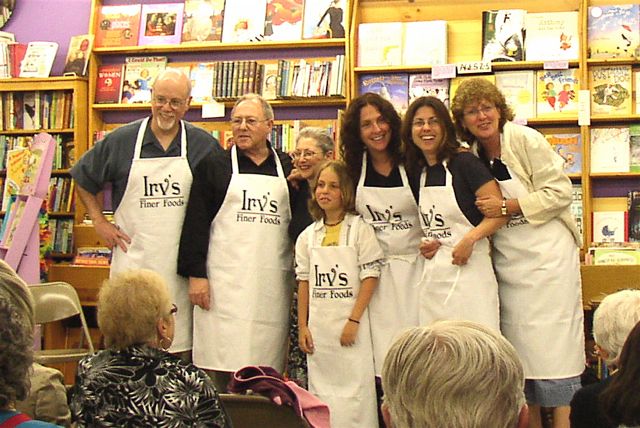
2. Irv's Finer Foods. Ronnie, our dad, me, our mom, and our Aunt Mary.
3. The shul. Photo courtesy of Robb Packer, copyright 2005. The Doors of Redemption, The Forgotten Synagogues of Chicago.
4. A shikker dad with Uncle Hy at Ronnie's Bar Mitzvah.
5. Me, cutting a rug at the party.
6. Ronnie as an adorable baby.
7. Pvt. Ron Shapiro
8. Ronnie, second from the left at the book launch for "The Division Street Princess."
9. The cover of Ronnie's memoir, "Making Happy."
10. Ronnie and his wife, Norma, on a recent trip to St. Augustine, FL.

Monday, October 15, 2007

I'm All Ears


Pull up a chair; I'm all ears. Don't be embarrassed because you find yourself turning to me for advice. Many other souls -- lost, confused, or indecisive -- have made the very same pilgrimage. But before you surrender your woes, you should be forewarned there’s a hitch in my mode of problem solving.


First off, while I am a certified expert (photos of more well-known counselors are included in this post) in a variety of subjects, I know my limits. If you stick to relationships, child rearing, weight loss, memoir writing, and Macs, it'll be smooth sailing.


But if instead, you are querying about fashion, travel, sports, financial planning, religion, nightlife, deep sea diving, dog obedience, cooking, home decorating, sewing, crafting, carpentry (I could go on, but am trying to limit this to 500 words.), I'd suggest a Google search.


If you are like the hundreds (okay dozen, um, handful) of callers who ring me up, you're likely to begin our conversation with the standard, "Do you have a minute?" Now, others might respond to that question with an exasperated sigh, but for yours truly, it’s positively lyrical. "Absolutely," I invariably respond, pushing away my mate who's wondering when dinner will be served, or my pooch desperate for some tummy-rubbing attention.


With coffee cup in hand, I settle into my office chair, and depending upon the problem, either log on to my computer, retract a folder from my resource files, flip through my Rolodex, pull books from the appropriate shelf, or simply listen. There's likely to be a number of uh-huhs on my end, which I can assure you, doesn't signify inattentiveness, just eagerness to jump in once you've paused in your downloading.


If you're wondering where I have the chutzpah to claim wisdom in my handful of fields, consider this evidence: In the realm of Relationships, although my first marriage ended in divorce, it did last 30 years and my ex and I are on friendly terms, even vacationing together as a family. Also, my second spouse and I will be celebrating our 10th year in 2008.


Re: Childrearing. Have you met Faith or Jill? Need I say more? Weight loss, down from 119 to 102 and have kept it off for more than 10 years. Memoir-writing, check out the title of this blog at your local bookseller. And as for Macs, I may not be on par with the guys at the Genius Bar, but can hold my own with any of Apple's other black t-shirted personnel.


Now, as to the forewarning I hinted at: If you turn to me for counsel or problem solving, do not expect it to end there. While you may be satisfied your issue has been resolved, I, on the other hand, may not be ready to let go. I may have to press on, refuse to dislodge even when you plead, "That's fine, that's all I needed to know." Well, maybe that's fine for you, but I haven't gotten to the root of the problem. Surely there's more we can discuss to clarify the picture. And when I contact you tomorrow to learn how my advice changed your life, I'll expect you to answer the phone and not screen my calls.

But I'm all ears.

Sunday, September 16, 2007

Short Fuse


Stand back, I may be about to blow! In the past, you could've described me as mild-mannered and been spot on. But as I age, I find myself easily erupting; and some recent flare-ups have made me wonder: Am I alone in my new volatility, or are other traditionally tame people experiencing similar behaviors? And, is having a short fuse so bad?

To start you thinking, I've shared two tantrums and hope you'll confess to a few of yours. For inspiration, I've included pictures of some famous hot heads.


Here goes: In my childhood (see "The Division Street Princess"), I was the classic good little girl. I can't recall ever talking back to my parents, raising my voice, or stalking off a sidewalk game. If challenged, I'd likely cry, or run home to mommy. Adolescence continued the same pattern and first marriage tussles typically ended in silence rather than a strong defense.


I admit to losing it a handful of times with friends, daughters, or second spouse. But I don't count these as authentic blow ups because my anger dissolved in tears. The following blow-ups, though, where absolutely no aqua was in evidence, made me feel 10-feet tall.


The first occurred on the CTA Blue Line. Husband Tommy and I were seated near exit doors when a male passenger leaned over the metal bar, smiled at the two of us, then dropped his pants to show off his …..


Because Tommy was partially blinded by a patch over one eye (recent cataract surgery), he didn't catch what was going on. I, instead, leaped from my seat and erupted in profanities. "Get the f@#$ off the train!" I shrieked. I don't know who was more startled, the flasher, other passengers, or me. I continued screaming until the offender slinked off the train, hiking up his pants on the way out. I felt like Wonder Woman!


Number two for your enjoyment took place during a discussion with a neighbor (known to be a feisty guy). We were in the midst of a debate, when he switched from the topic at hand to a personal attack. "You're retarded if you believe that!" he threw at me. "Shut the f@#$ up!" I returned. (You'll note I have a preference for a particular epithet.) He continued on, Tommy intervened, then pulled me home. Again, no tears, just a feeling of triumph.


(In the interest of full disclosure: I wound up writing my neighbor a note apologizing for my outburst because I realized his anger covered a raw spot. “Let’s put this behind us,” I suggested. He happily agreed. But I still count my initial rage as evidence of new boldness.)


I can't guarantee future outbursts won't find me dabbing my eyes and seeking a tissue. And I can't predict what will set me off. So, this will have to serve as fair warning: Watch out who you're messing with. I may be short, but…

Monday, August 13, 2007

Keep In Touch


In the past, I've failed to keep in touch. You've complained I don't call often enough. And as for letter writing, well, we've both neglected that quaint courtesy. But all that has changed, I promise. You see, my daughters bought me an iPhone for my birthday and now I can't keep my paws off the buttons. So call, text, let's catch up.

After receiving my iPhone (it was the first time in memory I lunged for the gift rather than the birthday cake) and swatting away my grandson who kept trying to snatch it from me, I reflected back on telephones of the past and the scenes they conjured.


Back in the 1940s (described in my memoir), I clearly see a small, spindly telephone table with a shelf for the Yellow Pages. When the telephone book wasn't a booster seat for me, it lived in its cubbyhole and grew tattered and smudged. A black, rotary dial phone topped the table; and my inventive father somehow anchored a pencil to that stand using string and rubber band.


I can't remember our phone number on Division Street, but my husband Tommy swears his prefix at the time, on Chicago's far northwest side, was Gladstone-something. Maybe my brother, Ron, although three years older than I but with a better memory, can come up with the long-buried name.


The Princess phone (It lights up!) was introduced in 1959, and that image finds me sitting on the floor of a narrow hallway in the one-bedroom apartment I shared with my mother. The phone was mounted on the wall, so I wound the cord around my fist while I yakked with my fiancé/first husband. During some of those daily calls, we considered eloping because we were both furklempt from the wedding arrangements. (We didn't elope, but interestingly -- to me, maybe not to you -- second husband Tommy and I got married in Las Vegas, somewhat of an elopement.)


During those same years in the late '50s, my mother Min was employed as a switchboard operator for American Linen Supply Co. After toiling behind a counter wearing a stained apron in our mom-and-pop grocery store, the new job was one she relished. I can still see her returning home at 6 p.m., her gorgeous blue eyes as bright as my illuminated phone, bringing tales of how her fingers zoomed across the board.

All of the other long-ago phones have faded from memory; the only images tied to them are rings that brought exceedingly good or bad news.

As for cell phones ("mobile" now, I guess) I was a slow subscriber, believing them primarily useful in case of emergency or for ordering pizza on your way home from work.

But because I've been a M.O. (Mac Obnoxious) since 2004, I have lusted for an iPhone since it was first unveiled. But the price tag kept us apart. My daughters -- evidentially witnessing their mother's desperate need for an object to love and pamper (other than themselves) -- on Aug. 10, presented me with the perfect gift.

Sadly for Faith and Jill, now that I'm armed with my clever iPhone, and have mastered Text Messenging, those poor dears are continually being harassed by their mother's: "hi, luv, how r u? xoxo"

I'm still w8ing 4 their reply.

Monday, July 16, 2007

Nap Time


If you and I happen to be in the middle of a conversation, and my eyelids start to lower and my head falls forward, don't take it personally. Check your watch. The big hand is likely on 12 and the little on 1, signaling time for my nap.


Daily 1 p.m. naps are a strict rule in the Soloway-Madison household. To assure that postal workers, UPS drivers, Watchtower evangelists, or other doorbell ringers heed our sacred hour, Tommy and I post a note on our mailbox pleading for silence. Our visitors likely pause as their fingers near our bell, read the well-worn sign, and believe their compliance protects a sleeping baby from stirring. Whatever.


Before you deride our daily habit, you should know that health experts praise nappers, and also that many famous people were fervent nappers. First, the benefits of napping: In a Feb. 13, 2007 article in The New York Times (my absolute favorite newspaper and source of all of my boorish conversation starters; i.e. "According to an article in today's New York Times…), "napping at least three times a week for a half-hour was associated with a significantly decreased risk of death from heart disease." Since most of the relatives cited in my memoir succumbed to this particular scourge, I'm up for any remedy that might stave off the family inheritance.


A website devoted to the subject (did you doubt it?), adds "nature intended that we take a nap in the middle of the day." Also, "an afternoon nap as short as ten minutes can enhance alertness, mood, and mental performance."


Second in my evidence are these famous nappers, whose accomplishments in life should further convince you of the practice's perks: Winston Churchill, Thomas Edison, Albert Einstein, John F. Kennedy, Eleanor Roosevelt, and several more from yet another website on the topic.


These noteworthy schlufflers likely have their own excuse for their siestas; mine is related to the hour in which I awake: 4 a.m. Please do not suggest I stay up past my usual bedtime (9 p.m.) to encourage later awakenings. Others have offered this and the result is by 10 p.m. I am wide-awake, then struggle to fall asleep, finally drop off at 1 a.m., and pop up at my traditional early hour. It's hopeless.


As for Tommy, I don't know his defense. He sleeps soundly from 10 p.m. to 5:45 a.m., returns for a morning nap from 7:45 to 8:45 a.m., and joins me in our joint 1 p.m. nap. Lest you think my spouse is aged or infirm, know that he is a vigorous guy who recently made the front page of the Lakeview YMCA newsletter.


And naturally Buddy, our 9-year-old Golden Retriever, accompanies Tommy and me for all bedtime snoozes. Flat-dogging* it on our bedroom floor, Buddy is happy to be part of our daily ritual. The only problem is that our dog's superlative hearing allows him to detect the footsteps of the postal worker, UPS driver, and evangelist. Duty calls, Buddy barks. Goodbye naptime. For me, of course. Nothing disturbs my Tommy.

*I have tried several times to take a photograph of Buddy in his flat-dog position. Have you ever successfully crept up on a sleeping canine and attempted a flash? Not possible; this one will have to do.

Yawn…. Honest it's not you. Time to…zzz, zzz, zzz.

Friday, June 08, 2007

Celebrating Dad: Old Spice & Gastronomy


Sunday the 17th is Father’s Day, so naturally I’ve been thinking of ways to celebrate Dad. Although Internet and newspaper advertisers have generously offered gift ideas, I’m relieved of that particular task because my father has snubbed the holiday for the past 49 years.

Of course, Irv Shapiro didn’t intentionally skip all of those gift opportunities. I’m certain he thought himself invincible and that his three-pack-a-day Camel habit or king-size appetite despite diabetes would never catch up to him. Alas, it did, and my father died at the too-young age of 48.


Today's post not only honors fathers long gone, but also those hale and hearty -- specifically Michael Blackstone, the dad of Charles Blackstone who is the author of "The Week You Weren't Here." Following my serving, Charles dishes up his own take on the subject.


My dad’s corporeal absence doesn’t stop me from considering the sorts of gifts I’d like to bestow on Pop. For nostalgia’s sake, there would have to be Old Spice, the men’s aftershave lotion manufactured by the Shulton Company back in 1938 and still on the shelves under the Procter & Gamble label.

In the Fathers' Days of my childhood, Old Spice with its colonial sailing ship logo was always first choice. And although Chicago's Division Street and Dad’s butcher counter were far removed from the nautical theme of the product, Dad gleefully accepted my perennial gift as if it was the cleverest choice on earth.


My father read a paperback book a week (we called them pocketbooks back then), especially pulp novels. Mickey Spillane was one of his favorite authors. "I, the Jury" was published in 1947 (Spillane wrote it in six days), and it introduced his tough detective Mike Hammer.

So when Old Spice bottles started backing up on our medicine cabinet’s shelves, I would switch to a Spillane novel, or another writer with an equally gritty pen.

Now this may be odd for a Jewish man, but my dad was very handy with tools. At one point in his life, he even had a workshop. The feature I most remember about that oil-stained and jumbled cave was the row of baby food jars that Dad used as containers for nails, bolts, and screws. He would fasten the jars’ covers to the basement’s ceiling, unscrew the container when in use, and then reattach it at the project’s end. I recall thinking how clever he was; I still do.


I recently saw a Stanley 62-piece Professional Grade Mechanics Tool Set on sale for $32.90 (regularly priced at $71.99) and in my mind’s eye; I carefully wrapped the set and presented it to my delighted father. “Old Spice would’ve been fine,” he might have said. “You shouldn’t have.”

Oh, there’s many more gifts I could think of that would please Dad, but I believe I’ve just given him the very best present a child could offer: Although 49 years have gone by, he's as fresh in my mind and in my heart as he was when he opened his very first package of Old Spice. What more could a parent wish for than to be forever remembered by his princess?


Father’s Daze by Charles Blackstone

My father has always been rather hard to shop for. He just doesn’t like anything. It’s not just disdain for all things pedestrian; a lot of popular gift items are just lost on him. The only DVDs he’s ever wanted to watch—The Curb Your Enthusiasm boxed sets—he already has, thanks to me. Worst of all, since he retired nearly five years ago (“I’m not a doctor!” he's taken to proclaiming), he no longer wears anything more elaborate than Dockers and button down shirts. Not even to fancy parties. And this means I can’t give him ties.


I know, I know. Ties for Father’s Day are so cliché. Right up there with fireworks on the Fourth of July and Christmas evergreens. The tie, though generic, was always at the top of my list because it was a gift that still allowed for tradition, for whimsy, and for me to get him something that he actually knew how to use and desired—until he gave them up. And it didn’t matter if I picked out an ugly one, or one so shockingly contemporary that we both knew there was no chance of him removing it from the gift box, let alone wearing it in public.

You could always win with a tie, even when you were losing. A tie wasn’t hard to find. You could get them at the supermarket. A tie said love, admiration, and appreciation. But none of that mattered if he had renounced them.

The prospect of choosing became a little more daunting with each passing tie-free year. I got away with gag gifts. Smile, nod, thanks, back to TV. What would it take to really impress The Dad? A $200 bottle of Chateau Neuf-de-Pape?

My wife solved the problem last year. I was about to suggest we just pretend we were out of town over the weekend and skip Father’s Day entirely. That would buy me at least a year. Then, from out of nowhere, Alpana said, “Why don’t we just take them to dinner?” I immediately recognized this as the pure genius that it was. All it would take was a phone call to make a reservation. (It didn’t hurt that we were friends with the proprietor.) And I wouldn’t have to give up the chance to give a gift that would not only be desirable and useful but also showcase my personality.


So we took them to Papillion, a charming eight-table French place, tucked away on Brown Street in downtown Skokie. Chef Danny regaled us with asparagus soup and beautifully marbled steak and soft shell crab and lobster medallions and a festive array of coronary-inducing cheeses. My dad ate like an emperor, or a pro-wrestler. Volnay and Pommard flowed into us like we were tributaries. We ate and drank and enjoyed the beautiful early-summer night. There was even a festive crème brûlée at the end. You can probably guess who got the first—and last—spoon.


At the end of the evening, my dad, the last to leave, stumbled out sated, impressed, touched, and, I can only hope, adequately loved. If he remembered tonight for even an hour longer than he’d remember having received a carbon-dioxide-powered corkscrew or pair of Bose noise-canceling headphones, I could consider this Father’s Day a resounding success.

“You’re a good son,” he said to me, after draping a leaden arm over my shoulder.

“And you’re a hard dad to shop for,” I returned.

He couldn’t deny it. I didn’t want him to.

(Photo above: Michael Blackstone is pictured with his wife Linda and daughter Maya. Taken in Normandy, 2002.)

Happy Father’s Day to Dads everywhere!


¡Muchas gracias!
To Andrea Telli (pictured on the left), manager of the Humboldt Park Branch of the Chicago Public Library; José López, executive director of the Juan Antonio Corretjer Puerto Rican Cultural Center; Billy Ocasio, 26th Ward Alderman, and Ann Bishop (on the right) professor, the University of Illinois Graduate School of Library and Information Science for inviting me to be part of their marvelous June 9th event, "Historic Memory and Literary Tradition in Humboldt Park: The Intersection of Puerto Rican and Jewish Experience."

I shared the program with poets David Hernandez, "The Urban Poems;" Eduardo Arocho, "The 4th Tassel;" and members of Café Teatro Batey Urbano; as well as authors Hazel Rochman, "Against Borders: Promoting Books for a Multicultural World;" and Carlos Quiles and Josefina Rodriguez, "Memorias de Josefina.


And another bow of gratitude to Maddi Elga Amill (photo), owner of Books Plus Publications for making my book available for purchase at the event.